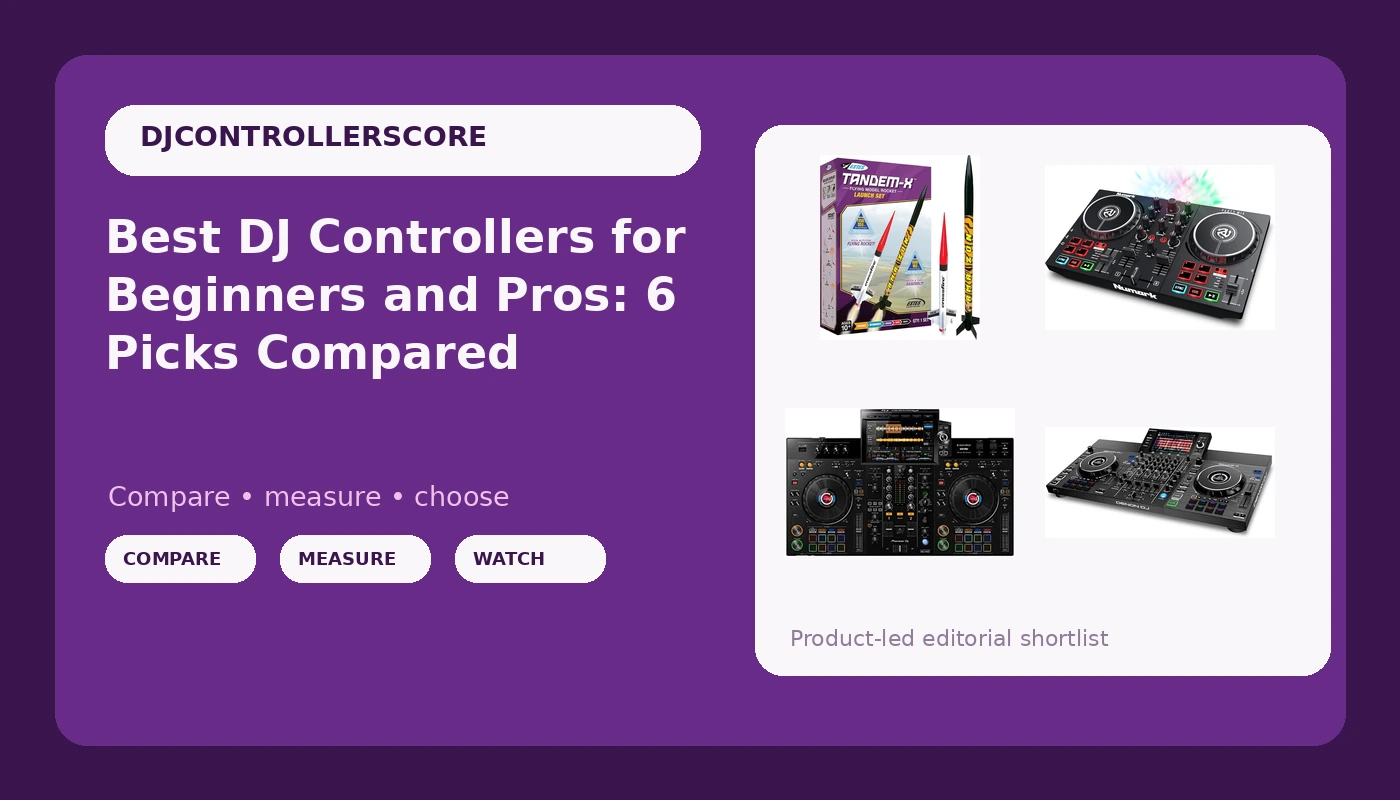
If you are shopping for the best DJ controllers for beginners, the 2026 market makes the decision harder than it should be. There is a two-channel controller with built-in lights at the entry level, an all-in-one system that removes the laptop from the equation, a standalone unit from Denon, and a professional controller built around stems. The names overlap, the marketing language overlaps, and very little on a spec sheet tells you which one will still feel right in month six.
This guide covers six products from the same buying batch: five DJ controllers that span entry level to professional, plus one beginner model rocket kit that is included because it is a reasonable gift for a young builder at home. For each product the approach is the same. Describe what the verified listing says, explain who the product actually suits, and leave the current price and availability to the retailer link.
Related: How to Choose Your First Two-Channel DJ Controller
Quick answer
The Pioneer DJ DDJ-FLX4 2-Channel DJ Controller, 16 Pads, White is the strongest fit for most readers because it stays at two channels with 16 pads, which is the right amount of layout while you are learning to plan transitions instead of juggling decks. Choose the Pioneer DJ XDJ-RX3 All-In-One DJ System (Black) instead when you want a single unit that does not depend on a laptop to run a set.
DJ controllers worth comparing
The list splits into four practical categories, and knowing which one you are shopping in saves more time than any spec comparison.
Entry level: the Numark Party Mix II DJ Controller with Built-in Lights is the low-risk starting point, and the lights are the feature the product name leads with.
Two-channel workhorse: the Pioneer DJ DDJ-FLX4 2-Channel DJ Controller, 16 Pads, White is the model most beginners graduate to, with a compact two-channel layout and 16 pads.
Standalone: the Pioneer DJ XDJ-RX3 All-In-One DJ System (Black) and the Denon DJ SC LIVE 4 Standalone DJ Controller Black both remove the laptop, which changes how you practice and how you pack for a gig.
Professional: the RANE FOUR Professional Stems DJ Controller is built for DJs whose sets depend on stems rather than simple track-to-track mixing.
One entry sits outside all of that. The Estes 1469 Tandem X Rocket-Building Kit is a model rocket kit, and the controller in its name is a launch controller, not a DJ controller. It is in the grid because it was part of the same batch and because it is a solid gift for a kid who is not ready for a mixer yet. Treat it as a bonus, not a comparison.
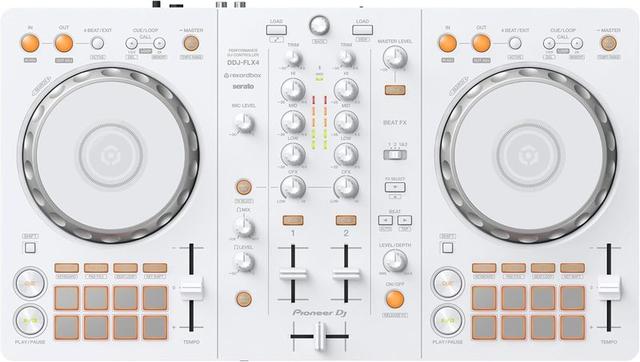
Pioneer DJ DDJ-FLX4 2-Channel DJ Controller, 16 Pads, White
A two-channel controller with 16 performance pads and a white finish, sized for a desk or a small booth. The layout keeps the essentials within reach while you learn to plan transitions.
Visit on Amazon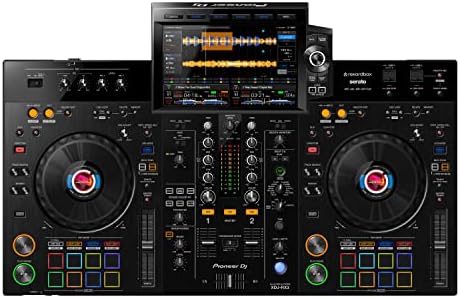
Pioneer DJ XDJ-RX3 All-In-One DJ System (Black)
An all-in-one DJ system in black, built so the players and the mixer live in one chassis instead of tethering you to a laptop.
Visit on Amazon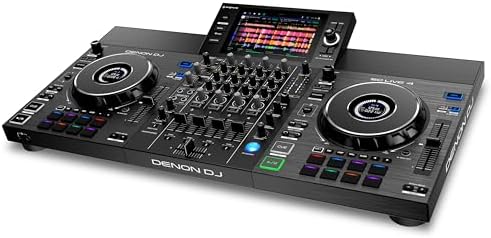
Denon DJ SC LIVE 4 Standalone DJ Controller Black
Denon's standalone entry in this list, finished in black, for DJs who want to walk in with one unit and no computer in the setup.
Visit on Amazon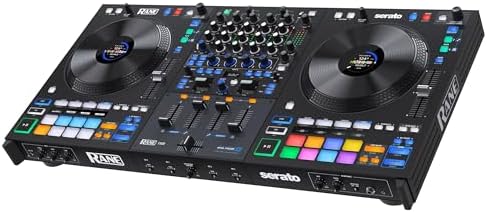
RANE FOUR Professional Stems DJ Controller
Check current Amazon price
A professional controller built around stems, for DJs whose sets depend on splitting tracks into parts and rebuilding them live.
Visit on Amazon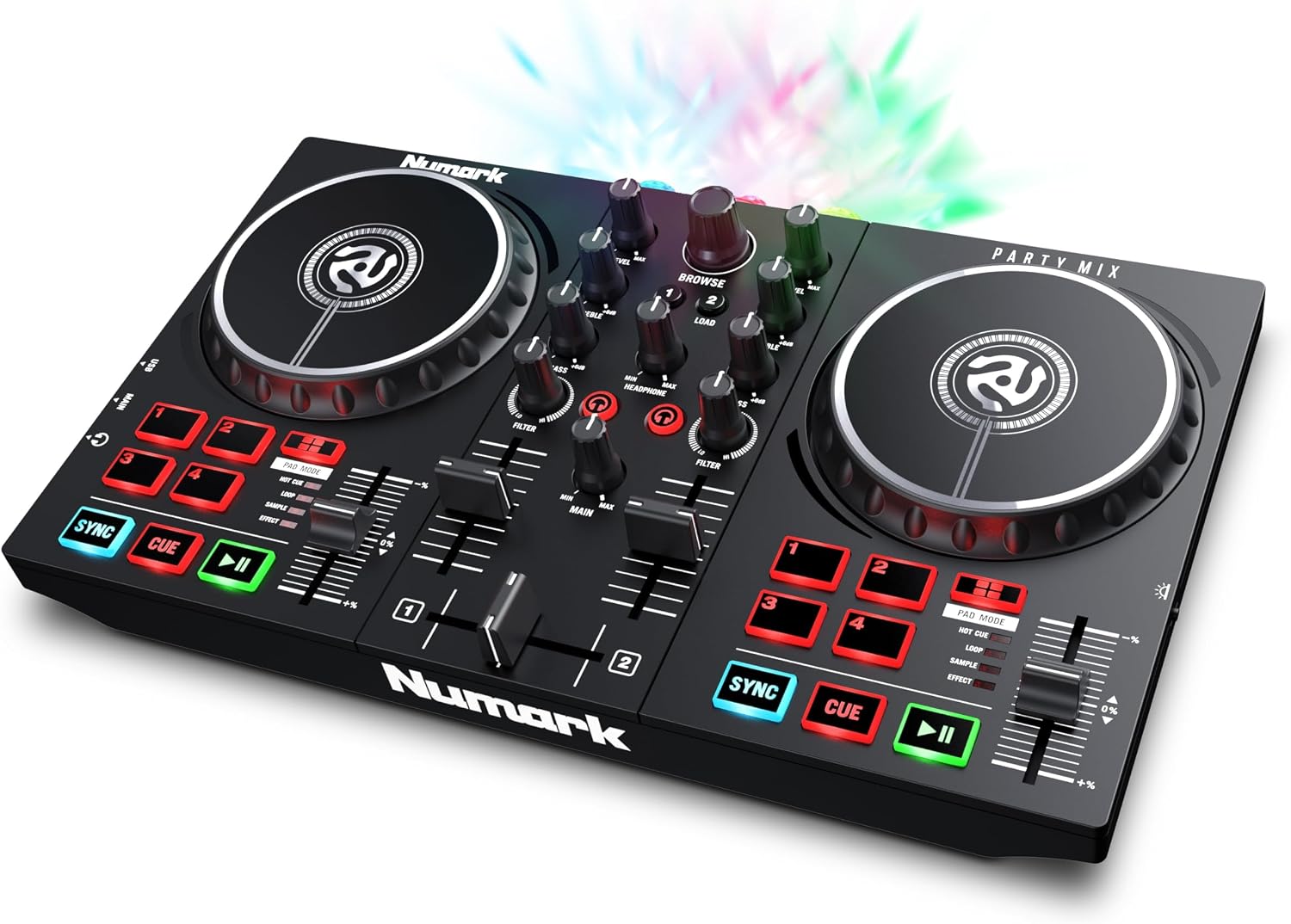
Numark Party Mix II DJ Controller with Built-in Lights
An entry-level controller with built-in lights. The lights are the headline feature at this price, and it is a low-risk way to find out whether DJing sticks.
Visit on Amazon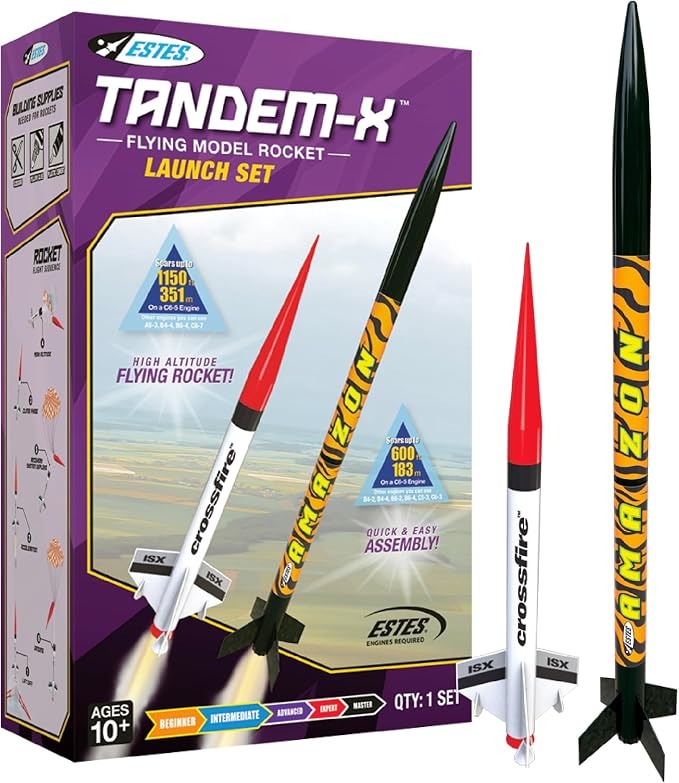
Estes 1469 Tandem X Rocket-Building Kit, Beginner Flying-Rocket Model Kit for Ages 10+, Includes Launch Pad and Controller
A beginner flying-rocket model kit for ages 10 and up that includes a launch pad and a launch controller. Not a DJ controller, but a solid gift for a young builder in the house.
Visit on AmazonPrices and availability may change. Check the retailer for current details.
How these products were compared
This guide compares five things: channel count and layout, whether the unit runs standalone or depends on a computer, the control surface as described by the manufacturer, the software situation and what it costs to keep using the controller, and how each model fits a realistic upgrade path.
Product names, images, and retailer links are matched one to one, so every card points to the exact product shown rather than a similar model in the same family. That matters more than it sounds, because controller families share names across several price tiers.
Two notes on method. First, this is a comparison of verified product information and editorial judgment, not a lab measurement, and nothing here should be read as a timed durability test. Second, no current price is printed in this article. Prices move, bundles change, and a controller that looks like a poor value in one season can be the obvious pick in the next, so the card links are the place to confirm the number that matters today.
How to choose the right DJ controller
Start with channels, not features. Two channels are enough for almost everything a new DJ does: mixing track to track, learning phrasing, and practicing transitions until they are boring. Four channels become useful when you are layering loops, running acapellas over instrumentals, or playing back to back. Buying four channels before you have a reason to use them usually means paying for capacity you will not touch.
Then decide whether you want a laptop in the chain. The DDJ-FLX4 and the Party Mix II are computer-based, which means the screen you already own handles library browsing and waveform display. The XDJ-RX3 and the SC LIVE 4 are standalone, which means fewer cables, faster setup, and one less thing that can crash mid-set. Standalone costs more, and it is worth it mainly if you play out often or dislike troubleshooting at a gig.
Control surface comes next, and this is where the feel arguments live. Jog wheels and faders are the two parts you touch constantly, and they are also the two parts that wear. When you compare controllers in person, or read a listing closely, ask what the platters are made of, how the crossfader is described, and whether the pads are the same size across the unit. If a product page spends its space on lighting and says nothing about the faders, that tells you where the budget went.
Software is the quiet variable. A controller is only as useful as the software it runs, and some platforms charge a subscription for features that used to be included. Check what ships with the unit, whether a paid tier is required for recording or for specific effects, and whether the library you build now will export later. Switching platforms after two years of crate digging is the most expensive mistake in this hobby.
Finally, think about the upgrade path. Beginner controllers hold value reasonably well when they are clean and boxed, and the money you spend on the first one is really rent on the knowledge you gain. Buy something that lets you practice every night, and let the gear decision stay small. Gear is not the bottleneck. Practice is.
Pioneer DJ DDJ-FLX4 2-Channel DJ Controller, 16 Pads, White
The DDJ-FLX4 is a two-channel controller with 16 pads in a white finish. It is the pick here because the layout matches the way beginners actually learn: two channel strips, a bank of pads for cues and loops, and a footprint that fits on a desk next to a laptop. Nothing on it is so specialized that you have to grow into it, and nothing is so stripped down that you outgrow it in a month.
The trade-offs are honest ones. It is not a standalone unit, so it needs a computer to run. It is not a four-channel mixer, so anyone planning to layer multiple sources will eventually want more. The white finish shows fingerprints and dust faster than a black chassis, which matters if the controller lives on a table near a window. If those limits do not bother you, the FLX4 is the safest first controller in this list, and it is the one most likely to stay useful after an upgrade, either as a backup or as the rig you take to small gigs.
Alternatives to consider
The Pioneer DJ XDJ-RX3 All-In-One DJ System (Black) is better suited to DJs who want to show up, plug in, and play without a laptop, while the RANE FOUR Professional Stems DJ Controller is a stronger fit when your sets depend on stems and you want a controller designed around that workflow rather than adapted to it.
The Denon DJ SC LIVE 4 Standalone DJ Controller Black covers the standalone slot for DJs who want an alternative to the Pioneer ecosystem, and it is the unit to look at if you plan to compare standalone systems side by side before committing. The Numark Party Mix II DJ Controller with Built-in Lights covers the entry-level slot and is the least expensive way to find out whether you actually enjoy this, lights included. The Estes 1469 Tandem X Rocket-Building Kit covers the gift slot, and it is a model rocket kit with a launch pad and a launch controller, so keep it away from the DJ booth and read the safety instructions before anyone presses a button.
Day-to-day use and maintenance
Controllers fail in predictable places. Faders and crossfaders take the most abuse, pads collect dust and sweat, and jacks loosen when cables get yanked. A few habits extend the life of any unit on this list. Cover the controller when it is not in use, or store it in a case, because dust in a fader is the beginning of a scratchy channel. Keep drinks off the table, or at least off the side where the mixer sits. Coil cables loosely instead of wrapping them around your hand, and unplug by the connector rather than the cord.
Software upkeep matters too. Install updates when you have a free evening rather than an hour before a set, back up your library and cue points regularly, and keep a copy of your music on a second drive. If you play out, build a small kit: a spare USB cable, a spare power supply, a short audio adapter, and a cloth. None of that costs much, and all of it saves gigs.
Buying checklist
- Measure the desk or booth space you actually have, and check the controller footprint against it.
- Choose two channels or four based on your normal sets, not on the one night a year you might layer four sources.
- Decide whether you want a standalone unit or a computer-based one, and count the cables each option adds.
- Confirm what software ships with the exact model you are buying, and whether any features require a subscription.
- Check the finish and the fader type if the controller will travel, since both affect how it ages.
- Verify the current retailer price, availability, and return terms through the product link before you buy.
Final recommendation
Choose the Pioneer DJ DDJ-FLX4 2-Channel DJ Controller, 16 Pads, White when you want a two-channel controller with 16 pads to learn on and a layout you will not outgrow immediately. Choose the Pioneer DJ XDJ-RX3 All-In-One DJ System (Black) when you want a standalone system and are ready to pay for the convenience of leaving the laptop at home. If your sets are built on stems, look at the RANE FOUR Professional Stems DJ Controller instead, and if budget is the deciding factor, the Numark Party Mix II DJ Controller with Built-in Lights is the lowest-risk way to start.
Where two products do not differ in any way that matters to a normal buyer, this guide does not invent a winner. Confirm the current price and availability on the product page, then buy the one that matches the way you actually play.