Related: Best DJ Controllers Under $500: Where the Money Actually Goes
Eight years in a booth, five of them playing weddings on weekends, and the question I get most is still the same one: which controller should I buy first? My answer has not changed much. The best DJ controllers for beginners are the ones that make you want to practice on a Tuesday night, not the ones with the longest spec sheet.
I have three rules, and none of them are about channel counts. First, the software bundle is half the purchase. A controller is a box of knobs until the software unlocks it, and a subscription you cannot afford will kill your momentum faster than cheap gear ever will. Second, jog wheel feel decides whether mixing feels like music or like fighting a machine. Close your eyes and touch the platter. If it feels like a toy steering wheel, you will never trust it in a blend. Third, faders die. The only question is whether they die at a paying gig or after a year in your bedroom.
Two channels is enough to start. Four channels is a problem you have not earned yet. Here are the four controllers I point beginners toward, and who each one is actually for.
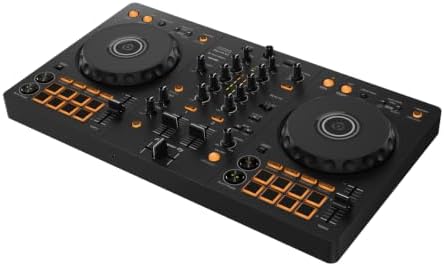
Best overall: Pioneer DJ DDJ-FLX4 with the CUE1 headphones
This is the one I hand to friends who ask me what to buy, and it is not because I love everything Pioneer makes. The DDJ-FLX4 ships with both Rekordbox and Serato, which means you can learn on one and move to the other without buying new hardware. That flexibility matters more than people admit, because the software you start on is rarely the software you finish on.
The layout is the real argument. The FLX4 is arranged like the gear you will eventually find in a booth, so the muscle memory you build at home transfers the first time you play somewhere with a house system. Nothing about it is exotic, and that is the point. Cue buttons sit where your hands expect them, the crossfader handles cuts without drama, and the jog wheels have enough resistance to feel like a platter instead of a button.
This bundle also includes the Pioneer DJ CUE1 on-ear headphones, which solves the second purchase most beginners forget about. You need a pair you can trust for cueing, and getting them in the same box means one order, one delivery, and one less excuse to wait.
Where it falls short: two channels only, and the build is plastic. It will not survive being thrown in a van every weekend for five years, and if you are already certain you want four decks, look elsewhere. As a first controller, though, it is the safest money in this guide. It holds value, it resells easily when you outgrow it, and it teaches the standard layout instead of a manufacturer's pet idea.
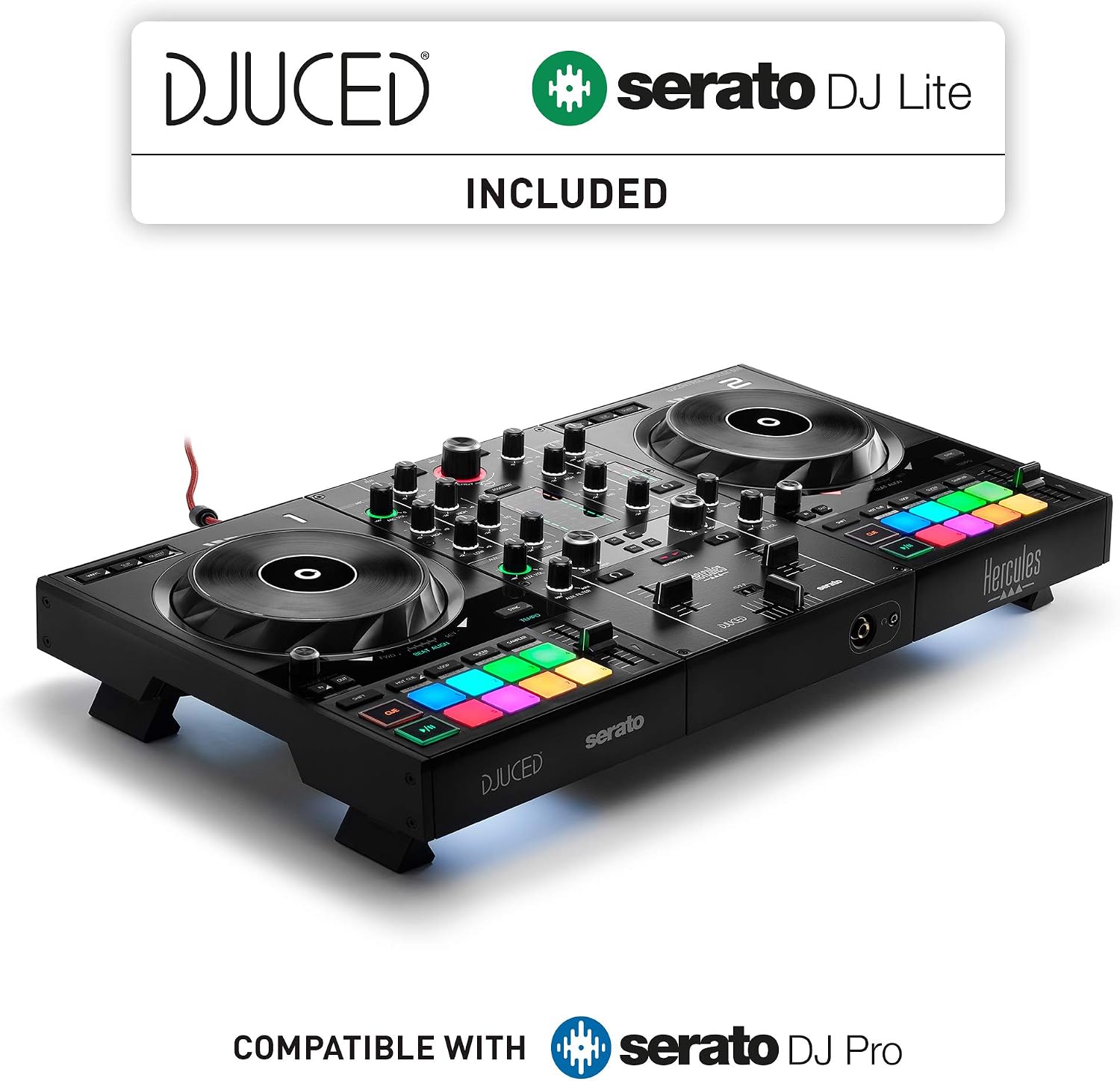
Best step up: Hercules DJControl Inpulse 500
The Inpulse 500 is what I recommend when someone has been practicing for a few months and wants more surface area under their hands without jumping to a four-channel price. It runs Serato and DJUCED, so you are covered whether you want the more common club ecosystem or Hercules' own software, and the two-deck layout keeps you honest about planning transitions instead of stacking four tracks you cannot manage.
What I like about the Inpulse line is the teaching layer. The beat assist features actually show you where the grid is and how a blend should sit, which is the opposite of software that mixes for you and leaves you with no ear. If the goal is learning to mix rather than learning to press sync, this is the family to look at.
The 500 is the roomier of the two Hercules options here. More controls, more space between them, and enough of a layout that a two-hour practice session does not leave your hands cramped. It is also the one I would take to a small party without feeling like I brought a toy to a job.
The trade-off is ecosystem. Hercules gear does not carry the same resale gravity as Pioneer, and if your local scene is Rekordbox-first, you will be the odd one out at the after-party. As a practice instrument, it earns its spot.
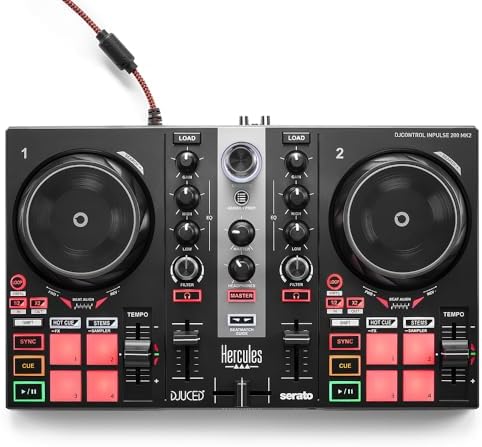
Best for learning: Hercules DJControl Inpulse 200 MK2
This is the cheapest sensible way into DJing, and I mean that as a compliment. The Inpulse 200 MK2 is built for learning to mix, and it arrives with software and tutorials included, so you are not hunting for a free trial that expires before you understand beatmatching.
It is small, which is both the appeal and the limitation. It fits on a desk next to a laptop, it travels in a backpack, and it does not demand a dedicated table in a shared apartment. The controls are condensed, so your hands learn efficiency early, and the beat assist features from the Inpulse line are here too, scaled down but still useful for building an ear.
If you are on the fence about whether DJing is for you, buy this instead of the expensive thing. Gear is not the bottleneck at the start, practice is, and a controller you can use every night beats a controller you are afraid to touch. Keep it as a backup rig after you upgrade, or hand it to the friend who keeps asking you how to start.
Best portable: Numark Mixstream Pro Go
This is the odd one out in the best way. The Mixstream Pro Go is the portable option in this guide, and portability changes how you actually use a controller. A rig you can carry and set up anywhere is a rig that gets used at cocktail hours, backyard parties, and rooftops where running a full laptop setup is more hassle than it is worth.
For beginners that matters more than it sounds. The biggest obstacle to getting good is friction. A controller that takes ninety seconds to set up gets used on a Wednesday. A controller that needs a laptop, a power strip, and a driver update gets left in the closet.
The catch is price and workflow. This is not the cheapest way to learn, and its approach is different enough that if your goal is to eventually play in a club with a house setup, you still want practice time on a standard layout. Buy this if your gigs are mobile and your priority is showing up with one bag. Buy one of the Hercules options if your priority is learning the fundamentals as cheaply as possible.
The beginner controller reference table
Same table I keep when people ask me to just tell them the answer. Best for means the job it does better than the others here, not a ranking of quality.
| Controller | Best for | Software | What to know |
|---|---|---|---|
 Visit on Amazon → Visit on Amazon →Pioneer DJ DDJ-FLX4 with CUE1 headphones |
The standard first controller | Rekordbox and Serato | Headphones included; two channels; plastic build; holds value |
 Visit on Amazon → Visit on Amazon →Hercules DJControl Inpulse 500 |
First step up from a starter rig | Serato and DJUCED | Roomier layout; beat assist teaching tools; weaker resale |
 Visit on Amazon → Visit on Amazon →Hercules DJControl Inpulse 200 MK2 |
Learning to mix on a budget | Software and tutorials included | Compact; condensed controls; best backup rig |
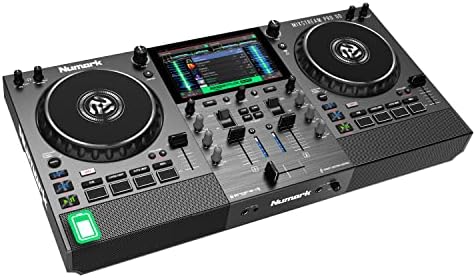 Visit on Amazon → Visit on Amazon →Numark Mixstream Pro Go |
Mobile gigs and fast setup | Portable rig, no laptop required | Highest cost here; different workflow from club standard |
Read that table top to bottom and you have the short version. If you want the long version, it is the four checks below.
How I judge a beginner controller
I do not care what the box claims. Four things decide whether I recommend a controller to someone starting out, and they are the same four things I use on my own gear.
The software bundle. A controller is a box of knobs until the software unlocks it. I want a bundle that includes a full version of something real, not a thirty-day trial that expires right as you are getting comfortable. Both of the Pioneer and Hercules options here clear that bar in different ways.
Jog wheel feel with eyes closed. This is the review. A platter with no resistance makes every blend feel like a mistake, and you will start avoiding transitions instead of practicing them. Touch it before you read the spec sheet. If it feels like a toy steering wheel, walk away.
Fader construction. Faders die. That is not pessimism, it is maintenance. The question is whether they die at a paying gig or after a year of bedroom practice. On a first controller you are looking for a crossfader that handles cuts without grinding, and you should expect to replace the unit eventually rather than expecting it to outlive you.
Two channels and a plan. You do not need four channels to start. You need two solid channels and a brain that plans the next transition. Every controller in this guide is a two-deck or portable rig, and that is deliberate. Four channels will not fix bad transitions, and nothing else will either.
What the spec sheet will not tell you
"Pro-grade" stamped on a plastic controller means nothing. I have seen that word on gear with faders that feel like they were made of hope. Ignore the label and check the parts your hands actually touch: the platter, the crossfader, the up faders, the headphone jack.
Watch for subscriptions. A controller that requires a recurring payment for basic features is a controller with a monthly bill attached, and that is the fastest way to stop practicing. Check what the included software actually does before you commit.
RGB lights are not a feature. A controller with cheap faders and a light show is still a controller with cheap faders.
And finally, buy for the room you are actually in. A bedroom, a basement, a wedding cocktail hour. Club readiness is a claim you earn at a gig, not a bullet point on a listing.
Which one should you buy?
Should you buy the Pioneer DJ DDJ-FLX4 bundle?
Yes, if you want one order that covers both the controller and your cueing headphones. It runs Rekordbox and Serato, the layout matches what you will find in a booth, and it resells easily when you upgrade. The build is plastic and there are only two channels, so treat it as a first controller, not a forever controller.
Should you buy the Hercules DJControl Inpulse 200 MK2?
Yes, if you are not sure yet whether DJing is for you. It is the cheapest sensible entry here, software and tutorials are included, and it is small enough to live on a desk and get used every night. Practice is the bottleneck at the start, not gear, and this removes the excuse.
Should you buy the Hercules DJControl Inpulse 500?
Yes, if you have been practicing for a few months and want more surface area under your hands without paying for four channels. It runs Serato and DJUCED, and the beat assist features teach you where the grid is instead of mixing for you. Just know that it will not hold value the way the Pioneer does.
Should you buy the Numark Mixstream Pro Go?
Yes, if your gigs are mobile and you want to leave the laptop at home. It is the portable option in this guide and the fastest to set up at a party. It costs more than the entry picks and does not train the standard club layout, so buy it for mobility, not for learning.