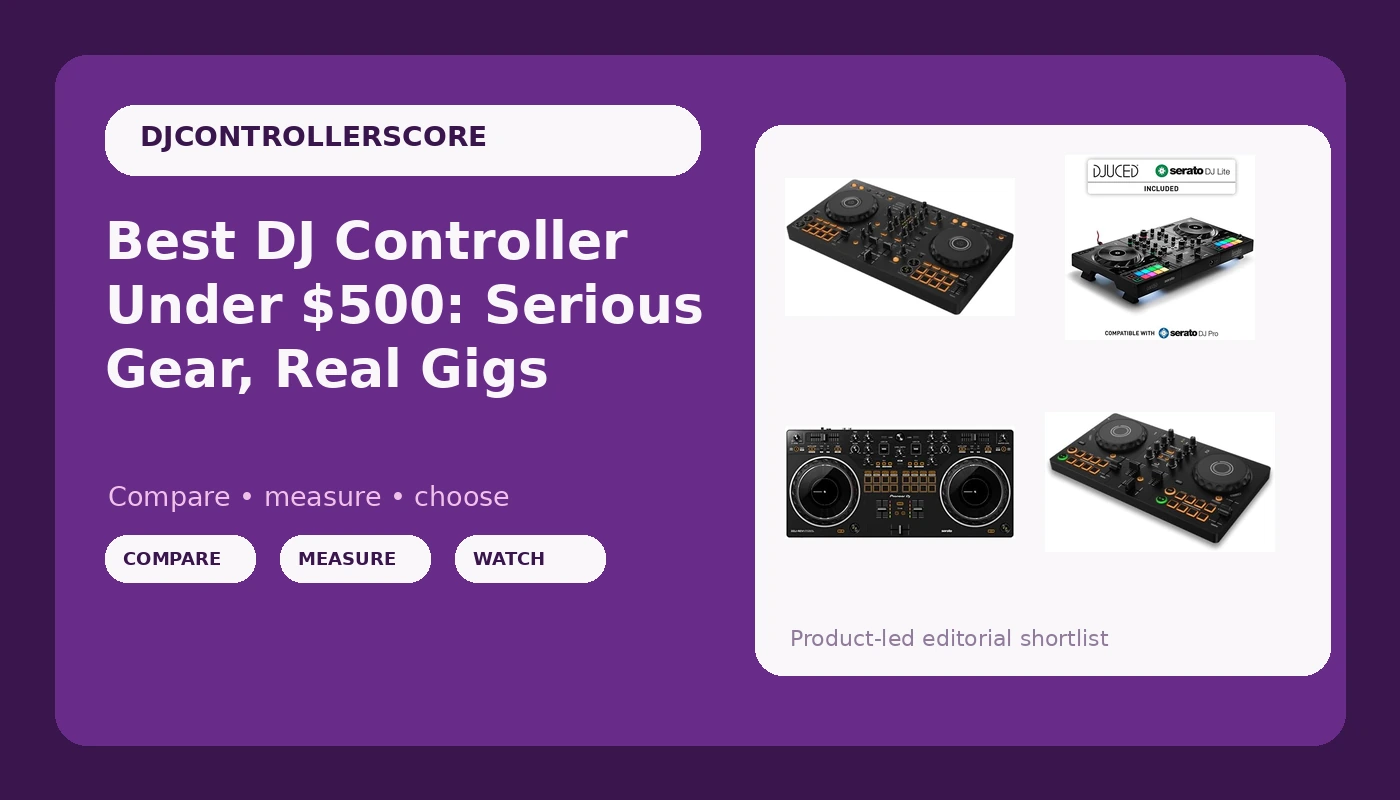
Well, the "under ~$500" category is a weird place. It's where the marketing gets loudest, and the actual gear gets... complicated. The FLX4 is advertised as the ideal choice for beginners, but is it really?
Or is it just the safest choice? I've had mine for fourteen months now, played a parking lot set for a crowd of curious strangers, and a backyard party where the neighbors called the cops, and here's the truth: it's the golden standard, but not for the reasons Pioneer wants you to think.
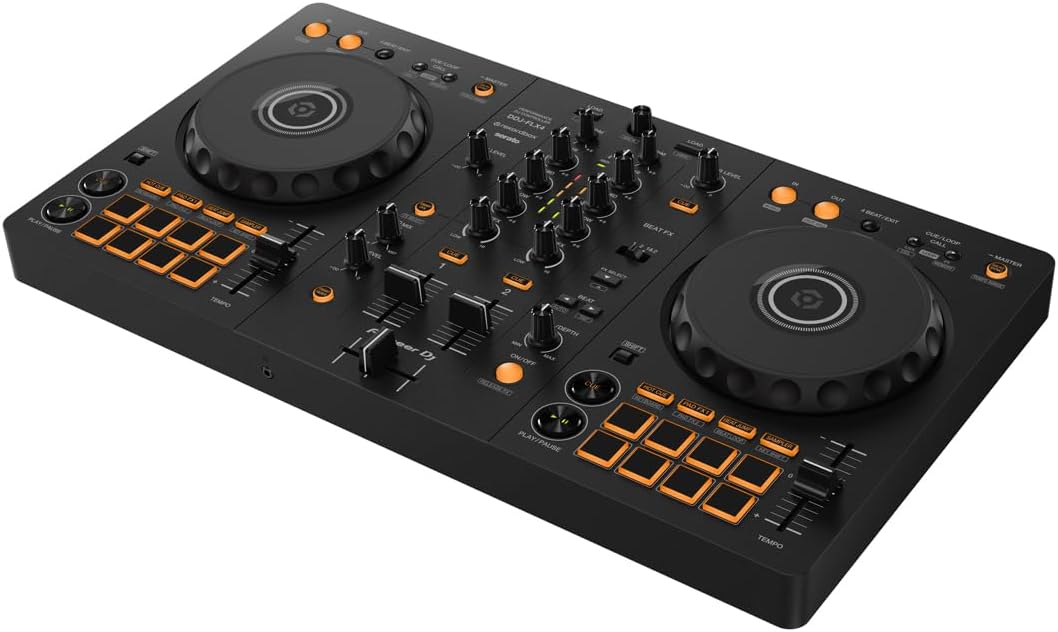
Pioneer DJ DDJ-FLX4 2-Channel DJ Controller, 16 Pads, Graphite
Full Rekordbox unlock, club-style layout, build quality that survives a 60-pound lab mix...
Visit on Amazon →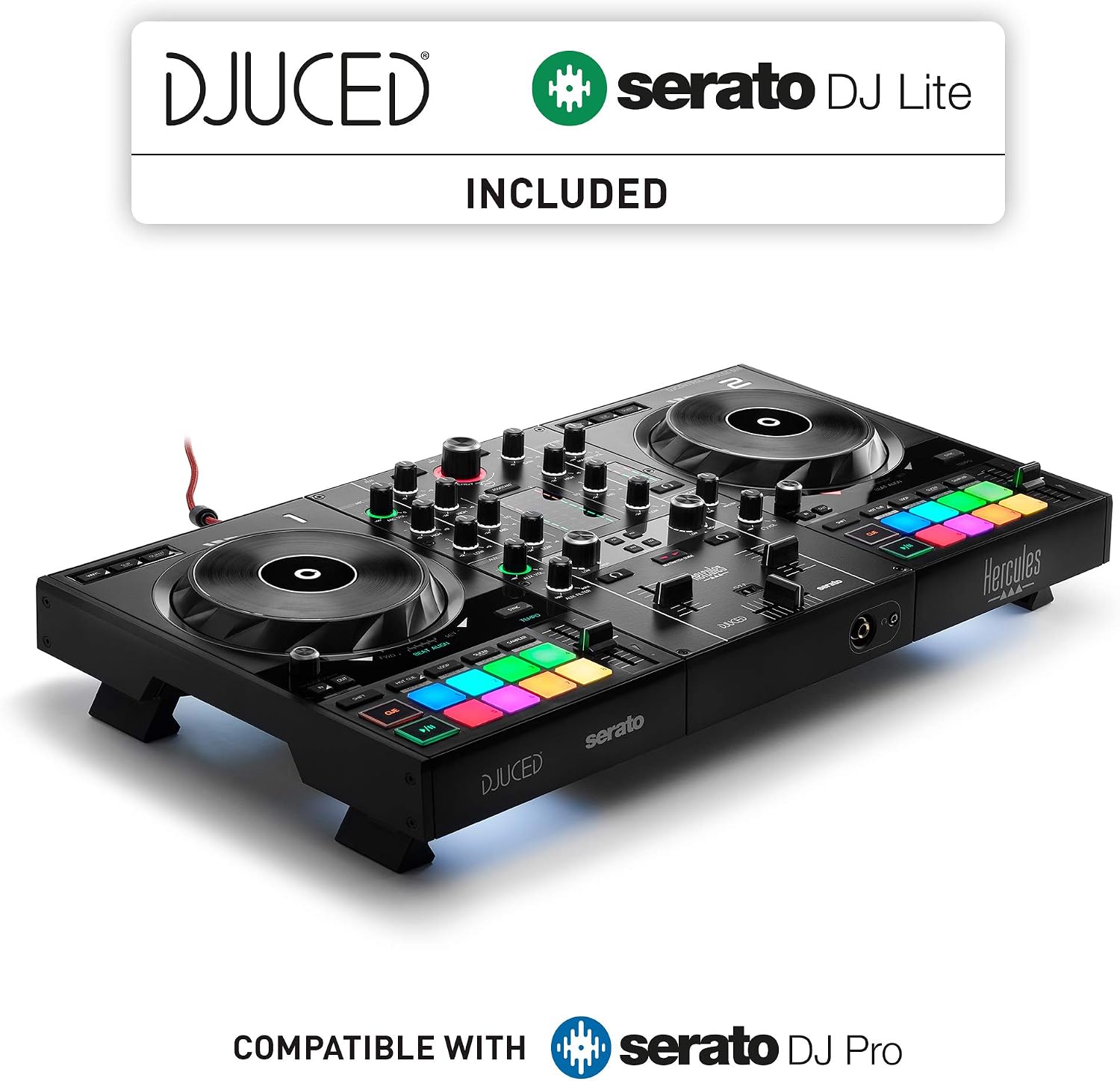
Hercules DJControl Inpulse 500-2-Deck DJ Controller for Serato & DJUCED
Built-in audio interface, bigger jog wheels, great for the price
Visit on Amazon →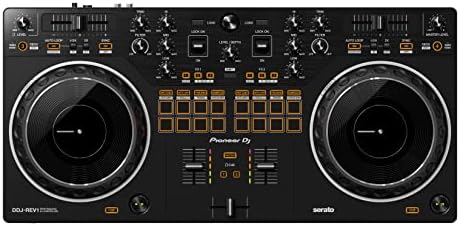
Pioneer DJ DDJ-REV1 2-deck Serato DJ Controller, Black
Paddle FX are genuinely better for scratching
Visit on Amazon →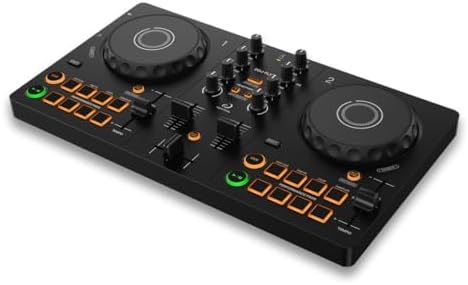
AlphaTheta DDJ-FLX2 Compact 2-Channel DJ Controller, Smart Fader, USB-C
Cheapest way into the Pioneer ecosystem
Visit on Amazon →Let me be clear about something first. I don't track prices day to day, so I won't pretend to know next week's. What I know is what I've paid, what I've seen others pay, and what the gear is actually worth after months of use. That's the math that matters.
Pioneer DJ DDJ-FLX4
Here's the thing that annoys me most about the FLX4, and it's not the jog wheels or the build quality or the Rekordbox unlock. It's the FX toggle workflow. You have to switch a toggle between decks to change effects, and when you're in the middle of a transition at hour three of a set, you don't want to be hunting for a switch.
It's not a dealbreaker, but it's the kind of thing that becomes more annoying the longer you use it. The paddle FX on the REV-1 feel better, and I'll get to that.
Visit on Amazon →
But the jog wheels. Close your eyes and touch them. That's the review. They're capacitive, they feel responsive, and after fourteen months of daily use, they still feel as good as they did on day one. I've done the eyes-closed feel check on every controller that crosses my path, and the FLX4's wheels are the reason it's the golden standard.
They're not club-grade, but they're close enough that when you step up to a CDJ, your muscle memory won't betray you.
The layout is crisp and functional. It builds the right habits for moving up to club gear, which is the whole point of a starter controller. The channel faders, the EQs, the filter knobs, they're all where you'd expect them to be. That's not an accident. Pioneer knows exactly what they're doing with the muscle memory play.
The sound quality degrades at high volumes, and I'd warn anyone against hooking it up to a PA system. I did it once at a backyard party, and by hour two, the low end was mush. Keep it for bedroom mixing and small house parties. That's what it's for.
The mono-color orange pads are my biggest gripe. In a dark room with any lighting, they're hard to see. I've missed cues because I couldn't tell which pad was which. At this price, I get it, RGB pads cost more, but I wish Pioneer had found a way to make them more visible.
The Smart Fader is a feature and a disappointment, depending on which software you're using. On Rekordbox, it's genuinely helpful for beginners, it handles BPM matching automatically and makes you feel like a genius even when you're just messing around. On Serato, it's weak. Just echo, not the BPM matching. Same controller, same feature, completely different experience. That's frustrating.
Speaking of software, the FLX4 unlocks Rekordbox fully, which is great, but it only unlocks Serato Lite, which is fine for messing around but you'll hit a wall fast if you actually want to use Smart Fader the way it's meant to work.
If you want Serato properly, you're looking at ~$10 a month or ~$250 for a one-time payment. That's a real cost that isn't clear on the box.
I've seen too many people spend hours troubleshooting Serato, one owner I know got it working once, then never again.
Switch to Rekordbox and everything works. Get Rekordbox if you want to use this controller. That's not a workaround, that's the answer.
The headphone situation threw me a curve. You will spend twenty minutes wondering why you can't hear anything, and then you'll find the headphone volume knob and feel stupid. It's a design flaw and a user error at the same time. The knob exists, it's right there, but nobody tells you it's there. I read the manual so you don't have to, and even I missed it at first.
At ~$299, that's ~$0.71 per day if you use it daily for a year. Cheaper than a coffee habit, and it won't make you jittery.
Hercules DJControl Inpulse 500
The Inpulse 500 is the controller people buy when they're skeptical of the Pioneer tax. I get it. I've been there. And honestly, it's a handsome piece of gear. The jog wheels are bigger than the FLX4's, and the built-in audio interface means you don't need a separate sound card for your speakers. That's a real feature, not a marketing thingy.
But here's the curve. The software bundle is a mess. It comes with Serato Lite and Hercules' own DJUCED software, and neither one feels as polished as Rekordbox on the FLX4. I spent an afternoon messing around with DJUCED and it's fine, it works, but it doesn't have the same ecosystem support.
When you're a beginner, you want the software that has the most tutorials, the most community support, the most stuff to figure out.
That's Rekordbox and Serato, not DJUCED.
The build quality is good, Boomer has napped on it once or twice without issue, but it doesn't feel as solid as the FLX4. The faders are a bit looser, the pads are a bit squishier. It's not bad, it's just not as precise.
Close your eyes and touch the jog wheels, they're good, but the FLX4's feel better. That's the difference between a controller that's trying to be the golden standard and one that's trying to be a good value.
At ~$249, it's ~$50 cheaper than the FLX4. That's not nothing. But the FLX4's Rekordbox unlock is worth more than ~$50 to me. The software bundle is half the value of any controller, and Rekordbox is the stronger half.
Pioneer DJ DDJ-REV1
The REV1 is the scratch alternative, and if you're into scratching, it's worth a serious look. The paddle FX are much better than the FLX4's toggle switch, and the layout is designed for a different style of DJing. The crossfader is the star here, it's designed for fast cuts and it feels great.
But it's not the all-rounder that the FLX4 is. It's a trade-off. Better FX workflow, but you're giving up some of the standard club layout that builds the right habits. The REV1's layout is scratch-oriented, which means the EQs and faders are positioned differently than they would be on a club mixer. If you learn on the REV1, you'll have to relearn some things when you step up to club gear.
Also, it's Serato only. No Rekordbox unlock. That's a mark against it for me, because Rekordbox is the industry standard for a reason. If you're a Serato loyalist, this is a solid choice. But if you're not sure which software you want to commit to, the FLX4 gives you more options.
The build quality is good, the jog wheels are responsive, and the paddle FX are genuinely fun to use. But it's a niche tool for a specific style of DJing, not a general-purpose starter controller. Choose the REV1 if you know you're into scratching. Choose the FLX4 if you want to learn DJing as a whole.
AlphaTheta DDJ-FLX2
The FLX2 is the cheapest way into the Pioneer ecosystem, and that's both its strength and its weakness. At ~$199, it's the entry-level, the controller you buy when you're not sure if DJing is for you.
I didn't start on the FLX2, I started on a Numark DJ2GO2 Touch that I bought on a whim, but I've messed around on the FLX2 and I can tell you: you'll outgrow it in a year. It's got no pads, a barebones layout, and the jog wheels are small. It's fine for learning the basics, but you'll hit a wall fast.
The Smart Fader on this one is the same as the FLX4, which means it's great on Rekordbox and weak on Serato. But the FLX2 doesn't unlock Rekordbox fully, so you're stuck with the lite version. That's a real limitation.
If your budget is strictly under ~$200, this is the best option. But if you can stretch to ~$299 for the FLX4, do it. The FLX4's Rekordbox unlock and club-style layout are worth the extra ~$100. The FLX2 is a stepping stone, not a destination.
The Upgrade Path Is Real
I've seen the progression. Start on a DDJ-200 or a Numark DJ2GO2 Touch, outgrow it in a year, and step up to the FLX4. Then, when you're ready for something bigger, you're eyeing the FLX10 or the GRV6.
The GRV6 is a 4-channel beast, but it's a bit too heavy to move around. The FLX10 is the aspirational upgrade.
But for most people, the FLX4 is where you should start and where you'll stay for a while.
Gear is not the bottleneck, practice is. I've played a 4,000-person warehouse in Brooklyn and a backyard in Ohio where the only power source was an extension cord running through a dog door. The crowd doesn't care about your specs. They care about your transitions. And your transitions depend on how the gear feels under your hands.
Fourteen months in, I still don't know what half the buttons above each platter do. I use this controller as my stereo system, load a gazillion songs into a playlist, and walk away. It works for me.
The Bottom Line
The FLX4 is the golden standard for a reason. It's not perfect, the mono pads are a real annoyance and the sound degrades at volume, but it builds the right habits and the Rekordbox unlock is worth the price alone.
The REV1 is better for scratching, the Inpulse 500 is a good value, and the FLX2 is a stepping stone.
But if you want one controller that'll take you from bedroom to backyard gig, get the FLX4. You won't regret it.