Well, the marketing says a loop button is supposed to make you sound like a pro instantly. Is that true? I've been messing around on controllers for about three years now, and I've spent the last fourteen months with the Pioneer DJ DDJ-FLX4 as my main deck.
Related: Best Serato DJ Controller: Picks for the Software You Already Use
I've played a parking lot set to a growing crowd of confused dog walkers and a backyard party that ended with the cops asking me to turn it down.
The truth is, loop and sample features are powerful, but the way they are laid out on different controllers can make you feel like a genius or like an absolute idiot.
Here is what actually works.
The Loop Button Is Not a Crutch, It's a Tool
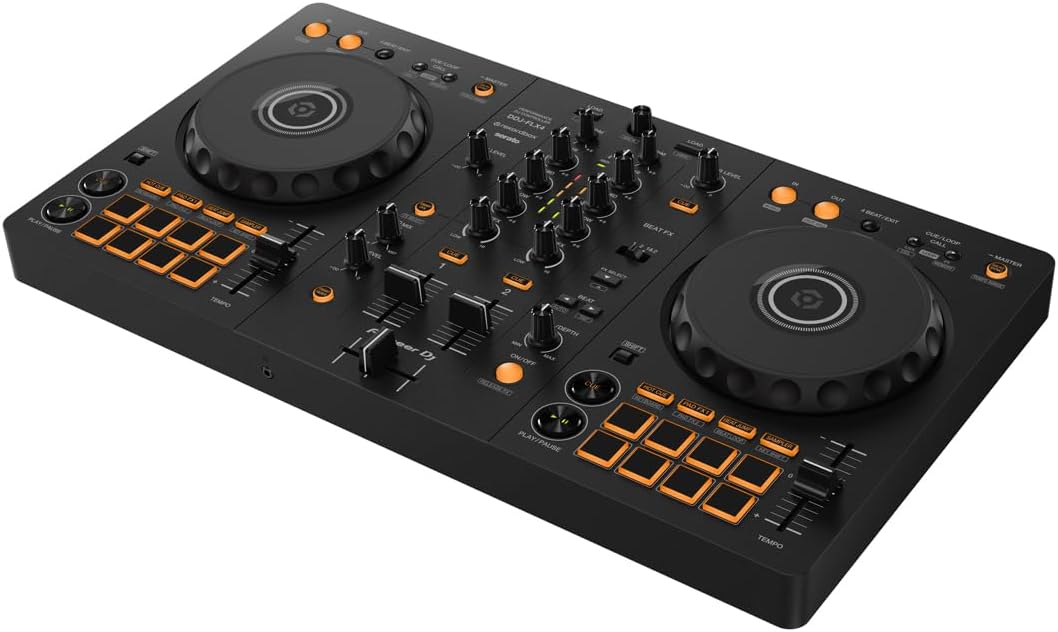
I remember the first time I tried to use a loop on my old Numark DJ2GO2 Touch. I hit the button, the track kept playing, and I panicked because I didn't know how to turn it off. I ended up slamming the fader down and staring at the crowd like a deer in headlights. The FLX4 is a different story. The loop controls are right there on the performance pads, and the layout is crisp and functional.
The thing that threw me a curve was the headphone volume knob, but that's a different story. For loops, the key is understanding that you are not just repeating a section; you are building tension. I usually set a 4-beat loop on a vocal hook about 16 bars before a drop, and I let it ride.
It gives me time to queue up the next track, adjust the EQ, and actually breathe. It's not about showing off; it's about creating space in the mix.
The Sample Pads Are Where It Gets Fun
On the FLX4, you have eight performance pads that can trigger samples. I loaded a gazillion sound effects into a playlist once, and I found that a simple riser or a vocal chop works way better than a meme sound.
The pads are velocity-sensitive, but the mono-color orange pads are my biggest gripe. In a dark room with any lighting, they are hard to see.
I've missed cues because I couldn't tell which pad was which. I get it, RGB pads cost more, but I wish Pioneer had found a way to make them more visible.
To use them, you hit the "Sampler" button above the pads. You have to load your samples into the software first. In Rekordbox, it's a drag-and-drop process. Once they are in there, you just hit a pad to trigger it.
The trick is to not overdo it. I use one or two samples per song, usually a snare roll or a vocal stab, and I keep them short.
A 1-second sample holds way more impact than a 5-second clip that drags on.
The REV-1 Does Scratch Loops Better
I borrowed a friend's REV-1 for a week because I was curious about the scratch layout. The paddle FX are much better than the toggle switch on the FLX4. The FX workflow on the FLX4 requires toggling a switch between decks, and it's just not as smooth.
When you're in the middle of a transition and you need to switch FX, you don't want to be hunting for a toggle switch.
The REV-1's paddles are right there, and you can slam them up and down without looking.
However, the REV-1 is not the all-rounder that the FLX4 is. It's designed for a specific style of DJing. If you're into scratching, it's worth a serious look. But if you want to play house or techno, the club-style layout on the FLX4 builds the right muscle memory. I took a whack at scratching on the REV-1, and I was terrible at it. That's on me, not the gear.
The Numark Mixtrack Platinum FX Has a Better Workflow for Beginners
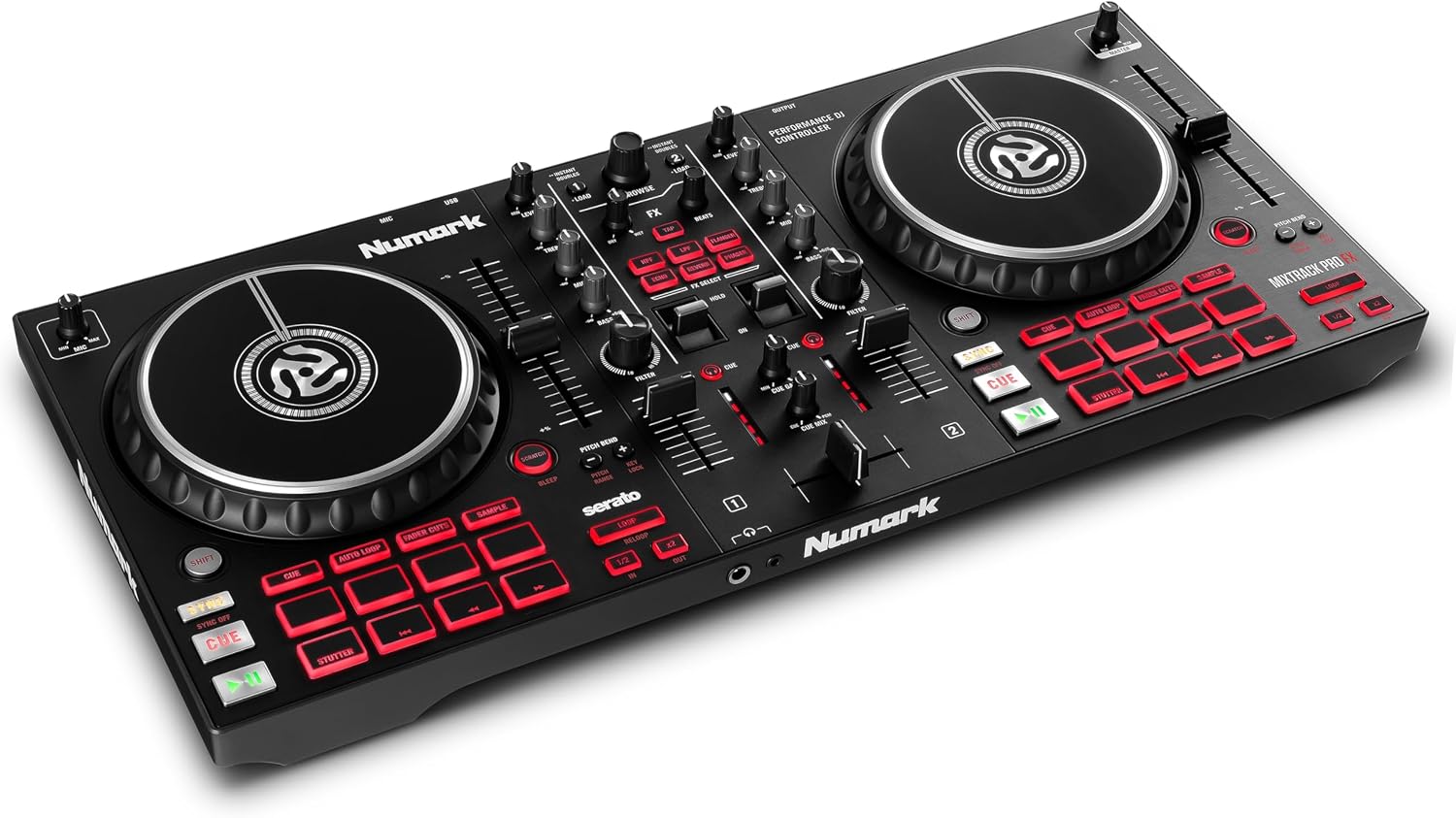
If you are a Serato loyalist, the Numark Mixtrack Platinum FX might be the better fit. The paddle-style FX are much better than the toggle switch on the FLX4. I tested this unit for a few hours at a friend's house, and the layout felt intuitive. The loop controls are also on the pads, but the software integration with Serato is smoother than the FLX4's Lite version.
The problem is the software unlock tiers. The FLX4 unlocks Rekordbox fully but only gives you Serato Lite. The Mixtrack Platinum FX is the opposite; it unlocks Serato DJ Pro fully but only gives you Rekordbox Lite.
I spent hours troubleshooting Serato with the FLX4, got it working once, and never again. Switch to Rekordbox and everything works.
Get Rekordbox if you want to use the FLX4. That's not a workaround; that's the answer.
The Smart Fader Is a Feature and a Disappointment
The Smart Fader on the FLX4 is supposed to help with transitions. On Rekordbox, it's genuinely helpful for beginners. It handles BPM matching automatically, and it makes you feel like a genius even when you're just messing around. On Serato, it's weak, just echo, not the BPM matching that Rekordbox does. It's a letdown.
I used the Smart Fader for the first month I owned the controller. After that, I turned it off and started doing manual transitions. It's a great learning tool, but you don't want to rely on it. The same controller, the same feature, completely different experiences depending on software.
The Upgrade Path Is Real
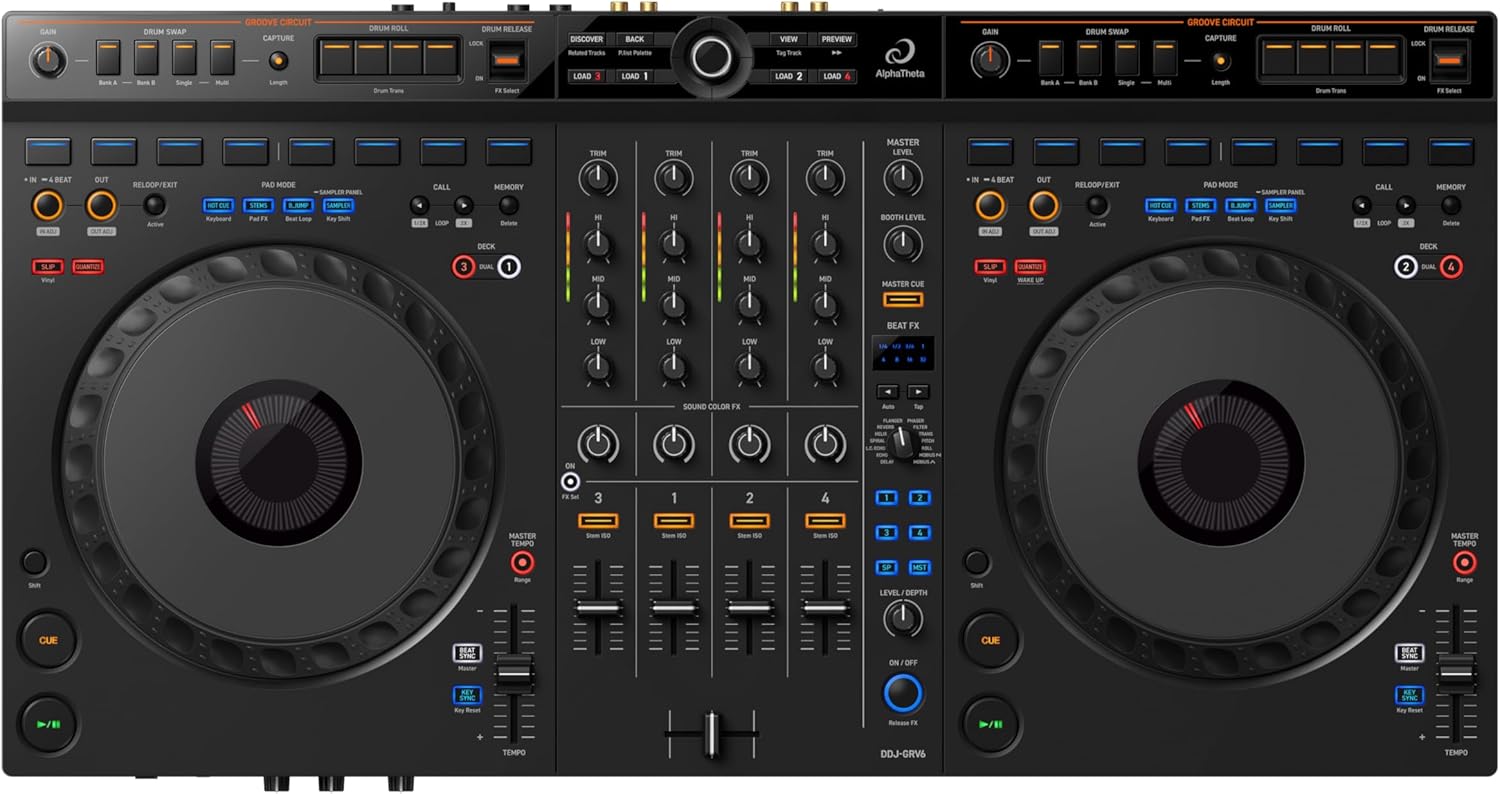
I've seen the progression: start on a DDJ-200 or a Numark DJ2GO2 Touch, outgrow it in a year, and step up to the FLX4. Then, when you're ready for something bigger, you're eyeing the FLX10 or the GRV6.
The GRV6 is a 4-channel beast, but it's a bit too heavy to move around. The FLX10 is the aspirational upgrade.
But for most people, the FLX4 is where you should start and where you'll stay for a while.
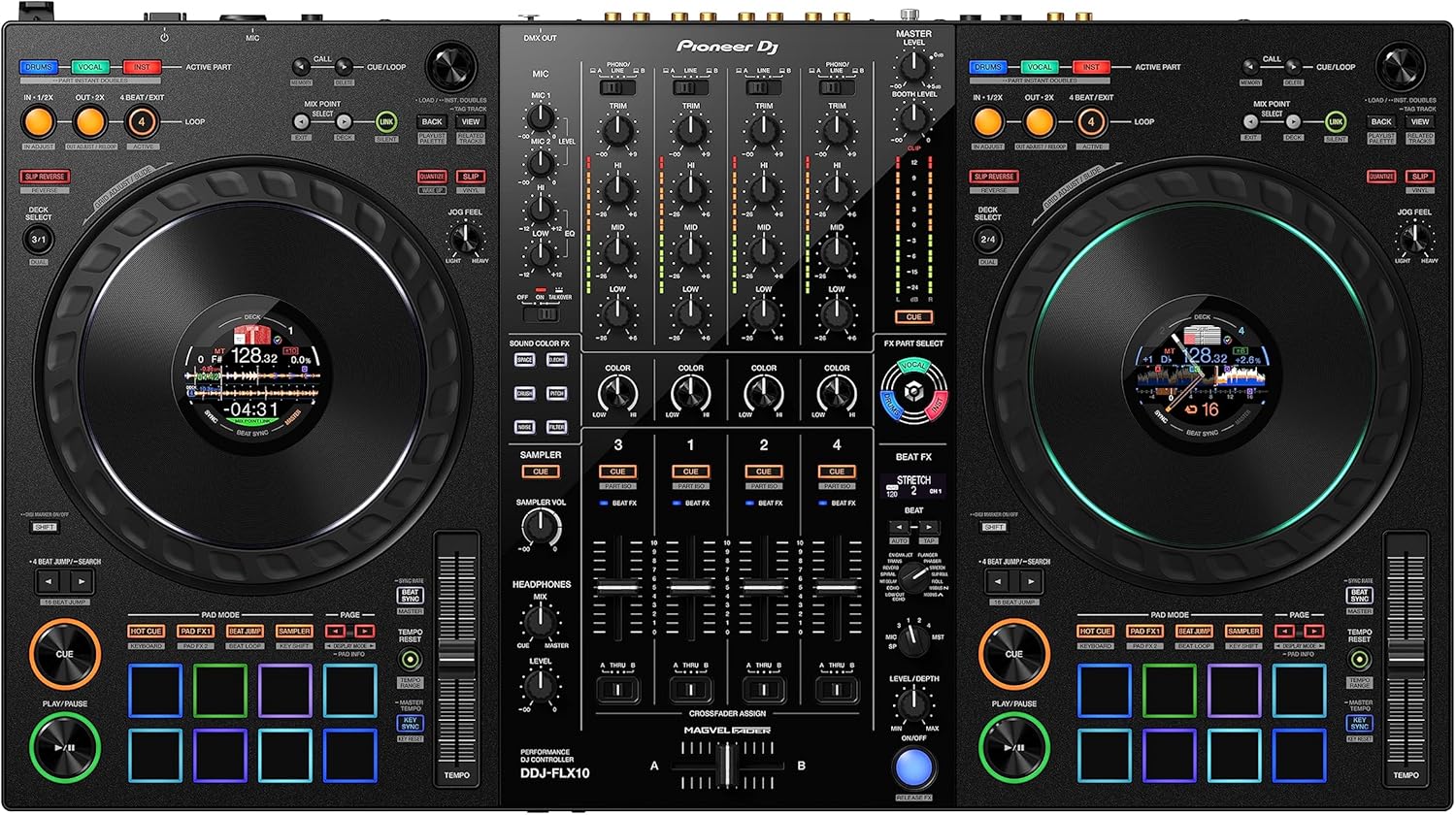
I don't track prices day to day, so I won't pretend to know next week's, but the FLX4 at ~$299 is ~$0.71 per day if you use it daily for a year. That's cheaper than a coffee habit, and it won't make you jittery. The FLX10 is over ~$1,000, and that's a serious investment. If you're just starting, don't buy the expensive gear. Start with what lets you practice every night, not what looks impressive.
How to Actually Practice Loops and Samples
The best way to learn is to load a gazillion songs into a playlist and just let it run. Pick a track, find a section you like, and set a loop. Try to mix out of that loop into the next track. Then try to mix in a sample. Do this for an hour a day, and you'll get the hang of it.
My dog Biscuit, a 60-pound lab mix who's deaf in one ear and has zero respect for cables, has slept on this controller for months. It's built solid. If it can survive her, it can survive you. The FLX4 is the golden standard for a reason, but it's not a professional deck by any means.
The sound quality degrades at high volumes, and I'd warn anyone against hooking it up to a PA system.
Keep it for bedroom mixing and small house parties.
The Bottom Line
Loops and samples are not magic buttons. They are tools that take practice. The FLX4 is a handsome piece of gear that builds the right habits, but you have to put in the hours. If you're a Serato loyalist, look at the Mixtrack Platinum FX.
If you're into scratching, look at the REV-1. But if you want the golden standard that works out of the box with Rekordbox, get the FLX4.
Just know that you'll spend twenty minutes wondering why you can't hear anything through your headphones, and then you'll find the headphone volume knob and feel stupid.
I've been there.