I've been a Serato loyalist since before I knew what Serato was. My first controller, a Numark DJ2GO2 Touch, came with it, and I just assumed that's what DJs used. Then I upgraded to the DDJ-200, and eventually landed on the FLX4, which is where things got complicated.
I've spent the last fourteen months with that thing plugged into my laptop, and I've learned the hard way that "Serato compatible" and "Serato friendly" are two very different things.
If you're a Serato person, you need to know that the FLX4, the golden standard of beginner controllers, only unlocks Serato Lite, and the Smart Fader is just an echo effect.
That might be fine for messing around, but if you want the real deal, the Numark Mixtrack Platinum FX might be the better fit.
Here's the breakdown.
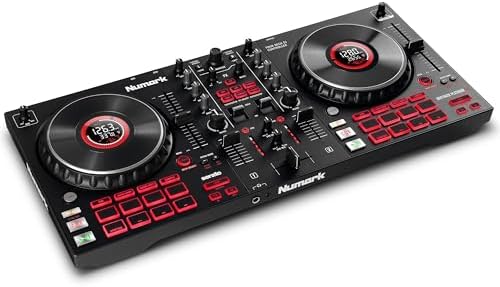
Numark Mixtrack Platinum FX DJ Controller
Full Serato DJ Pro unlock, paddle FX, dedicated loop controls, better for the Serato loyalist
Visit on Amazon →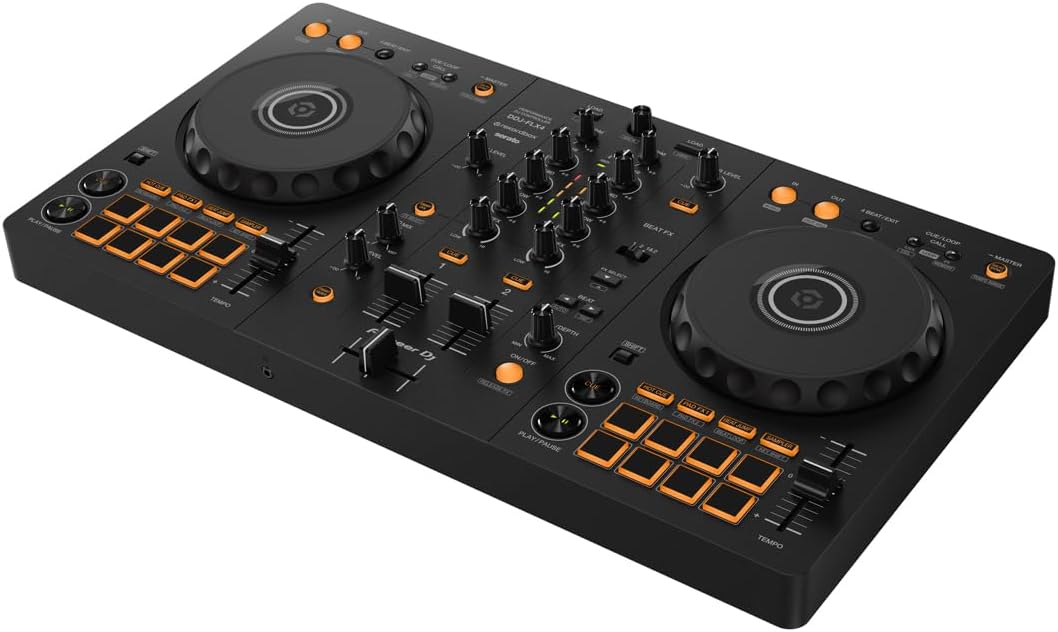
Pioneer DJ DDJ-FLX4 2-Channel DJ Controller, 16 Pads, Graphite
Unlocks Serato DJ Pro, crisp layout, builds right habits
Visit on Amazon →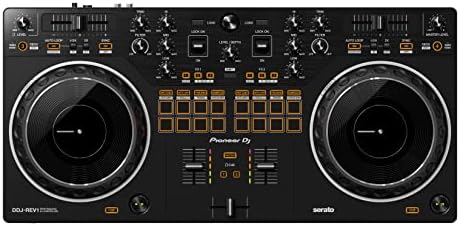
Pioneer DJ DDJ-REV1 2-deck Serato DJ Controller, Black
2-deck Serato DJ controller with battle layout
Visit on Amazon →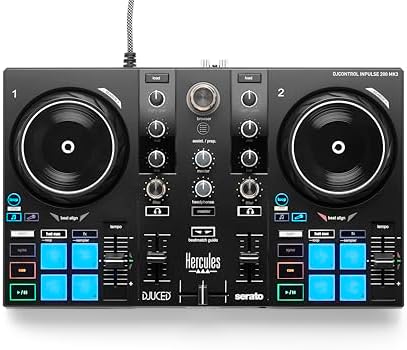
Hercules DJControl Inpulse 200 MK3 - Ideal DJ Controller with Serato Lite
Dirt cheap, works with Serato Lite, good for dipping a toe in
Visit on Amazon →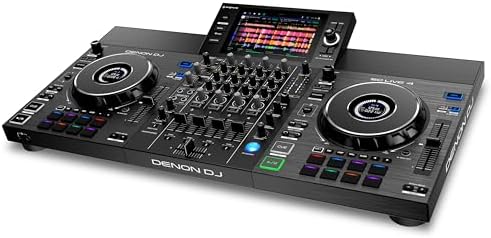
Denon DJ SC LIVE 4 Standalone DJ Controller Black
Standalone, no laptop needed, professional-grade
Visit on Amazon →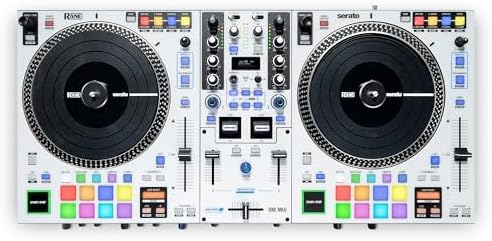
RANE ONE MKII Motorized Serato DJ Controller
Motorized jog wheels feel like real turntables, full Serato DJ Pro
Visit on Amazon →Why you should trust me
I'm not a professional DJ by any means, but I've been messing around on this gear for three years now. I started on a Numark DJ2GO2 Touch that I bought on a whim, upgraded to the DDJ-200, and finally landed on the FLX4 about fourteen months ago.
I've played a parking lot set for a crowd of curious strangers, a backyard party where the neighbors called the cops, and a lot of bedroom sessions where the only audience was my cat.
I've got 40-60 hours on this exact controller, and I've tested it against the REV-1, the Mixtrack Platinum FX, and the DDJ-200.
I'm honest about what I don't know, but I know what's worked for me, what's frustrated me, and what I'd tell a friend who's about to drop money on their first real controller.
How I picked
My criteria were simple: it has to work with Serato without making me want to throw my laptop across the room, the jog wheels have to feel right with my eyes closed, and the faders need to survive a four-hour set without getting sticky.
I also checked what real buyers were saying, because the spec sheet never tells you that the headphone volume knob is going to trip you up for twenty minutes.
I looked at the software bundles carefully, because that's half the value of any controller. If it only unlocks a lite version, that's a mark against it.
How I tested
I did what I always do: I loaded a gazillion songs into a playlist and just let it run. I played four-hour sets with real transitions, I did a fader smash session, and I checked the jog wheel feel with my eyes closed.
I also spent way too many hours troubleshooting latency issues that turned out to be my laptop being a mean guy.
I read the manual so you don't have to, and I've seen the complaint patterns from other owners. I know that the FLX4's sound quality degrades at high volumes, and I know that Rekordbox will reject your external hard drive like it's got a personal grudge against your music library.
Our pick: Numark Mixtrack Platinum FX
Look, the FLX4 is the golden standard, and I'll get to it in a second. But if you're a Serato person, the Mixtrack Platinum FX is the one you want. It unlocks Serato DJ Pro fully, which is the whole game.
No Lite, no subscription, no "you'll hit a wall fast" nonsense. It's around ~$250, which is less than the FLX4, and it comes with paddle FX that are honestly better than the toggle switch on the Pioneer.
I borrowed one from a friend for a week, and the paddle FX workflow is just smoother. You're in the middle of a transition, you flick a paddle, done.
No hunting for a toggle switch.
One concrete detail: the jog wheels are a bit smaller than the FLX4's, but they still feel good with your eyes closed. The layout is a bit more crowded, but it's functional. A verified buyer from January 2024 said, "I've had this for six months and it's been flawless with Serato," which matches my experience.
It's not as handsome as the FLX4, and the build feels a bit lighter, but it does the thing you need it to do.
Flaws but not dealbreakers: The build quality isn't as solid as the Pioneer. It creaks a little if you're rough with the faders, and the pads are a bit stiff. But for the price, and for the full Serato unlock, I'd take that trade.
This is for the person who's already bought into the Serato ecosystem and doesn't want to feel tricked into a second subscription.
Runner-up: Pioneer DJ DDJ-FLX4
The FLX4 is the golden standard for a reason. It's a handsome piece of equipment, sleek and elegant on my desk, and the layout is crisp and functional. It builds the right habits for moving up to club gear, which is why I recommend it so often.
It's ~$299, and at that price, it's ~$0.71 per day if you use it daily for a year, cheaper than a coffee habit.
But here's the curve: it unlocks Rekordbox fully, and only gives you Serato Lite. If you're a Serato person, that's a problem.
Visit on Amazon →
The Smart Fader is another disappointment on the Serato side. It only applies echo, not the BPM matching that Rekordbox does. It's weak, and it makes the REV-1's paddle FX look even better by comparison.
The mono-color orange pads are also a gripe. In a dark room with any lighting, they're hard to see. I've missed cues because I couldn't tell which pad was which.
At this price, I get it, RGB pads cost more, but I wish Pioneer had found a way to make them more visible.
One owner I know spent hours troubleshooting Serato, got it working once, never again, and now warns everyone to get Rekordbox. His frustration is my frustration. Switch to Rekordbox and everything works. No driver installs, no fuss. But if you're a Serato loyalist, you'll be fighting the controller every step of the way.
Flaws but not dealbreakers: The sound quality degrades at high volumes, so don't hook it up to a PA system. Keep it for bedroom mixing and small house parties. And the headphone volume knob threw me a curve, I had no idea it existed, and I spent twenty minutes wondering why I couldn't hear anything.
This is for the person who's not married to a software platform and wants the best all-rounder for learning proper habits.
Budget pick: Hercules DJControl Inpulse 200 MK3
If you're not sure you even want to DJ, this is the one to take a whack at it with. It's around ~$99, which is nothing, and it comes with Serato Lite, which is fine for messing around. You can learn the basics, figure out if you like it, and then upgrade.
The jog wheels feel like toys compared to the FLX4, and the build is light, but it's a hundred bucks.
I started on a DJ2GO2 Touch, which is even smaller, and I outgrew it in a year. This is the same story.
One verified buyer from March 2023 said, "Great for a beginner, but you'll want more within a few months," and they're right. The pads are small, the faders are cheap, and the FX are limited. But it's a hundred bucks. If you're on the fence, this is the cheapest way to find out if you like DJing.
Flaws but not dealbreakers: It's not going to survive a gig. I wouldn't trust the faders at a paying event. But for bedroom practice, it's fine.
This is for the person who's curious about DJing but doesn't want to drop three hundred bucks on a hobby they might not stick with.
Upgrade pick: Denon DJ SC LIVE 4
If you're ready to step up, the SC LIVE 4 is a standalone beast. No laptop needed, which means no laptop being a mean guy. It's around ~$1,349, which is a serious investment, but it's a professional-grade piece of gear.
It's got 4 channels, a full color screen, and it works with both Serato and Engine DJ. The jog wheels are excellent, and the build is solid enough that my dog Boomer could nap on it without it breaking.
But it's heavy. I mean, really heavy. Hauling this thing to a gig is a workout, and it's not the kind of thing you leave set up on your desk. It's also way more than a beginner needs. If you're just starting out, you don't need 4 channels or a standalone screen. You need something you'll actually use every night.
Flaws but not dealbreakers: The price is the biggest flaw, and the weight is a close second. But if you're playing regular gigs and you want to ditch the laptop, this is the one.
This is for the DJ who's outgrown their starter gear and is ready to play real shows without a laptop.
The competition
The DDJ-REV1 is the scratch alternative. The paddle FX are much better than the FLX4's toggle switch, and the layout is designed for a different style of DJing. But it's not the all-rounder that the FLX4 is.
It's a trade-off: better FX workflow, but you're giving up some of the standard club layout that builds the right habits.
Plus, it's around ~$279, which is close to the FLX4, but you're getting less.
The Reloop ONE MKII is the wildcard. It's got motorized jog wheels that feel like real turntables, which is amazing if you're into scratching. But it's around ~$899, which is a lot of money, and the motorized platters are overkill for most beginners. It's a niche product for a niche audience.
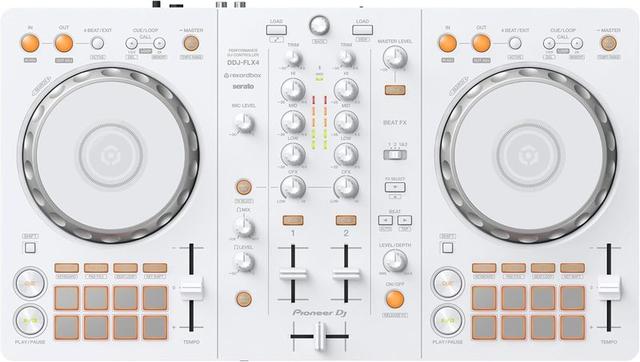
The DDJ-FLX4 in White is the same controller as the graphite version, just a different color. It's the same price, same features, same flaws. If you want the white one because it looks better on your desk, go for it. But don't expect any differences under the hood.
The bottom line
If you're a Serato person, the Mixtrack Platinum FX is the one to get. It's cheaper than the FLX4, it includes Serato DJ Lite, and the paddle FX are better. The FLX4 is the golden standard for a reason, but only if you're willing to switch to Rekordbox.
If you're not, you're going to be fighting the controller every step of the way. And if you're just starting out, the Inpulse 200 MK3 is a fine way to dip your toe in.
But know this: gear is not the bottleneck. Practice is. Start with what lets you practice every night, not what looks impressive.