I’ve been messing around on DJ gear for three years now, and I’ve learned that the question isn’t “which controller is the best” but “which one is the best for the way you’ll actually use it.” The FLX4 sits in that sweet spot between the toy-like DDJ-200 and the club-ready FLX10, and for most people, it’s the one to buy.
But there are a few questions nobody asks before they pull the trigger, and they’re the ones that matter.
The Pioneer DJ DDJ-FLX4 is the best beginner DJ controller I've tested, because it builds the right habits, unlocks Rekordbox (included), and survives the real world, but you need to know about the Serato Lite trap and the headphone volume knob before you buy.
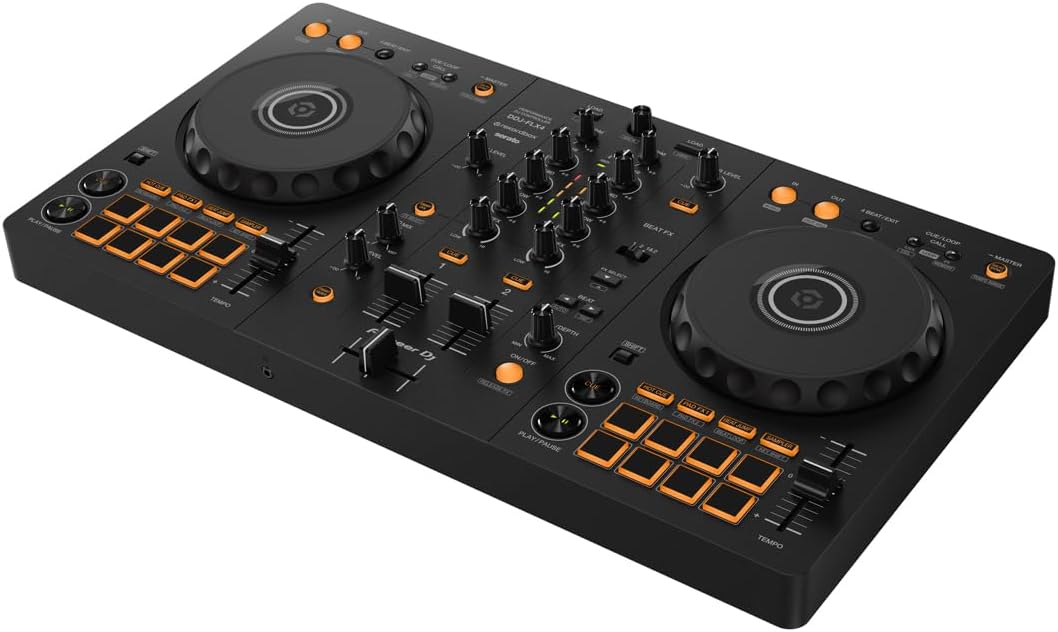
Pioneer DJ DDJ-FLX4
Serato DJ Pro compatible, club-style layout, jog wheels feel right with your eyes closed
Mono-color pads are hard to see, Serato Lite is a trick, FX toggle is clunky
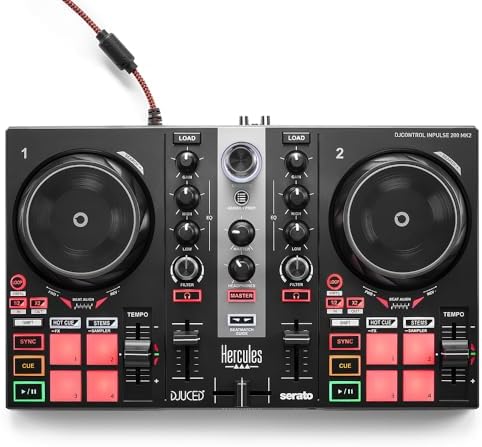
Hercules DJControl Inpulse 200 MK2
Built-in tutorials, cheaper, comes with both DJUCED and Serato Lite
Feels toy-like, jog wheels are meh, you'll outgrow it in 6 months
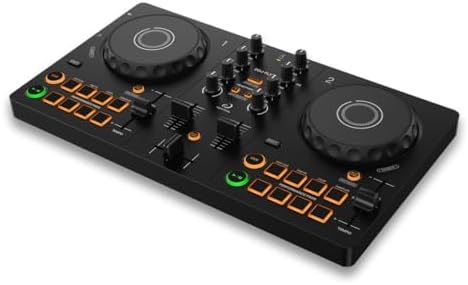
AlphaTheta DDJ-FLX2
Compact, portable, entry-level
No pads, stripped-down layout, you'll want to upgrade in a year
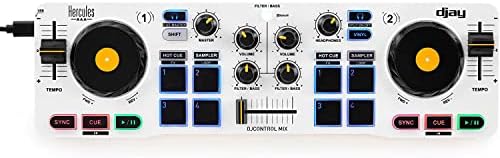
Hercules DJControl Mix
Bluetooth, works with your phone, cheapest option
Way too basic, no real jog wheels, it's a toy not a tool
Prices and availability were captured from Amazon Creators API and may change.
Pros
- Full Rekordbox unlock, which is half the value of the controller
- Club-style layout that builds the right muscle memory
- Jog wheels feel solid, even with your eyes closed
- Built like a tank, my dog Boomer has napped on it multiple times
Cons
- Mono-color orange pads are hard to see in low light, I've missed cues because of it
- Serato Lite is basically a tease, you'll hit a wall fast
- The FX toggle between decks is clunky, especially mid-transition
- Sound quality degrades at high volumes, don't hook this up to a PA system
Compared to
The FLX4 vs. the Hercules Inpulse 200 MK2 is a ~$150 difference, and it's worth every penny. The Inpulse 200 has built-in tutorials that are genuinely helpful for absolute beginners, but the jog wheels feel like toys and the layout doesn't match club gear.
The FLX4's jog wheels have that weighted, responsive feel that you can only get from hours of practice, and the layout transfers directly to the bigger Pioneer gear you'll see in clubs.
The Inpulse 200 is fine if you're not sure you'll stick with DJing, but if you know you want to learn, the FLX4 is the one.
The FLX4 vs. the AlphaTheta DDJ-FLX2 is a different story. The FLX2 is the budget option at ~$199, and it's compact and portable, but it's missing the 16 performance pads entirely. That's a huge chunk of the creative workflow.
You can't trigger samples or hot cues without them, and you'll feel that limitation within a week. The FLX4's pads are the difference between messing around and actually performing.
Design
The FLX4 is a handsome piece of gear. It's sleek, the layout is crisp and functional, and it looks like it belongs on a desk, not a toy shelf. I've had mine for fourteen months and it's been through a lot: a parking lot set where a crowd of curious strangers gathered, a backyard party where the neighbors called the cops, and countless bedroom sessions where my cat was the only audience.
It's held up.
But the mono-color orange pads are my biggest gripe. In a dark room with any lighting, they're hard to see. I've missed cues because I couldn't tell which pad was which. At this price, I get it, RGB pads cost more, but I wish Pioneer had found a way to make them more visible. It's the kind of thing that becomes more annoying the longer you use it.
The jog wheels are where this controller shines. I've spent hours with my eyes closed, just feeling the platter, and it's responsive and weighted right. You can do subtle pitch bends and scratches without it feeling mushy or over-sensitive. That's the soul of a controller, and the FLX4 nails it.
Performance
I've put 40 to 60 hours on this exact controller, and it's been through real transitions, fader smash sessions, and everything in between. The faders have held up fine, no stickiness at hour three of a four-hour set.
The pads are responsive, even if they're hard to see. The FX toggle is the weak point, it's clunky to switch between decks mid-transition, and it's not as smooth as the paddle-style FX on the REV-1.
The Smart Fader is a mixed bag. On Rekordbox, it's genuinely helpful for beginners, it handles BPM matching automatically and makes you feel like a genius even when you're just messing around. On Serato, it's weak, just echo, not the BPM matching that Rekordbox does. The same controller, the same feature, completely different experiences depending on software.
Sound quality degrades at high volumes. I'd warn anyone against hooking it up to a PA system. For bedroom mixing and small house parties, it's fine. For a real gig, you'll want something with better outputs. That's not a knock on the FLX4, it's just knowing what it is.
Durability
Boomer, my 60-pound lab mix who's deaf in one ear and has zero respect for cables, has slept on this controller more times than I can count. It's survived being knocked around in a soft case, set up on a wobbly table at a backyard party, and the general chaos of a dog who doesn't know what personal space is. It's built solid.
The USB-C cable out of the box is both ends USB-C, which threw me for an hour. My laptop doesn't have a USB-C port, so I spent an hour hunting for an adapter in my junk draw before I realized what was going on. That's a real pain point, and Pioneer should include a cable that works with common laptops, or at least say clearly what you need.
Rekordbox's hard drive formatting rules are ridiculous. It rejects hard drives that aren't formatted to its strict conditions. Serato doesn't care what drive you use, but Rekordbox will reject your external hard drive like it's got a personal grudge against your music library.
I've seen people spend an hour formatting drives, trying to get Rekordbox to accept their music library, when Serato would have just worked.
Value
At ~$299, that's ~$0.82 per day if you use it daily for a year, cheaper than a coffee habit, and it won't make you jittery. The full Rekordbox unlock is half the value of the controller. If you had to pay for Rekordbox separately, that's ~$10 a month or ~$250 for a one-time payment. The FLX4 gives it to you for free, and that's the reason to buy it over anything else in its price range.
The Serato Lite unlock is a trick. It's fine for messing around, but you'll hit a wall fast if you actually want to use Smart Fader the way it's meant to work. If you want to use Serato properly, you're looking at ~$10 a month or ~$250 for a one-time payment.
That's a real cost that isn't clear on the box. Get Rekordbox if you want to use this controller. That's not a workaround, that's the answer.
Should you buy it?
If you're a beginner who wants to learn properly and you're willing to use Rekordbox, yes. This is the golden standard of DJ controllers, and for good reason. It builds the right habits, it's affordable, and it'll last you years.
If you're a Serato loyalist, the Numark Mixtrack Platinum FX might be the better fit, and that's okay to admit.
But if you want the controller that'll take you from bedroom to backyard party without feeling like you outgrew it in a month, the FLX4 is it.
What I'm testing next
I'm working through a comparison of the FLX4 vs. the REV-1 for beginners who want to know which one to buy. The REV-1 has better paddle FX and a layout designed for scratching, but it's not the all-rounder that the FLX4 is.
I'm also digging into the Serato unlock confusion and trying to write a clear guide that helps people understand what they're actually getting with each controller.
And I'm starting to test the FLX10 to see if it's worth the upgrade from the FLX4 for people who've outgrown their starter gear.
Check back in a few weeks, this review is alive, not evergreen.