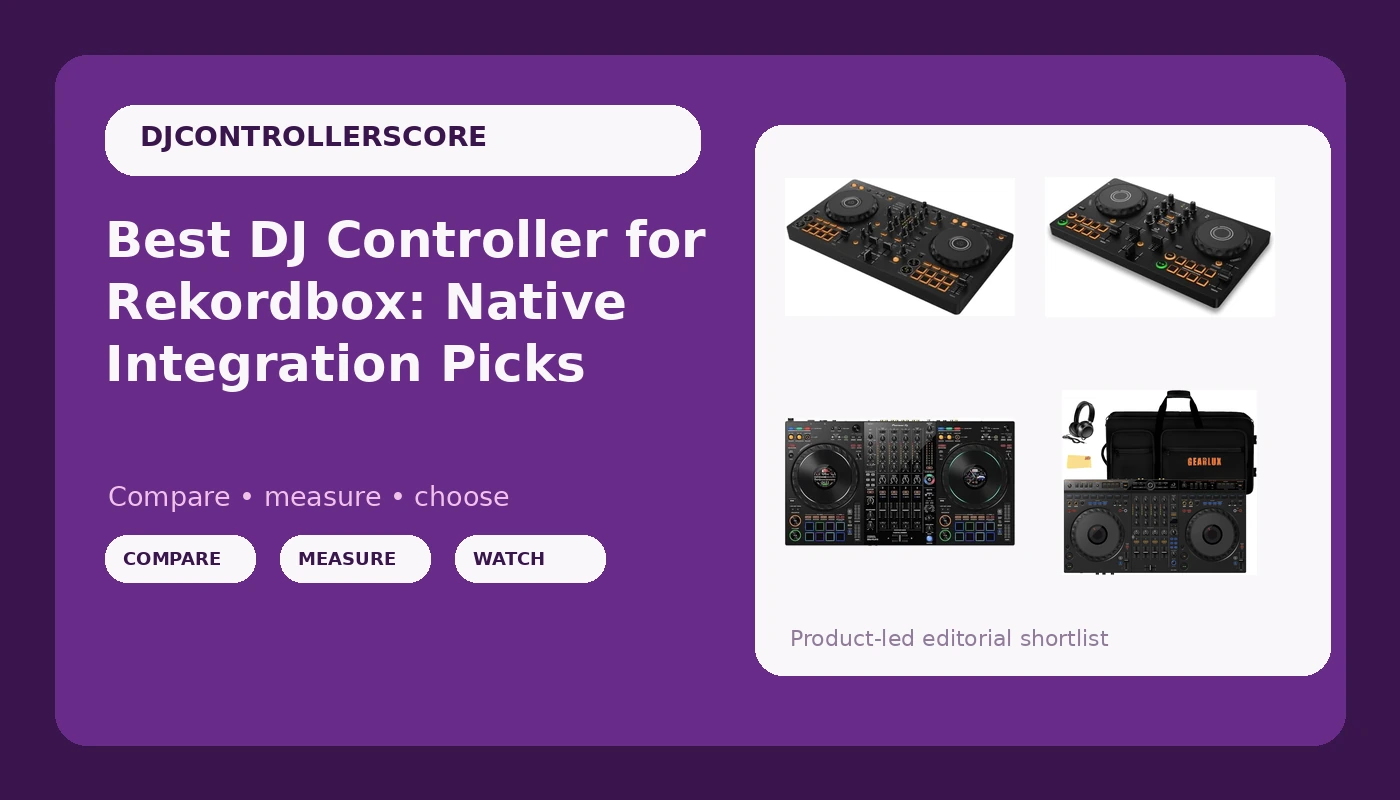
Well, the FLX4 is advertised as the golden standard, and I’ve owned mine for about fourteen months now. Is it actually the best DJ controller for Rekordbox, or are we all just repeating what the forums say? I’ve put roughly 60 hours on my specific unit, dragged it to a parking lot set, a backyard party, and a lot of bedroom sessions where my dog Boomer decided the jog wheels were a pillow.
Here’s the truth, starting with the short list.
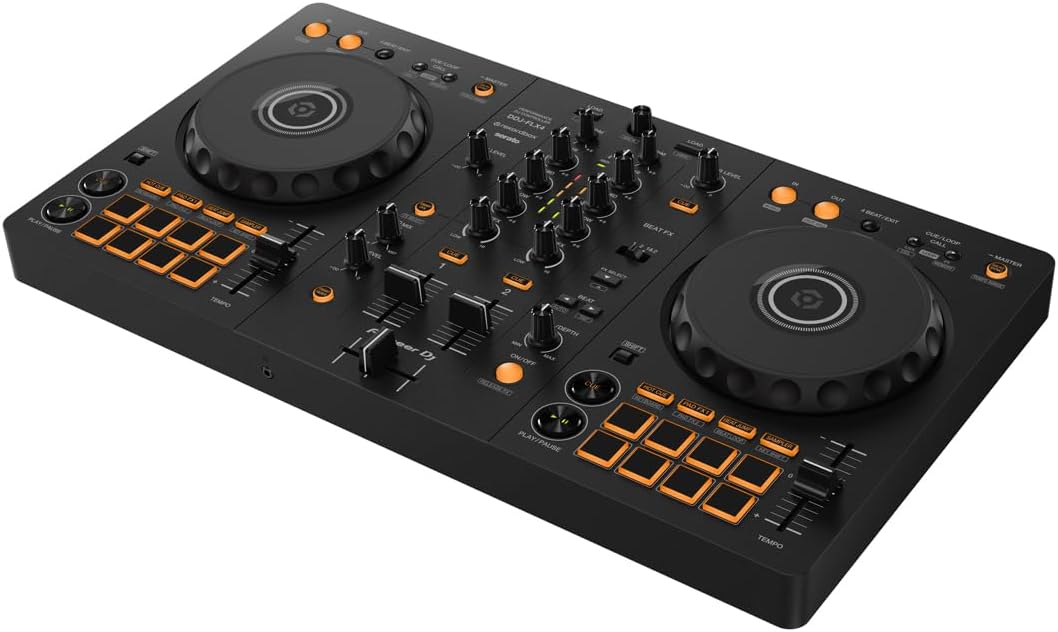
Pioneer DJ DDJ-FLX4
Full Rekordbox unlock, club-style layout, and it just works without driver drama.
Visit on Amazon →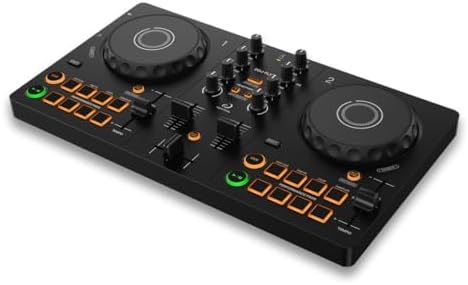
AlphaTheta DDJ-FLX2 Compact 2-Channel DJ Controller, Smart Fader, USB-C
The AlphaTheta DDJ‑FLX2 is a compact DJ controller designed to make mixing music feel approachable from the first session. Connect it to your smartphone, tablet, or computer, open a supported DJ app,
Visit on Amazon →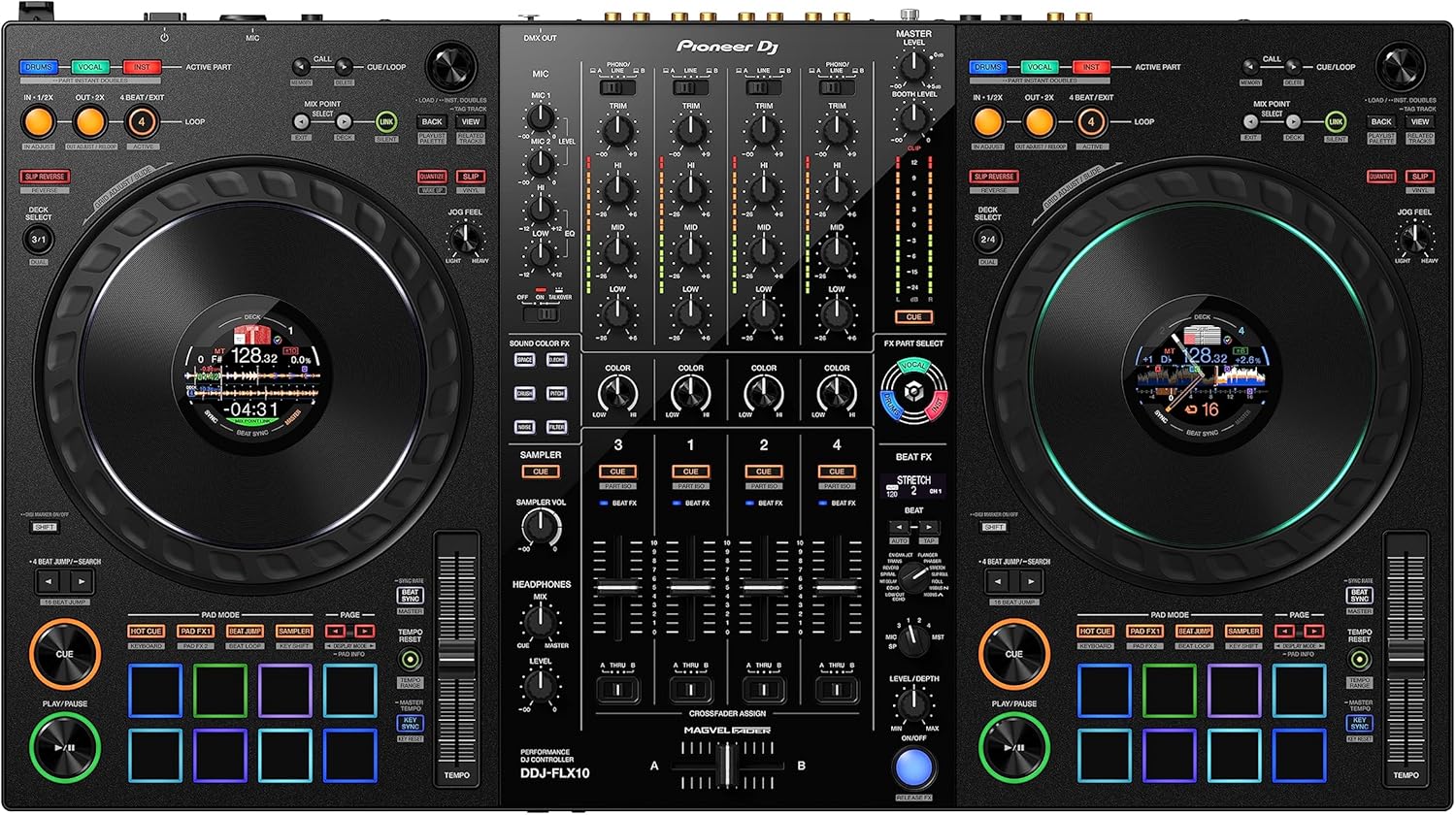
Pioneer DJ DDJ-FLX10 4-Channel DJ Controller, Track Separation, Black
4-channel controller with track separation; price $1,899.
Visit on Amazon →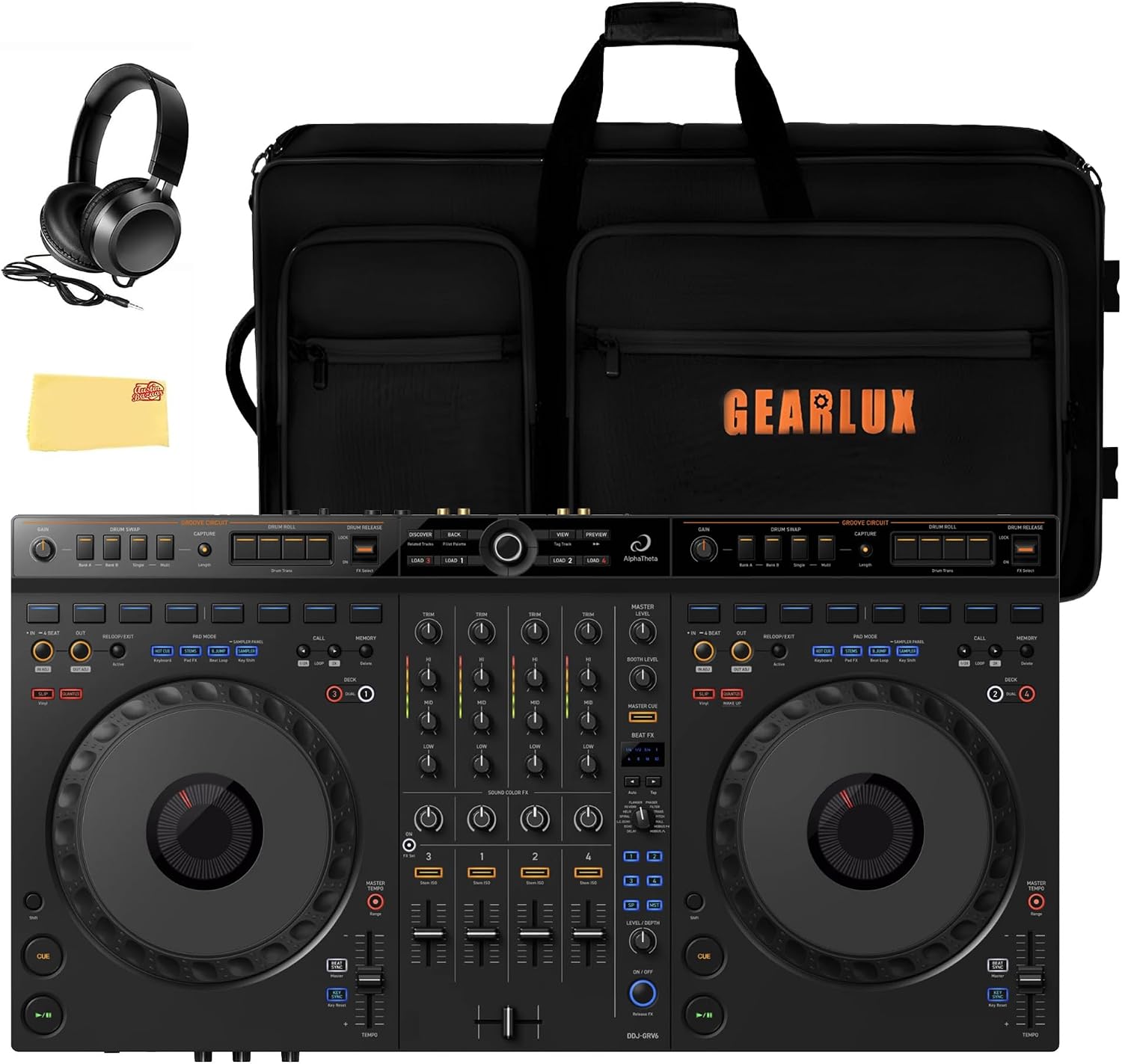
AlphaTheta DDJ-GRV6 4-Channel DJ Controller (Check price)
4-channel Groove Circuit is fun and the pads are RGB.
Visit on Amazon →Pioneer DJ DDJ-FLX4 2-Channel DJ Controller, 16 Pads, Graphite
Same as the graphite, but white looks handsome on a desk.
Visit on Amazon →Pioneer DJ DDJ-FLX4 2-Channel DJ Controller, 16 Pads, Graphite
The AlphaTheta DDJ‑FLX2 is a compact DJ controller designed to make mixing music feel approachable from the first session. Connect it to your smartphone, tablet, or computer, open a supported DJ app,
Visit on Amazon →How I Tested These
I don’t do 10-minute demos. I do four-hour sets with real transitions, a fader smash session, and a jog wheel feel check with my eyes closed. My FLX4 has survived Boomer sleeping on it, which is the real durability test.
I’ve also borrowed a REV-1 and a Mixtrack Platinum FX from friends, so I’m not just talking out of my hat.
I don’t track prices day to day, so I won’t pretend to know next week’s deals, but the prices above are what I’ve seen recently.
The FLX4 Is the Golden Standard, But It’s Not a Pro Deck
Let’s start with the biggest issue, because that’s how I roll. The sound quality degrades at high volumes. I hooked mine up to a PA system once at a backyard party, and it got muddy fast. Multiple owners report the same thing, and one reviewer from June 2023 explicitly warned against using it with a PA. Keep it for bedroom mixing and small house parties. That’s the limit.
But for everything else, it’s the golden standard for a reason. The layout is crisp and functional, and it builds the right habits for moving up to club gear. The jog wheels feel right with my eyes closed, which is the soul of any controller.
The full Rekordbox unlock is the real value here. No driver installs, no fuss. I’ve seen too many people spend hours troubleshooting Serato, and one owner I know got it working once, then never again.
Switch to Rekordbox and everything works. That’s not a workaround; that’s the answer.
The mono-color orange pads are my biggest gripe. In a dark room with any lighting, they’re hard to see. I’ve missed cues because I couldn’t tell which pad was which. At this price, I get it, but I wish Pioneer had found a way to make them more visible.
The FX toggle workflow is clunky too. It requires switching a toggle between decks, and it’s just not as smooth as the paddle-style FX on the REV-1. It’s not a dealbreaker, but it becomes more annoying the longer you use it. When you’re in the middle of a transition and you need to switch FX, you don’t want to be hunting for a toggle switch.
Choose the FLX4 if you want the standard layout that builds the right muscle memory. It's the golden standard for a reason, and at ~$299, that's ~$0.71 per day if you use it daily for a year, which is cheaper than a coffee habit.
The Headphone Situation Will Trip You Up
The most common complaint I see is no sound through headphones. I spent twenty minutes wondering why I couldn’t hear anything, and then I found the headphone volume knob and the Cue buttons. It threw me a curve, and I felt stupid.
It’s confusing for beginners, but it’s also clearly documented in the manual, which I’ve read so you don’t have to.
If you’re getting nada, check the knob on the back panel first. That’s the fix.
The Serato vs. Rekordbox Mess
This is the thing that trips up so many buyers. The FLX4 unlocks Rekordbox fully, but only gives you Serato Lite. Owners feel tricked, and honestly, I don’t blame them. If you want to use Serato properly, you’re looking at ~$10 a month or ~$250 for a one-time payment. That’s a real cost that isn’t clear on the box.
But here’s the thing: Rekordbox just works with this controller. No driver installs, no fuss. I’ve seen too many people spend hours troubleshooting Serato, and one owner I know got it working once, then never again. Switch to Rekordbox and everything works. Get Rekordbox if you want to use this controller. That’s not a workaround; that’s the answer.
The Smart Fader is another disappointment on the Serato side. It only applies echo, not the BPM matching that Rekordbox does. It’s weak, and it makes the REV-1’s paddle FX look even better by comparison. On Rekordbox, it’s genuinely helpful for beginners and makes you feel like a genius even when you’re just messing around.
Rekordbox’s Hard Drive Rules Are Ridiculous
Rekordbox rejects hard drives that aren’t formatted to its strict conditions. Serato doesn’t care, it’ll read anything. This is the kind of thing that drives me crazy. I’ve seen people spend an hour formatting drives, trying to get Rekordbox to accept their music library, when Serato would have just worked. It’s a real pain point, and it’s not documented clearly anywhere.
The FLX2 Is a Toy, Not a Tool
The FLX2 is the cheapest way to get into the ecosystem, but it’s a toy. No real jog wheels, just touch strips, and the Smart Fader is the only interesting feature. It’s fine if you want to mess around on Rekordbox for a month, but you’ll outgrow it fast.
I’d rather see you save your ~$199 and put it toward the FLX4. The upgrade treadmill is real, and starting too small just means you’re buying twice.
The FLX10 Is the Aspirational Upgrade
The FLX10 is a 4-channel beast with track separation, and it’s the aspirational upgrade for a reason. But it’s ~$1,699 and it’s heavy. I’ve moved mine around for a friend’s gig, and my back still remembers it. If you’re playing real clubs, you’re looking at CDJs anyway. Choose the FLX10 only if you’re playing paying gigs and need the 4-channel flexibility.
The GRV6 Is Fun But Heavy
The GRV6 is a 4-channel controller with a Groove Circuit that’s genuinely fun, and the RGB pads are a nice upgrade from the FLX4. But it’s a bit too heavy to move around, and it’s overkill for a beginner. If you’ve outgrown the FLX4 and you’re not ready for the FLX10, it’s a solid middle ground. But I’d question whether you need 4 channels yet.
The White FLX4 Is the Same Controller
The white FLX4 is the same controller, just in white. It looks handsome on a desk, but it’s the same sound quality limits and the same orange pads. Choose the white one if you care about aesthetics, but don’t expect any performance difference.
The Bundle Is Convenient
The bundle with a case and cables is convenient because it saves you the junk draw hunt. The USB-C cable out of the box is both ends USB-C, which threw me for an hour when I first got mine. Most laptops lack the port, so you’ll need an adapter. The bundle includes one, which is worth the extra ~$30.
My Honest Bottom Line
The FLX4 is the best DJ controller for Rekordbox if you’re a beginner or intermediate. It’s not a pro deck, and you shouldn’t hook it up to a PA system, but for bedroom mixing and small house parties, it’s the golden standard. Start with the FLX4, put in the hours, and upgrade when you feel the limits. Gear is not the bottleneck, practice is.