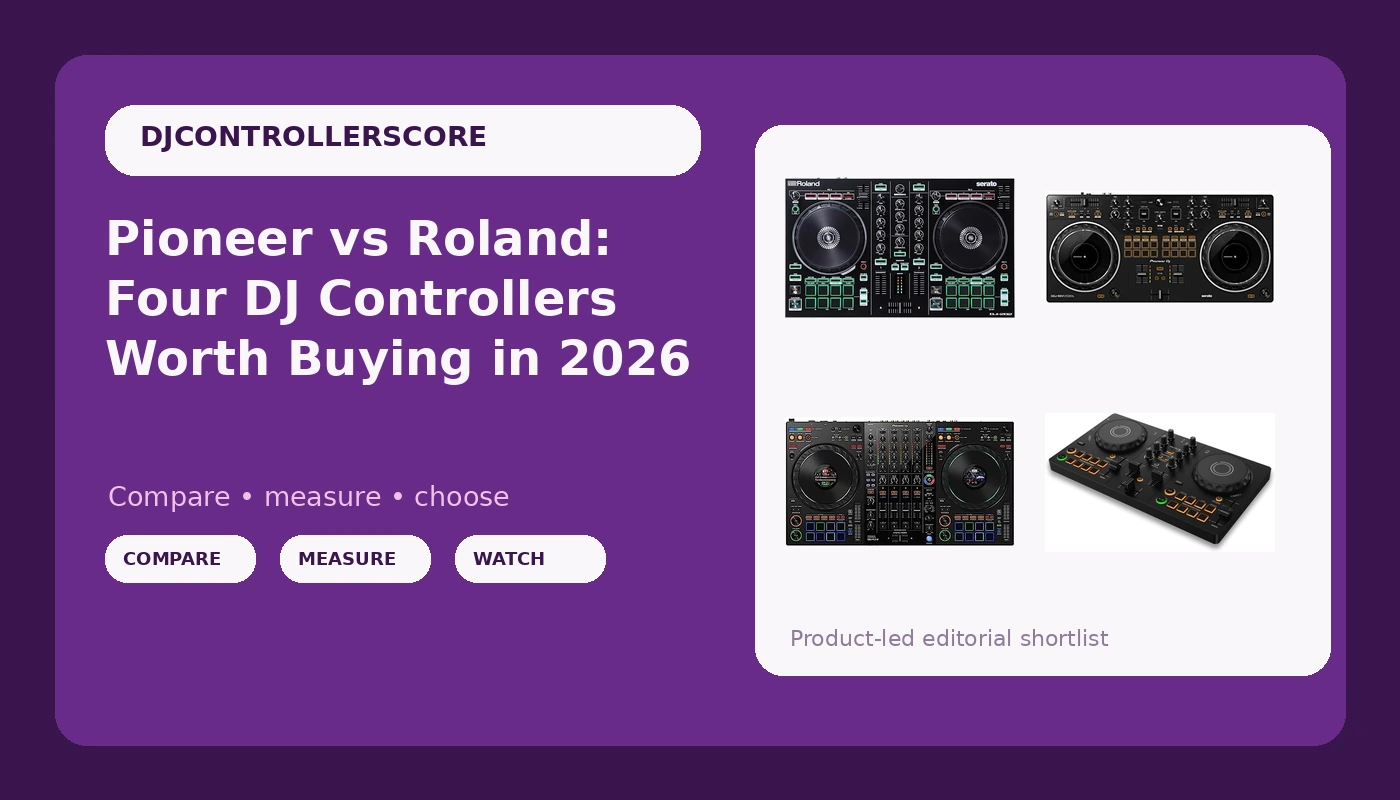
I've been behind a booth for eight years, five of those playing weddings where the gear gets loaded in at 4 p.m. and packed out at 1 a.m., and the same lesson keeps repeating: the best DJ controllers for beginners are almost never the ones with the loudest spec sheet. They're the ones that let you practice every night without fighting the hardware. The four controllers below cover the entire ladder, from the AlphaTheta DDJ-FLX2 at the entry point to the Pioneer DJ DDJ-FLX10 at the ceiling, with the Pioneer DJ DDJ-REV1 and the Roland DJ-202 filling the middle.
The short answer: the AlphaTheta DDJ-FLX2 is the right first controller for most people, the Pioneer DJ DDJ-REV1 is the right first controller if you want to scratch, and the DDJ-FLX10 is the one you buy when you're done pretending you'll upgrade later.
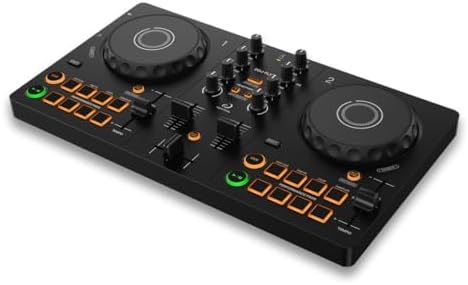
AlphaTheta DDJ-FLX2 Compact 2-Channel DJ Controller, Smart Fader, USB-C
Cheapest honest path to two real channels, USB-C, and Smart Fader for anyone who cannot beatmatch yet
Build and layout leave you no room to grow, so it becomes the controller you outgrow first
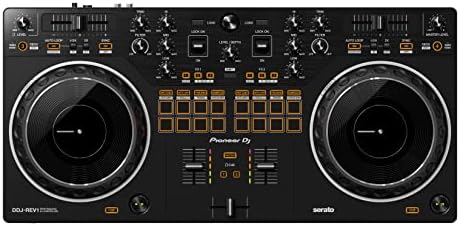
Pioneer DJ DDJ-REV1 2-deck Serato DJ Controller, Black
The REV layout puts tempo faders where scratch DJs actually want them, and Serato is the bundle
Serato's paid tiers are a real cost, and the layout makes casual mixing feel awkward at first
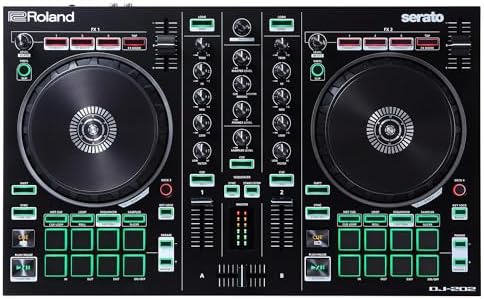
Roland DJ-202 Compact DJ Controller
Drum machine DNA gives you a sound no Pioneer in this group can copy
Smaller ecosystem, fewer people to trade tips with, weaker resale demand
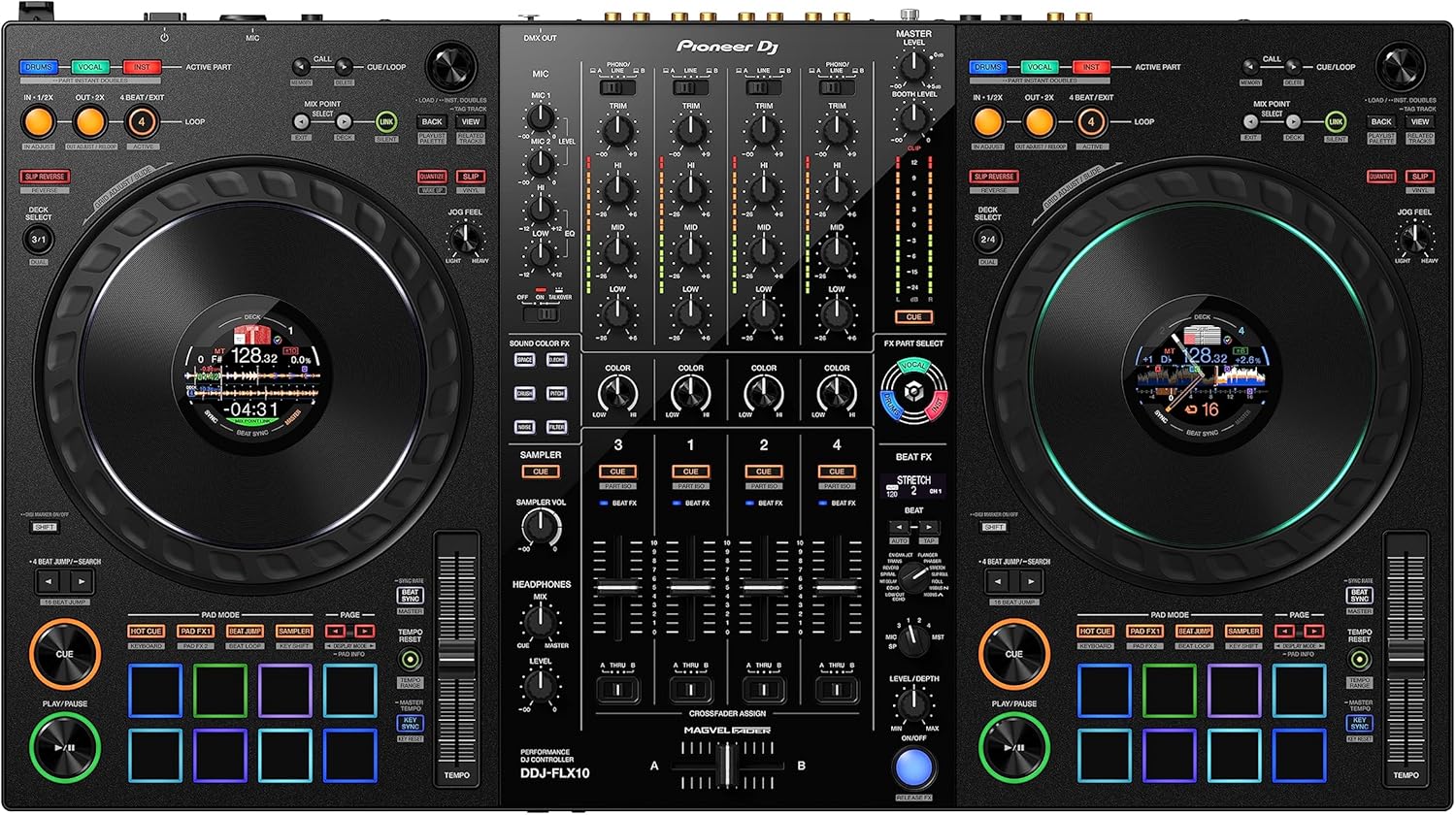
Pioneer DJ DDJ-FLX10 4-Channel DJ Controller, Track Separation, Black
Four channels, track separation, and the layout that matches what is actually in the booth
Costs more than most first cars, and none of that money teaches you transitions
Prices and availability were captured from Amazon Creators API and may change.
How I sort controllers before I recommend one
Every controller I put my name behind has to survive the same three questions, and none of them are about RGB lights.
The first is the marathon question. Can you play a four-hour set on it, from the reading-the-room hour at the start through the last three songs when the floor is either packed or empty? A controller that feels clever for 30 minutes in a store can feel like a punishment by hour three. If a unit cannot survive a real set length without your hands cramping or your wrist angles going bad, it does not matter how good the demo sounded.
The second is the eyes-closed jog wheel check. Close your eyes and touch the platter. That is the review. Jog wheels are the soul of a controller, and cheap plastic wheels with no resistance make every mix feel like a mistake, even when the mix is technically fine. You want a wheel that answers back when you nudge it, because pitch bending by ear is the skill that separates a DJ from a playlist.
The third is the fader question, and the answer is never "these will last forever." Faders die. The only question is whether they die at a gig or after 500 hours in the studio. Cheap crossfaders go soft and scratchy after a year of aggressive cuts, which is what I call a fader smash, and you will hear it before you feel it.
And underneath all three sits the thing that actually decides your first year: the software bundle. A controller is only as good as the software it ships with. Rekordbox and Serato are the two ecosystems worth building around, and if the box does not give you a usable version of one of them, you are paying twice.
AlphaTheta DDJ-FLX2: the cheapest honest start
The DDJ-FLX2 is the one I hand to people who have never touched a controller and are afraid of wasting money. It is compact, it is two channels, and the Smart Fader in the name is doing exactly the job you think it is: it smooths the transition for you while you learn what a transition is supposed to sound like. USB-C means you are not hunting for a dongle, which sounds like a small thing until the night it isn't.
Here is the honest framing. You do not need four channels to start. You need two solid channels and a brain that plans transitions. The FLX2 gives you the two channels. The brain is your problem.
What it won't do is grow with you. The build is light, the layout is tight, and by month six you will be poking at it wishing there was more surface. That is fine. It resells, it gets you practicing tonight, and practice is the bottleneck, not the gear. My one warning is the same for every budget controller: "pro-grade" stamped on a plastic chassis is marketing, not a specification. Buy it knowing what it is.
Pioneer DJ DDJ-REV1: scratch layout on a starter budget
The REV1 exists because scratch DJs got tired of reaching around a layout designed for people mixing house. The REV in the name is the point: the tempo faders sit up top where your hand naturally lands during a cut, and the whole thing is arranged like a battle setup rather than a CDJ. If you have watched a turntablist and wondered why their controller looks backwards, this is why.
It ships as a two-deck Serato controller, which is the right call. Serato is the scratching standard, and the software you learn on should be the software the scene uses. The trade-off is real, though. Serato's paid tiers are a cost you will meet eventually, and if all you want to do is blend tracks at a wedding, this layout will feel like extra work for no reason. It is a scratching tool first and a mixing tool second, and buying it for anything else is buying the wrong thing.
The jog wheels here are the deciding factor. The industry standard is the standard for a reason, and Pioneer did not get there by accident, so the wheels are the part I would check first if you can get your hands on one before ordering.
Roland DJ-202: the weird one, in a good way
Roland's DJ line is the only family in this group with drum machine heritage, and the DJ-202 is the compact entry into it. If you want to program a kick pattern under a track you are playing, there is genuinely nothing else at this size that scratches the same itch. That is the whole pitch, and for the right person it is a very good pitch.
The reason it does not win the group is ecosystem. Pioneer owns the booth, so every tutorial, every club install, and every other DJ's advice is built around Pioneer muscle memory. Roland gear asks you to learn its language with fewer people to ask. Resale is softer too, so if you buy one and bounce off it, you eat more of the cost.
Two things I would check before buying any Roland controller: whether the bundled software is the full version or the cut-down one, because that changes the real price a lot, and how the pads feel under repeated hits. Pads are where budget builds hide their compromises. If you want drum machine integration and you accept the smaller community, this is the pick. If you want the standard, keep reading.
Pioneer DJ DDJ-FLX10: the ceiling, and the tax
The FLX10 is the one I would buy if I were replacing a workhorse tomorrow. Four channels means you can run two decks, a third for acapellas, and a fourth for loops or a second laptop, which is how a real set actually gets built once you stop playing song-to-song. Track separation, which is right there in the name, means you can pull a vocal or an instrumental out of a finished track and do something with it live. That is the feature that changes what a set can be.
It is also the most expensive thing on this page by a wide margin, and I want to be straight about what that money buys and what it does not. It does not buy transitions. It does not buy taste. Every hour you spend on a FLX10 with no plan sounds worse than an hour on a DDJ-FLX2 with one. The price here is the Pioneer tax, and I pay it myself, so I am not going to pretend it is not real.
Where it earns the money: the layout matches what is in the booth at any club you will walk into, the jog wheels are the ones everyone else is trying to copy, and four channels plus track separation is a ceiling you will not hit for years. If you are gigging and getting paid, the math is easier. If you are not, this is a "later" purchase, not a "first" one.
The trade-offs nobody puts in the bullet list
The gap between the FLX2 and the FLX10 is not a straight line of quality. It is a set of specific doors, and each one costs money to open.
The first door is channels. Two channels is enough to learn on and enough for most weddings, because a wedding set is mostly one track into the next. Four channels is for people building layers live. Do not buy channels you are not going to fill, because unused channels do not improve your mixes.
The second door is software. Serato, on the REV1, is the scratching standard and the paid tiers will find you. Pioneer's ecosystem, on the FLX2 and FLX10, is what clubs run and what most tutorials assume. Roland's bundle is the wildcard, and you should read the fine print before you commit, because a software subscription for basic features is one of the fastest ways to turn a good deal into a bad one.
The third door is feel, and it is the one you cannot read about. Jog wheel resistance, fader stiffness, pad response: those are hands-on properties. Whatever you buy, buy it somewhere you can return, and spend the first week doing nothing but pitch bending by ear with your eyes shut.
The fourth door is durability, and it is the one that bites late. Every controller on this list will eventually need a fader replaced or a knob that stopped registering. The cheaper the build, the sooner that happens. That is not a reason to skip the FLX2. It is a reason to know what you are buying.
Which one is actually yours
If you have never mixed two tracks together and you want to start this month, buy the AlphaTheta DDJ-FLX2. Two channels, Smart Fader, USB-C, and a price that will not make you resent the hobby if you quit. Start with what lets you practice every night.
If scratching is the reason you got into this, buy the Pioneer DJ DDJ-REV1. The layout is the argument. Learning to cut on a layout designed for cutting is worth more than any spec advantage another controller offers.
If you want to build rhythms live and you are willing to learn a smaller ecosystem, the Roland DJ-202 is the interesting one. It is not the safe pick. It is the pick that does something the others cannot.
If you are already gigging, getting paid, and turning down requests because you ran out of decks, the Pioneer DJ DDJ-FLX10 is the last controller you will need to think about for a long time. Just do not buy it hoping it will teach you what the FLX2 would have.
Gear is not the bottleneck. Practice is. Buy the one that gets you behind the jog wheels tonight, and let the upgrade be a reward for the hours, not a substitute for them.