I have been a club DJ for eight years and a wedding DJ for five, and I have played everything from a 200-capacity basement to a 4,000-person warehouse. In that time the question I get asked most is not which brand is best. It is how much controller someone actually needs. That is the real work of choosing a DJ controller: matching the box to the room you actually play in, not the room you hope to play in one day.
The four controllers in this comparison cover the entire spread. One is a white wireless unit that runs off your phone. One is compact enough to disappear into a backpack and ships with a light show built in. One was designed specifically for live streamers and content creators. One is a four-channel black workhorse for people who already know what they want four channels for. None of them is the best. They are answers to different questions.
Related: Jog Wheel Durability: What Wears Out First On A Controller
For most people reading this, the right answer is one of the two Hercules units, because two solid channels and a software bundle you will actually use beat four channels you cannot fill yet. Buy the four-channel controller when you have a reason, not because it looks more serious on a desk.
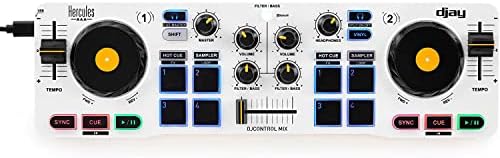
Hercules DJControl Mix Bluetooth Wireless DJ Controller
No laptop needed, pairs with iOS and Android phones, runs the dJay app
Wireless and phone-first, so it is a practice and small-room tool
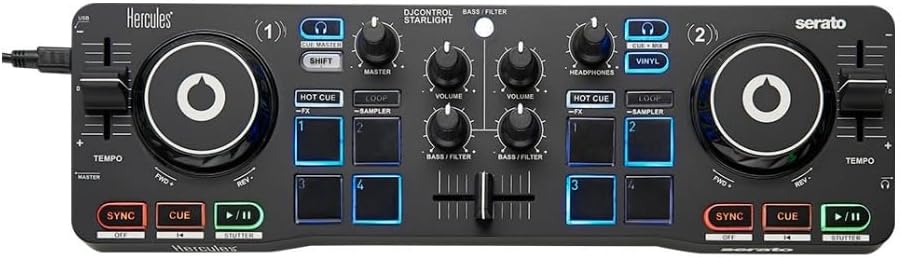
Hercules DJControl Starlight Compact DJ Controller with Light Show
Smallest option here, light show built in, fits in a backpack
Small platters, no room to grow into a bigger workflow
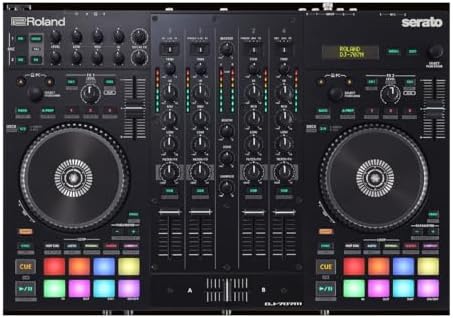
Roland DJ-707M DJ Controller for Live Streamers and Content Creators
Purpose-built for streaming and content creation work
Most of its value sits idle if you never go on camera
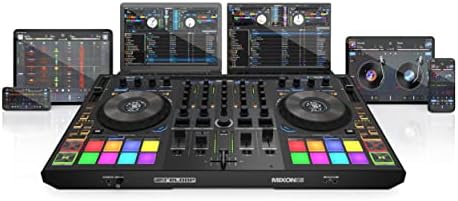
Reloop Mixon 8 Pro 4-Channel DJ Controller
Four channels for weddings, guest streams, and layered sets
You pay for channels you may not fill for a year
Prices and availability were captured from Amazon Creators API and may change.
How I judge a controller
Every controller that passes through my apartment gets the same treatment before I form an opinion. Four hours of real mixing, not four hours of scrolling through presets. A fader session that is deliberately harder on the crossfader than most paying gigs, because faders die eventually and I want to know whether mine die on my couch or in front of 300 people. Then a jog wheel check with my eyes closed, because that is where a controller tells the truth. If the platter feels like a toy steering wheel under my palm, no spec sheet rescues it.
Two more questions have nothing to do with hardware. What software ships in the box, and what does that software cost me in year two. A controller is only as good as the software it ships with, and a bundle that turns into a subscription for basic features is a bundle that will annoy you every month. Then the practical one: can I carry it. A controller you leave at home because it is heavy is a controller you never practice on, and practice is the only thing that makes anyone a DJ.
The phone-first option: Hercules DJControl Mix
The DJControl Mix is the only controller in this group that does not need a laptop. It is a Bluetooth wireless controller built for smartphones, iOS and Android, it runs two decks, and it works with the dJay app.
That wireless connection is the entire story. The setup becomes a phone, a controller, and headphones. No laptop bag, no interface, no cable salad on the kitchen table. For anyone who is already learning on a phone, this removes the biggest excuse not to practice, which is setup time. If your controller lives on a shelf and takes four minutes of cable untangling to use, you will use it twice a week. If it pairs in seconds, you will use it every night.
The trade-off is everything that comes with wireless and a phone-first workflow. I do not trust a wireless audio path the way I trust a cable, and I say that as someone who has watched a Bluetooth connection drop mid-transition at a wedding cocktail hour. The DJControl Mix is a practice tool and a small-room option, and it is honest about that. It is also the one I would hand to a teenager who wants to learn beatmatching before their parents spend real money.
The dJay app is what makes it work. That bundle is the product as much as the plastic is, and phone DJ apps have gotten genuinely good.
Visit on Amazon → for the Hercules DJControl Mix.
The compact option: Hercules DJControl Starlight
The DJControl Starlight is the smallest controller here, and the only one that treats lighting as part of the product. It is compact, it comes with a light show, and it is built for the person who wants a controller that fits in a backpack next to a laptop.
I have a real soft spot for this category, and I also want to be honest about what it is. A compact controller is a practice instrument. The reason to own one is that it lives within arm's reach, so you touch it every day. The reason to be careful is that the parts most likely to be compromised on a small controller are the jog wheels and the faders, which are the two things you touch constantly. Feel beats specs, every time. If the platters have no resistance, you learn bad habits about pitch bending that a bigger controller will not fix later.
The light show is a genuine feature for bedroom streams and small parties, and I am not going to pretend otherwise. It is also not a reason to buy a controller. Nobody has ever had a good set because of RGB.
Visit on Amazon → for the Hercules DJControl Starlight.
The streamer's option: Roland DJ-707M
Roland built the DJ-707M specifically for live streamers and content creators, and that framing matters more than it sounds. Streaming has different demands from a club booth. Your mix is going out to laptop speakers and phone speakers, not a stack, and your setup has to coexist with a camera, a microphone, and a chat window. A controller that assumes you are standing alone in a dark room does not help you there.
Roland has always had a personality in this market. I have said for years that the DJ-505 is weird and wonderful, and that if you want drum machine integration there is nothing else quite like it. The DJ-707M comes from that same house, aimed at a different job: the person who is on camera, on mic, and mixing at the same time.
This is also the one in this group I would call a commitment. It is serious gear for a serious workflow, and if you are mixing alone in a bedroom with headphones on, you are paying for capability you will not use. Buy it when the stream is the gig.
Visit on Amazon → for the Roland DJ-707M.
The four-channel option: Reloop Mixon 8 Pro
Four channels, black, and no apologies. The Mixon 8 Pro is the controller here that assumes you already know what you want four channels for.
Here is my honest position on channel count: you do not need four channels to start. You need two solid channels and a brain that plans transitions. Four channels are for a specific set of jobs. A wedding where you are running a ceremony feed, a microphone, and a dance set. A setup where you want two decks live and a third element layered in without rebuilding your whole layout mid-song. A workflow where you are tired of swapping what is plugged into channel two.
If none of that describes your week, four channels is an expensive way to feel professional. If all of it describes your week, four channels stops being a luxury and becomes the thing that keeps you from fumbling in front of a client.
The other thing four channels does is change the size and shape of the unit. This is a controller that wants a table, not a corner of a desk, and it wants to stay set up.
Visit on Amazon → for the Reloop Mixon 8 Pro.
Where each one loses
Every controller here has a losing scenario, and it is more useful to name them than to pretend one box wins everything.
- The Hercules DJControl Mix loses the moment you need a wired, laptop-based workflow, or you are playing to a room that will not forgive a dropped wireless connection. It is a phone controller, and it is proud of it.
- The Hercules DJControl Starlight loses when you outgrow small platters. It is a starter instrument, and starters get replaced.
- The Roland DJ-707M loses when the streaming is not real. If there is no camera and no microphone, most of what makes it interesting sits idle.
- The Reloop Mixon 8 Pro loses when you cannot fill four channels, because you will spend your setup time deciding what to do with decks you are not using.
None of those are defects. They are mismatches, and mismatch is what makes people buy a second controller eighteen months later.
Software is half the purchase
I will die on this hill: the bundle matters more than the hardware specs. A controller is only as good as the software it ships with, and the software question has two parts. What ships in the box, and what does it cost to keep using in year two.
The DJControl Mix leans on the dJay app, which is the whole reason a phone controller works at all. That is a real bundle, not a coupon. When you look at the other units, look up what software they unlock and whether the features you actually need sit behind a subscription. Software that requires a subscription for basic features is my single biggest pet peeve in this hobby, bigger than cheap faders, bigger than plastic platters.
The reason is simple. A bad fader is a bad day. A bad software decision follows you for years, because your library, your hot cues, and your playlists live inside it. Changing controllers is a purchase. Changing software is a migration.
Do you need four channels?
No, not at first. I have watched a lot of beginners buy four-channel controllers and then use two of them for a year, which is fine but it is not what they paid for. The better progression is a two-channel controller that feels good in your hands, six months of real practice, and then a decision about what your sets actually require.
The exception is the DJ who is already working. If you are doing weddings, if you are running a stream with guests, if you are the person who has to keep music going while someone makes a speech, four channels is not ambition. It is logistics.
What I would buy, and when
If you want to practice without a laptop and you already live on your phone, get the Hercules DJControl Mix. If you want the smallest possible thing that still feels like a controller and you like the light show, get the Starlight. If your gig is on camera, the Roland DJ-707M is built for exactly that job. If four channels are a real requirement in your week rather than a fantasy about your future, the Reloop Mixon 8 Pro is the serious answer.
Notice that none of those recommendations mention a spec number. They mention a room, a workflow, and a habit. That is how gear decisions actually get made.
Visit on Amazon → for the Hercules DJControl Mix, Visit on Amazon → for the Hercules DJControl Starlight, Visit on Amazon → for the Roland DJ-707M, or Visit on Amazon → for the Reloop Mixon 8 Pro.
What I am testing next
I am working through jog wheel durability on this year's controllers, five units, a four-hour set each, and a fader stress test that would void any warranty. The pattern so far is the same one I have seen for a decade: price predicts marketing budget more reliably than it predicts feel, and the controllers people keep using are the ones that are easy to set up. I will report back when the numbers are in.