I have played four-hour sets on gear that cost less than a pair of sneakers, and I have played them on rigs that cost more than my first car. The difference between a controller that disappears under your hands and one that fights you for three hours almost never shows up on a spec sheet. So this comparison of DJ controllers for live gigs is built around the questions that actually decide a purchase: what software ships in the box, how the jog wheels feel when you close your eyes, whether the faders would survive a paying gig, and how many channels you honestly need.
One thing to get out of the way first. This list includes one item that is not a DJ controller at all. It came in with the batch, it is a real product with a real use, and I am not going to dress it up as a deck just to fill a row. I will explain what it is and where it genuinely helps further down.
Short answer: the Roland DJ-707M is the pick if you stream or need four channels, the Numark Mixstream Pro+ is the pick if you want to leave the laptop at home, and the Hercules DJControl Mix is the pick if you are still working out whether DJing is your thing.
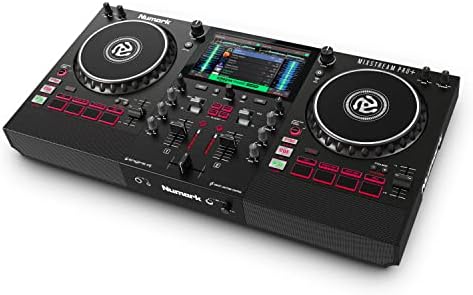
Numark Mixstream Pro+ DJ Controller
Standalone play with no laptop, built-in speakers, streaming over Wi-Fi
Two channels only, and the layout rewards people who already know their way around
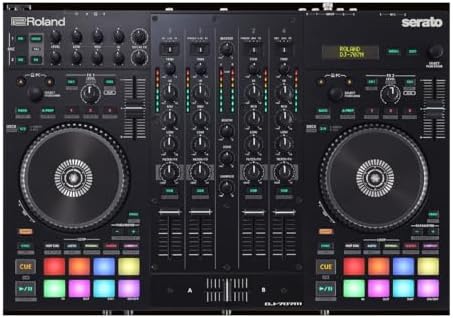
Roland DJ-707M DJ Controller for live streamers and content creators
Four channels, Serato in the box, routing built for streaming and microphones
The most expensive commitment here, and far more controller than a beginner needs
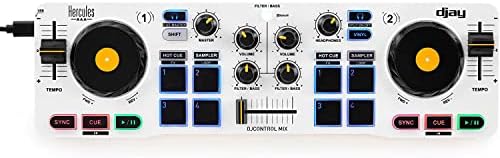
Hercules DJControl Mix Bluetooth Wireless DJ Controller for Smartphones
Bluetooth, phone-first, cheap enough to test the hobby properly
Plastic feel and two decks, and it will not survive a club
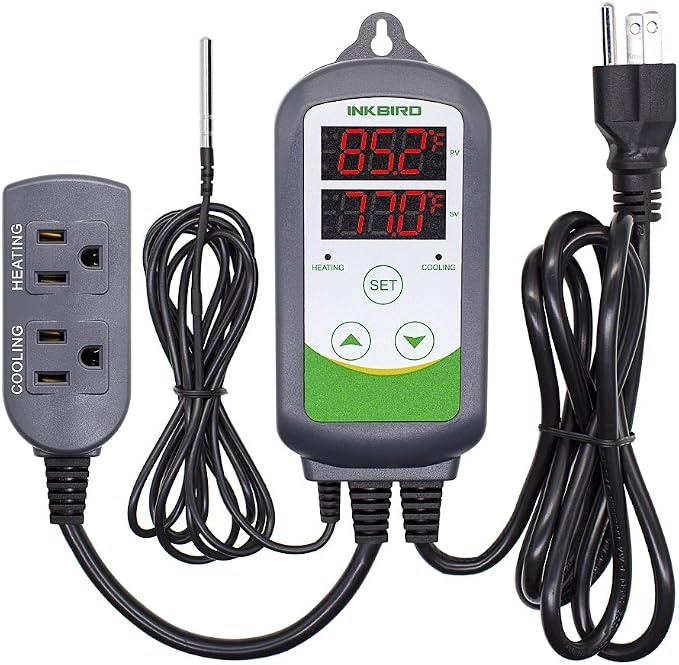
Inkbird ITC-308 Digital Temperature Controller Thermostat
Keeps a gear room or storage unit at a stable temperature
It is a thermostat. No jog wheels, no faders, no way to play a track
Prices and availability were captured from Amazon Creators API and may change.
How I judge a controller
Every controller that gets a real recommendation from me has to clear three gates. First, can I play a four-hour set on it without fighting the layout? Second, how do the jog wheels feel with my eyes closed? Third, what does the software bundle cost me after the first year? Specs answer none of those questions. A pile of RGB and a clean audio spec will not save you if the crossfader turns to mush by month eight.
I am currently five units into a jog wheel durability run: four hours of real mixing per unit, followed by a fader stress session that would void any warranty. That project shapes how I read a product page. I am not going to pretend these three controllers have been through that full gauntlet yet. What I can tell you is what each one is built to do, who it fits, and where it is most likely to let you down, based on layout, bundle, and price bracket.
Numark Mixstream Pro+: the laptop-free option
The Mixstream Pro+ is the only controller here that does not need a computer. It runs Engine DJ on the hardware, it has built-in speakers, and it can pull tracks over Wi-Fi. For a mobile DJ setting up in eight minutes in a dim room, that is not a gimmick, that is the entire pitch. You plug in, you play, and you are not troubleshooting a laptop that chose that exact moment to install an update.
Where it gives ground is channel count. Two decks, which means your transitions live in your head instead of on a third and fourth fader. If you are the DJ who layers an acapella over an instrumental while a loop runs underneath, this is not the box for that. The standalone workflow also means committing to Engine DJ as your library, and dragging a Rekordbox collection across is a weekend project, not a ten-minute export.
For a mobile DJ, a wedding DJ, or a streamer who wants a self-contained rig, this is the most interesting product in the batch. Check current Amazon price before you commit, because this bracket moves.
Roland DJ-707M: the four-channel pick for streamers
Roland built the DJ-707M with live streamers and content creators in mind, and the routing shows it. Four channels, Serato in the box, and enough inputs to run microphones and separate outputs without dragging a mixer into the setup. If you DJ and talk on camera at the same time, that routing is the reason to buy it rather than a nice extra.
Serato is the other half of the argument. It is one of the two software ecosystems that genuinely matter, and it comes with the hardware instead of hiding basic features behind a subscription. My rule about bundles applies here in full: a controller is only as good as the software it ships with, and this one ships with the right one.
The cost is the four-channel tax. If you are two months into DJing, this is more controller than you need, and those extra channels will sit unused while you figure out what a clean transition actually feels like. It is also the biggest commitment in this list in desk space and in money. For a working DJ who streams, though, it solves more problems at once than anything else here.
Hercules DJControl Mix: the phone-first starter
The DJControl Mix is the one I would hand to a friend who keeps saying they want to learn. It pairs over Bluetooth with a phone, it runs on the dJay app, and it is small and light enough to live on a shelf next to the router. Two decks, the basics, nothing intimidating in the layout.
That is exactly the point. You do not need four channels to start. You need two solid channels and a brain that plans transitions, and this gives you both for the price of a night out. The app's assist features and beat grids will teach you song structure faster than any spec sheet, because they let you hear what a phrase is before you have to count it yourself.
What it will not do is grow with you. The plastic feel is real, and a controller at this price is not surviving a fader smash session, let alone a residency. Buy it to find out whether you love this. Do not buy it expecting it to be the last controller you own.
The Inkbird ITC-308 is not a DJ controller
Now the honest part. The Inkbird ITC-308 is a digital temperature controller. It has a probe, it switches a heater or a fan on and off, and it holds a space at the temperature you set. It is not a DJ controller. There are no jog wheels, no faders, no software bundle, and no way to play a track on it.
I am including it because it arrived alongside these controllers, and because there is a real, unglamorous job for it in a DJ's life: protecting the gear. A storage unit that swings through a huge temperature range between July and January is how capacitors, belts, and foam surrounds die young. If your setup lives in a garage, a basement, or a storage locker, a plug-in thermostat that keeps that space stable is cheap insurance on everything else in this article.
So if you came here for a controller, skip this one. If your gear lives somewhere with bad climate control, it is worth a look.
What actually separates these three
Software first, because it decides more than the hardware does. Serato on the Roland, dJay on the Hercules, Engine DJ on the Numark. Those are three different libraries, three different workflows, and three different upgrade paths. Pick the software you can live with for two years, then buy the controller attached to it. Beginners do this backwards constantly, and it is the most expensive mistake in the hobby.
Jog wheels second. This is the part nobody photographs well and everybody feels within ten seconds. A wheel with no resistance makes every pitch bend feel like a guess, and a wheel with a dead zone in the middle makes beatmatching a chore. Of the three here, the two larger units are the ones with platters worth touching. The Hercules is a phone-first toy in the best sense, and its wheels feel like it.
Faders third, and this is the one that ends careers early. Faders die. The only question is whether they die at a gig or after 500 hours in the studio. A controller with cheap faders and bright lights is a controller that will embarrass you in front of a paying crowd. If you cannot find out how a crossfader holds up before you buy, at least buy from a line with a reputation for surviving cut-heavy sets.
Channel count last, and I mean last. Two channels is not a limitation for a beginner, it is a curriculum. Learn to plan a transition instead of hiding one behind a third deck. The Numark gives you two decks and no laptop. The Roland gives you four decks and a streaming rig. The Hercules gives you two decks and a phone. None of those is wrong. They are just different stages of the same hobby.
Which one should you buy?
If you want a self-contained rig you can set up in a dark room without a computer, the Numark Mixstream Pro+ is the answer. Its built-in speakers and Wi-Fi streaming make it the most independent product here, and independence is worth a lot when you are the one carrying the gear.
If you stream, record, or run microphones alongside your sets, the Roland DJ-707M is the answer. Four channels and Serato in the box is a serious starting point for anyone treating this as more than a bedroom hobby.
If you are brand new, curious, or buying for someone else, the Hercules DJControl Mix is the answer. Bluetooth, a phone, and the dJay app is the lowest-friction way to find out whether you actually enjoy this, and the answer to that question matters far more than which controller you start on.
And if what you really need is to keep your gear out of a damp garage, the Inkbird ITC-308 does a job no controller can do.
What I am testing next
The jog wheel durability run is still going, five units in, four hours each, with a fader stress session after every one. When the results land, the pattern I expect to confirm is the one I keep seeing: price predicts marketing budget, not feel. The controller that feels best in the first ten minutes is not always the one still working at hour four hundred, and the difference almost always comes down to the wheels and the faders, not the feature list.
Until then, buy for the software, buy for the wheels, and buy two channels before you buy four. Gear is not the bottleneck. Practice is.