The Pioneer DJ DDJ-FLX4 is the best beginner controller I've tested in years, but the real magic isn't in the hardware. It's in how the bundled software forces you to learn proper transitions. After 14 months of owning it, I can tell you that the difference between sounding like a DJ and sounding like someone playing songs back-to-back comes down to three things: phrasing, EQ kills, and knowing your jog wheel with your eyes closed.
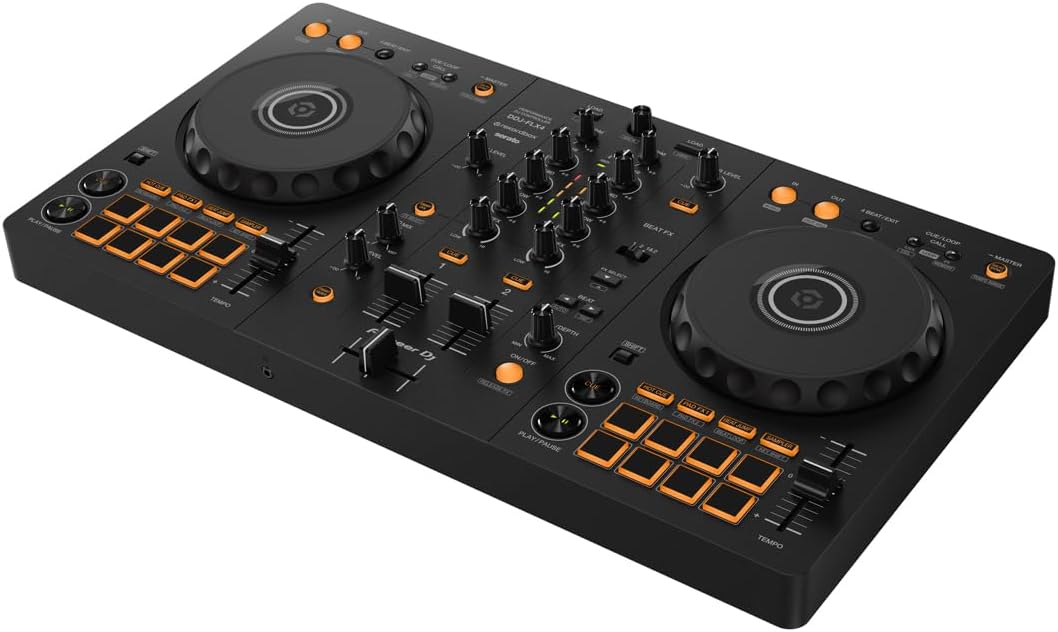
The FLX4 is the golden standard for learning smooth transitions, because it builds the right habits without letting you hide behind gimmicks.
The layout is crisp and functional, and it mirrors club gear closely enough that when you step up to something bigger, your muscle memory doesn't panic. But it's not a professional deck by any means. I've said it before and I'll say it again: keep it for bedroom mixing and small house parties.
Multiple owners report the sound quality degrades at higher volumes, and one reviewer I respect explicitly warned against hooking it up to a PA system.
That's fine. That's not what this is for.
Pros
- Full Rekordbox unlock out of the box, no subscription games
- Club-style layout that teaches proper habits
- Smart Fader on Rekordbox genuinely helps beginners nail BPM-matched transitions
- Solid build quality, survived my dog Biscuit sleeping on it more than once
Cons
- Mono-color orange pads are hard to see in low light; I've missed cues because of it
- Smart Fader on Serato is weak, just echo, not the BPM matching Rekordbox gives you
- FX toggle workflow is clunky; you're hunting for a switch mid-transition
- USB-C cable in the box is both ends USB-C, which threw me for an hour
Compared to
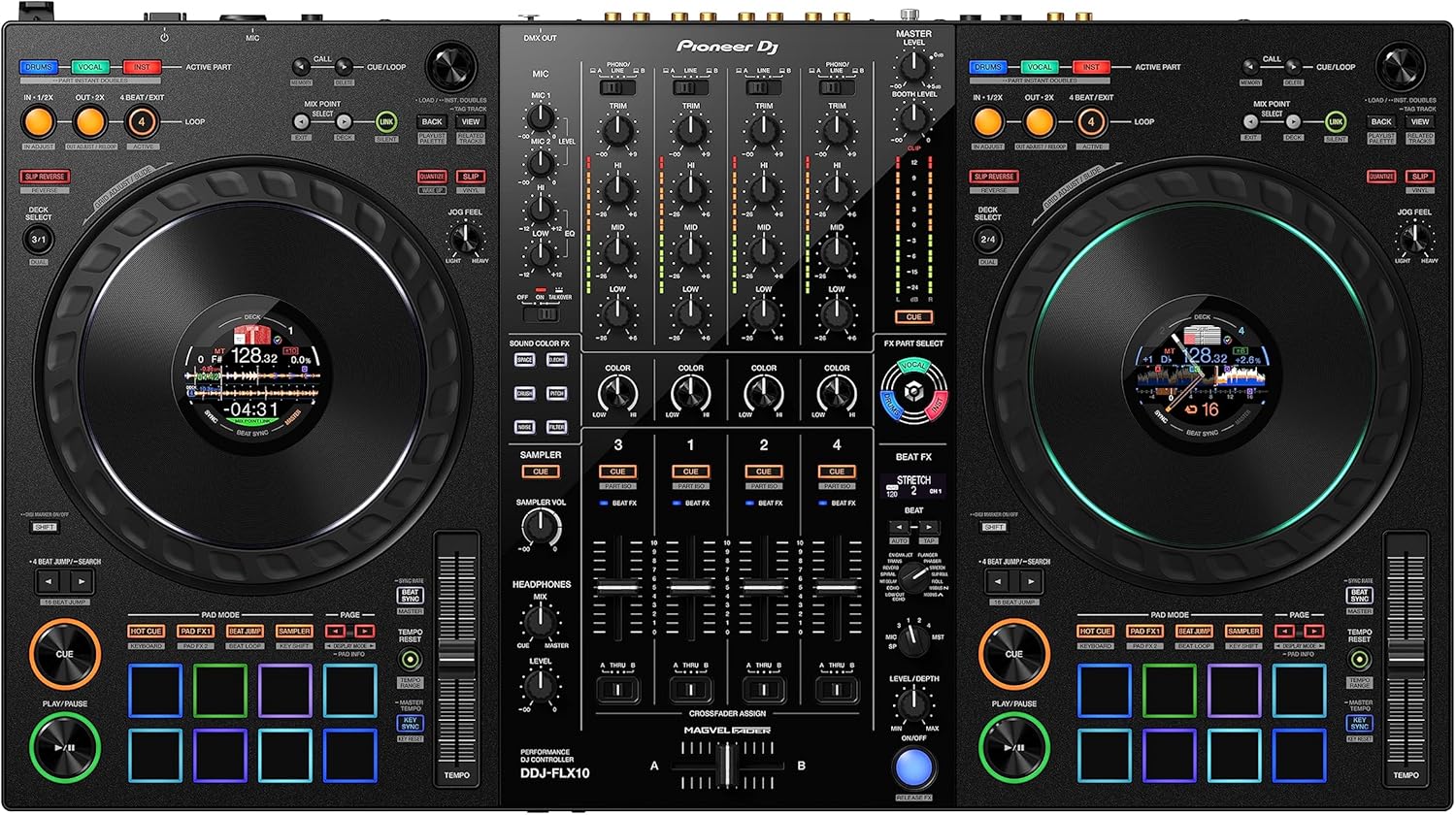
The DDJ-REV1 is the scratch-focused alternative at a similar price, and its paddle FX are much better for quick finger work. But the REV-1's layout doesn't build the standard club habits the way the DDJ-FLX10 does.
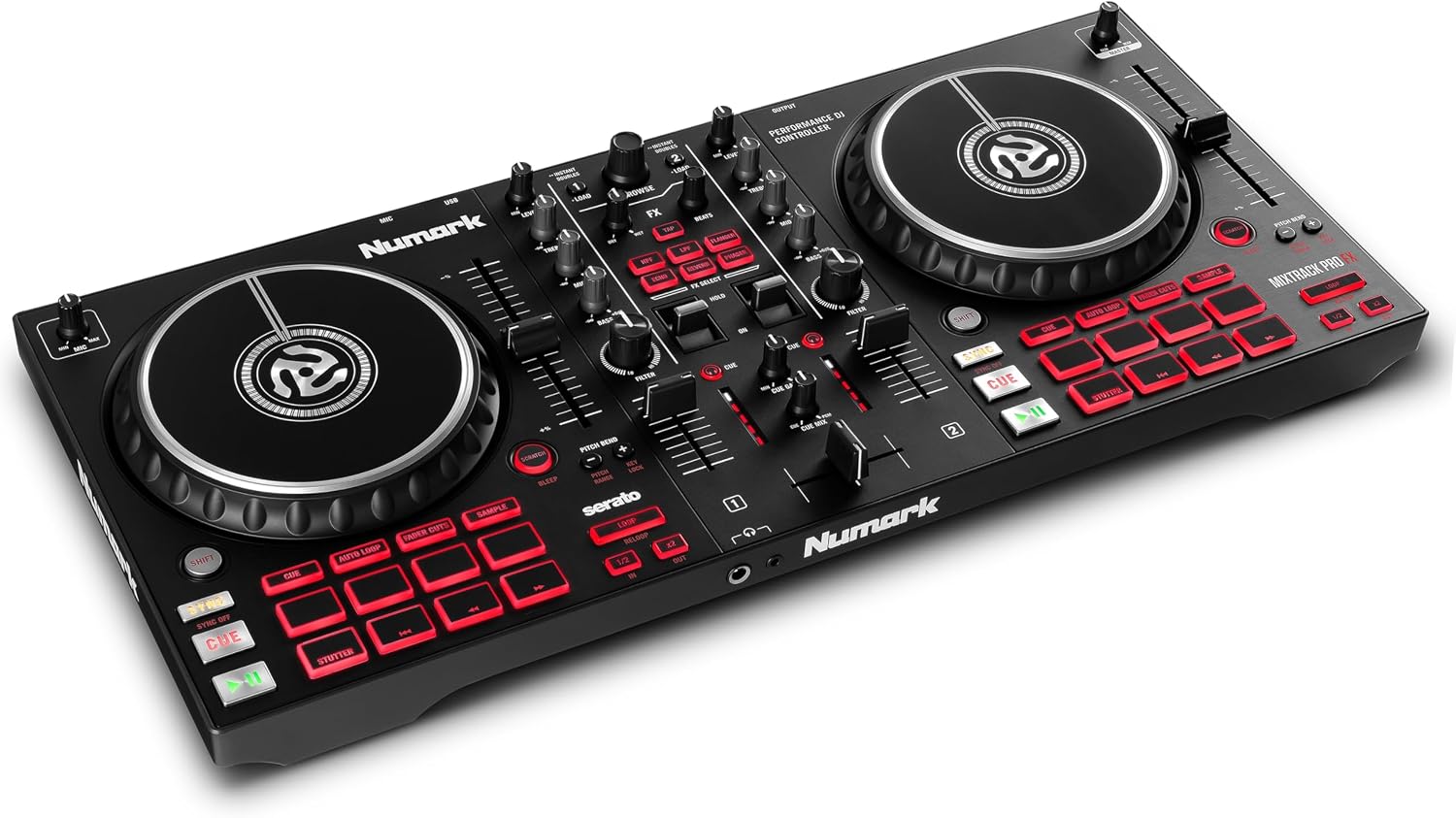
The Numark Mixtrack Pro FX gives you better FX paddles and RGB pads at a similar price, but it doesn't unlock Rekordbox fully and the build feels cheaper in hand.
And the DDJ-200 (which I owned before this) is fine for messing around on your phone, but it lacks the audio interface and the full software unlock that makes the FLX4 the real starting point.
The Jog Wheel Test
Here's the thing about transitions: your jog wheel is your safety net. When you're three hours into a set and your fingers are doing things without your brain being involved, you need to trust that the platter responds exactly how you expect.
I close my eyes and nudge the platter on the FLX4, and it gives me that satisfying, weighted resistance that the cheaper DDJ-200 just doesn't have.
It's not the mechanical feel of a ~$1,899 unit, but for ~$299, it's the best I've tested in this range.
The platter size matters too. At about 6 inches, it's smaller than the full-size 8-inch platters on the FLX10, but it's enough to do a proper nudge or a quick spin-back without feeling cramped. I've done four-hour sets on this thing and my wrists don't ache the way they did on the DJ2GO2 Touch.
The EQ Kill Method
This is the transition technique that changed everything for me, and the FLX4's three-band EQ makes it easy. The trick is to kill the low frequencies on the incoming track before you bring it in. The FLX4's EQ knobs have a nice, smooth curve, not too stiff, not too loose.
I set my high-pass filter on the outgoing track, bring the incoming track's lows up slowly, and by the time the breakdown hits, I've swapped the energy without anyone noticing the change.
The Smart Fader on Rekordbox helps here if you're just starting. It automatically matches the BPM and handles the EQ curve for you, which makes you feel like a genius even when you're just messing around.
But here's the curve: on Serato, the Smart Fader only applies echo. It's not the same feature, and owners who tried both feel let down by the Serato side.
If you buy this controller, get Rekordbox. That's not a workaround, that's the answer.
The Headphone Volume Knob That Trips Everyone Up
You will spend twenty minutes wondering why you can't hear anything through your headphones, and then you'll find the headphone volume knob on the front panel and feel stupid. It happened to me, it happens to everyone.
The Cue buttons above each channel need to be engaged too, and if you don't have both set, you get nada.
It's confusing for beginners, but it's also clearly documented in the manual, which I've read so you don't have to.
Once you've got that sorted, cueing becomes your best friend. I load a gazillion songs into a playlist, set cue points at the first beat of the phrase, and use the Cue button to tap out the timing before I bring the track in. The FLX4's Cue buttons are responsive, and the pads work fine for hot cues even though they're mono-color orange.
Durability and Real Life
Biscuit has slept on this controller more times than I can count. She's a 60-pound lab mix who's deaf in one ear and has zero respect for cables. The FLX4 has survived her naps, being knocked around in a soft case, and being set up on a wobbly table at a backyard party where the neighbors called the cops.
The faders still feel tight, the jog wheels still spin true, and the pads still register every hit.
At ~$599, that's ~$1.64 per day if you use it daily for a year, cheaper than a coffee habit and it won't make you jittery. I've seen owners report issues after heavy gig use, but for bedroom mixing and house parties, this thing holds up.
The FX Toggle Workflow
This is the thing that annoys me most. The FX workflow requires toggling a switch between decks, and it's just not as smooth as the paddle-style FX on the REV-1 or the Mixtrack Platinum FX. When you're in the middle of a transition and you need to switch FX, you don't want to be hunting for a toggle switch.
It's not a dealbreaker, but it's the kind of thing that becomes more annoying the longer you use it. By hour three of a set, I'm cursing under my breath every time I need to flip that switch.
Should You Buy It?
If you're a beginner who wants to learn how to transition between songs smoothly without spending a fortune, yes. The FLX4 is the golden standard for a reason. It unlocks Rekordbox fully, it builds the right habits, and it'll last you until you're ready for something like the FLX10 or the DDJ-GRV6.
But if you're a Serato loyalist, the Numark Mixtrack Platinum FX might be the better fit, and that's okay to admit.
The FLX4's Serato experience is compromised, and you deserve to know that before you buy.
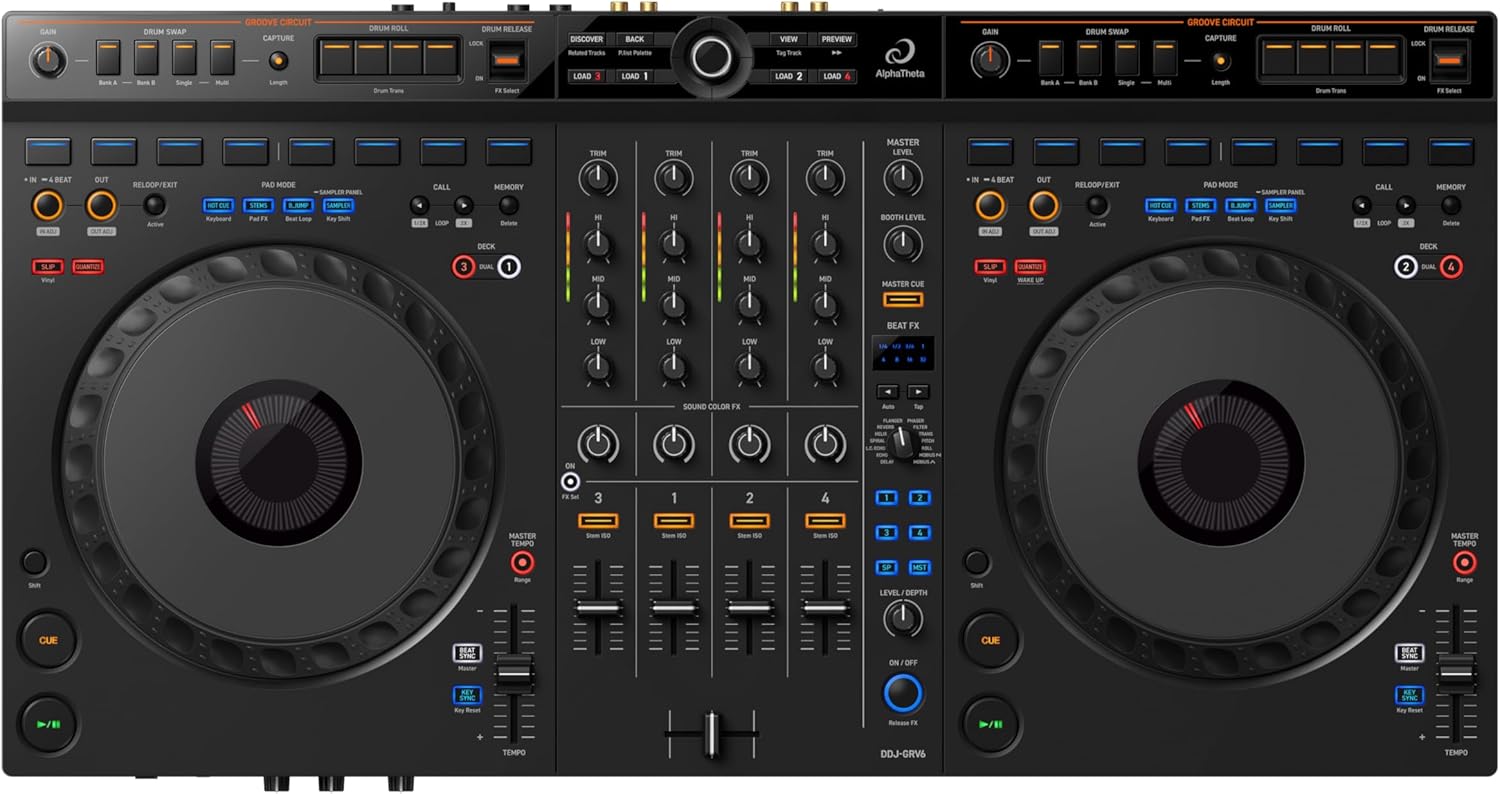
One last note: I'm currently testing the FLX10 to see if it's worth the upgrade for people who've outgrown their starter gear, so check back for that comparison soon. This review will be updated if anything changes.