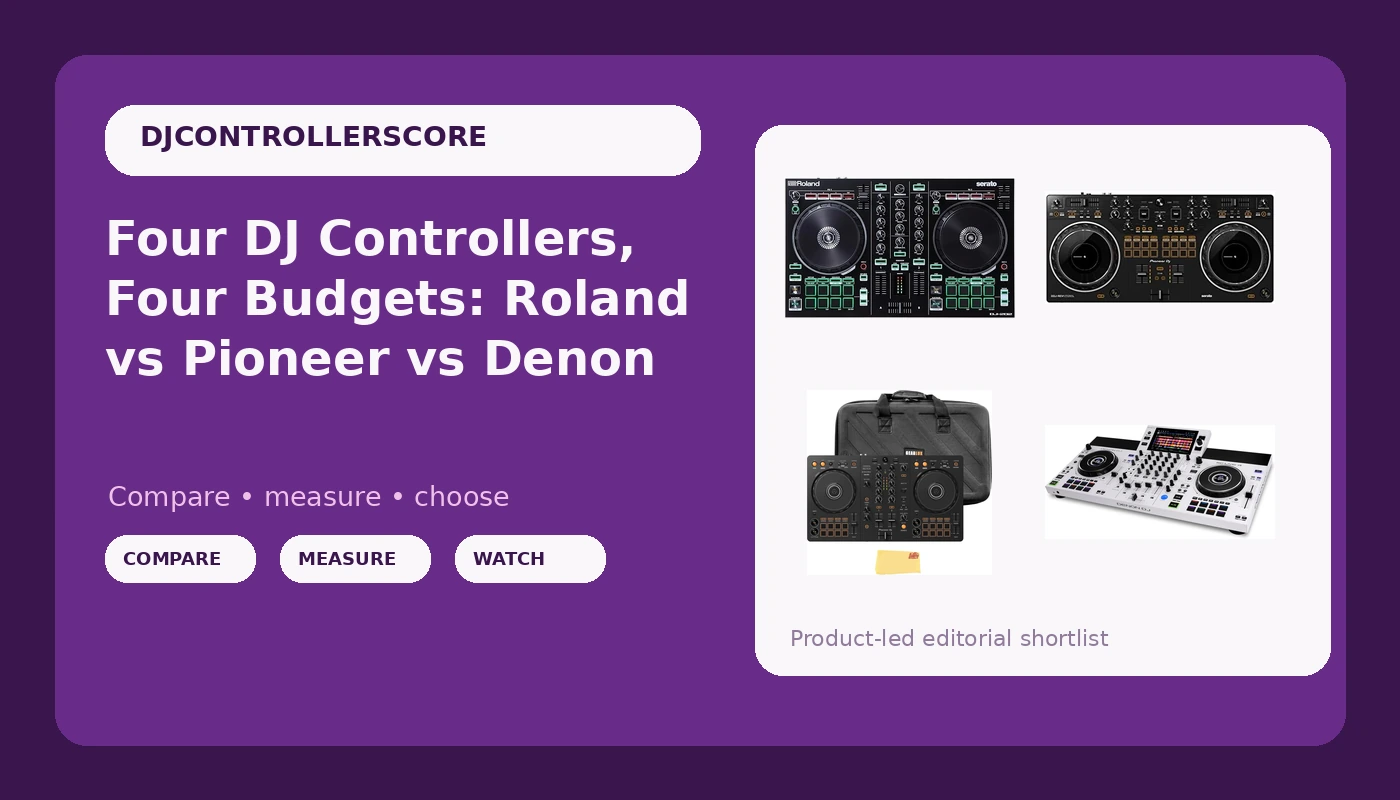
Every controller in this DJ controller comparison belongs to a different budget tier, and that is the entire point of putting them in one article. The Roland DJ-202 sits at the entry level. The Pioneer DJ DDJ-REV1 and the Pioneer DJ DDJ-FLX4 bundle fight over the same two-channel middle ground with completely different layouts. The Denon DJ SC LIVE 4 skips the laptop entirely and asks for a different kind of commitment. I have played club rooms in Brooklyn for eight years and weddings for five, and my rule for judging a controller has not changed since my first residency: the gear has to survive hour three, when your hands stop thinking and the hardware starts talking.
For most people, the best buy here is the Pioneer DJ DDJ-FLX4 bundle, because it ships with rekordbox, holds its resale value, and its jog wheels do not fight your hands. The Denon DJ SC LIVE 4 is the better machine, but it is a different purchase entirely: it wants to replace your laptop, not just your practice setup.
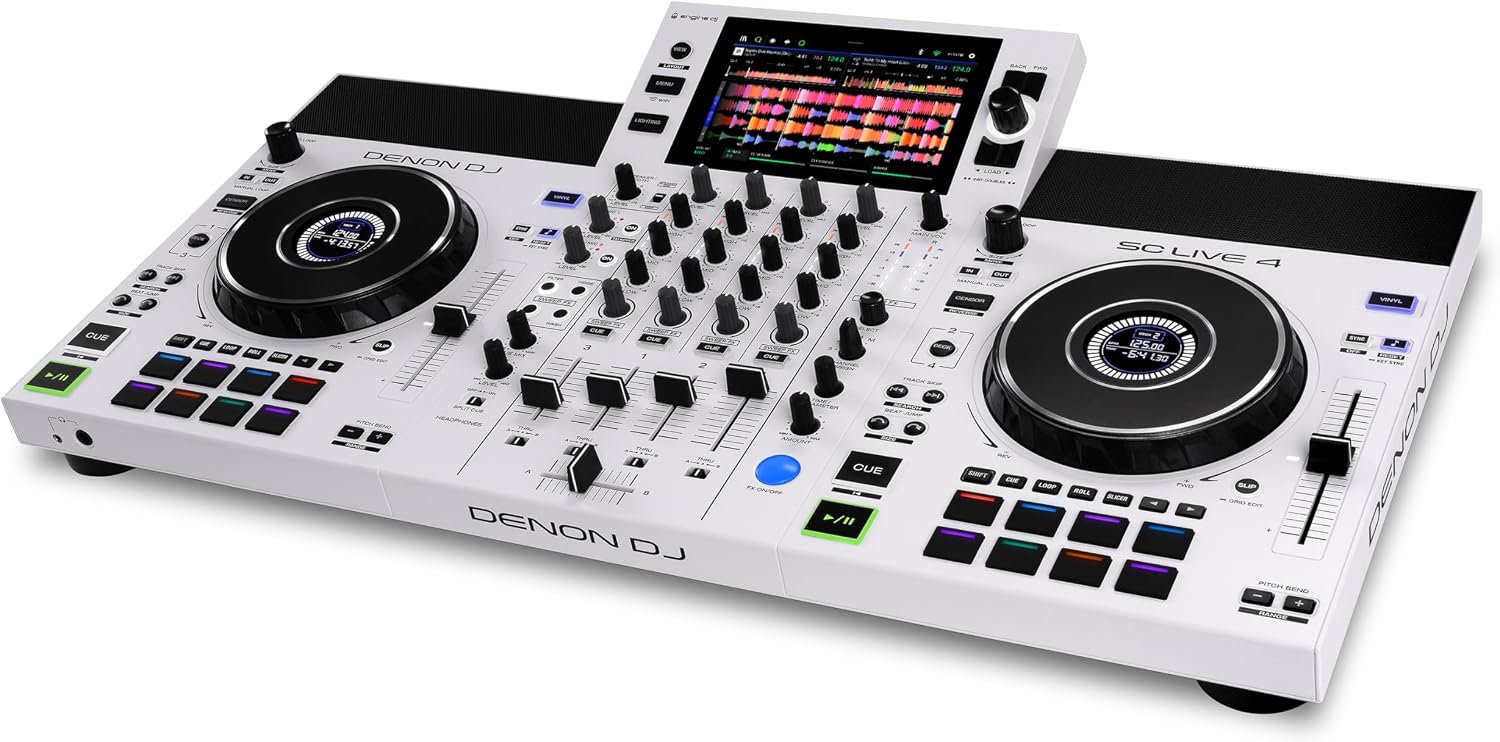
Denon DJ SC LIVE 4 Standalone DJ Controller White
Standalone Engine DJ workflow with four channels, a touchscreen, onboard speakers, and streaming without a laptop
The biggest spend and the heaviest bag in this group; you trade a laptop workflow you already know for one you have to learn from scratch
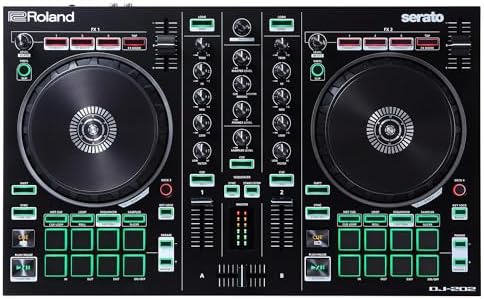
Roland DJ-202 Compact DJ Controller
Cheapest way into Serato here, plus a real drum machine and step sequencer built into a controller this size
The smallest platters of the group and entry-tier faders; it is the one you outgrow first, usually within a year
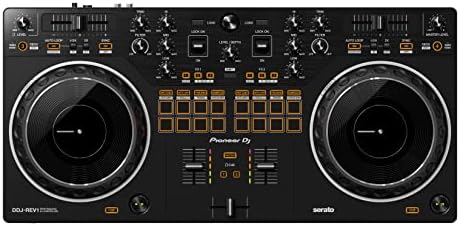
Pioneer DJ DDJ-REV1 2-deck Serato DJ Controller, Black
Battle-style layout that teaches scratch discipline, Serato DJ Lite included, lever FX paddles that feel like real hardware
The layout is a commitment; if you mix long blends with your hands parked on top of the platters, this is the wrong shape for you
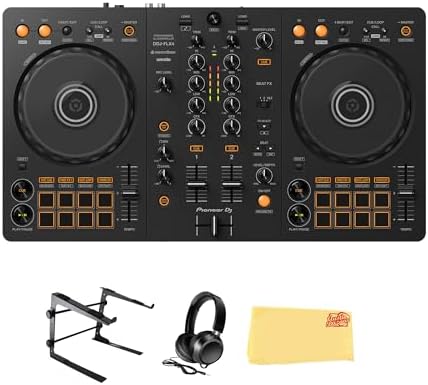
Pioneer DJ DDJ-FLX4 2-Channel DJ Controller - Black Bundle with Carrying Case and Austin Bazaar Polishing Cloth
Rekordbox and Serato DJ Lite both supported, beginner-friendly Smart Fader and Smart CFX, and a carrying case in the box
Plastic build, connections aimed at a bedroom or a small room rather than a booth patch panel, and the polishing cloth is filler
Prices and availability were captured from Amazon Creators API and may change.
How I judge a controller before I judge the spec sheet
My process is boring and repeatable, which is the point. First, jog wheel feel with my eyes closed. A platter should have resistance you can push against, not a free spin that keeps going after your finger leaves it. Cheap plastic wheels make every mix feel like a mistake, and no spec sheet on earth describes that.
Second, the fader smash. I work a crossfader hard for a few weeks and see whether it still returns to a clean cut or starts leaking signal on both sides. Faders die. The only question is whether they die at a paying gig or after 500 hours in a spare room.
Third, the software bundle, because that is half the value of the purchase. Fourth, gain staging under real volume, which is the skill nobody buys gear for. A controller that makes it hard to set clean levels will teach you bad habits that follow you to a club.
Pioneer DJ DDJ-FLX4 bundle: the gateway drug
The Pioneer DJ DDJ-FLX4 bundle is the controller I recommend to beginners more than any other, and the reason is not the hardware. It is that the FLX4 runs both rekordbox and Serato DJ Lite, so you can figure out which ecosystem you actually like before you spend money on one. That flexibility is worth more than any single feature on this list.
The jog wheels are the honest part of the design. They are not full-size, they are not mechanical, but they have enough weight that pitch bends feel predictable instead of twitchy. For someone learning to nudge a kick drum back into alignment, that is the difference between a habit and a frustration.
Smart Fader and Smart CFX are the features that get marketed to beginners, and I have mixed feelings. They will get you through your first party sounding competent, and they will not teach you a thing about transition technique. Use them as training wheels, not as a crutch. The carrying case in this bundle is genuinely useful because it means you can move the thing without wrapping it in a towel. The polishing cloth is not a reason to buy anything.
Where it loses: the build is plastic, the outputs are aimed at a bedroom or a small room rather than a booth patch panel, and the resale market is full of them because people upgrade. That last point cuts both ways. You will not struggle to sell it.
Pioneer DJ DDJ-REV1: the battle layout
The Pioneer DJ DDJ-REV1 is the weird one in the best sense. It flips the standard layout: tempo faders up top, platters on the outside, lever FX paddles where your fingers already live. That is a scratch and battle configuration, and if that is what you want to learn, there is no cheaper way to learn it on real Pioneer hardware.
Serato DJ Lite is included, which matters because the REV1 is built around Serato's scratch workflow rather than rekordbox. If your plan is to move toward a club standard rig later, understand that you are learning a layout that most booths do not have. That is not a flaw, it is a specialization.
The lever paddles are the part I would miss if I went back to a conventional controller. They feel like hardware, not like a button that happens to trigger software. The trade-off is that the REV1 rewards a very specific style of play. If your sets are long blends with your hands parked on top of the platters, this layout will feel backwards for the first month and possibly forever.
Roland DJ-202: the drum machine wildcard
The Roland DJ-202 is the most interesting budget controller on this list, and also the one I would recommend to the fewest people. Roland put a genuine drum machine and step sequencer inside it, which means you can build a kick pattern, layer it under a track, and do something live that no other controller at this level can do.
If you produce, if you come from a hardware background, or if you want your sets to have a live element that is not just another filter sweep, the DJ-202 earns its place. It is also the cheapest entry into Serato here, which makes it a legitimate first controller.
The problem is everything around the drum machine. The platters are the smallest in this comparison, the faders feel like a budget controller's faders because they are, and the whole unit communicates "starter" the moment you put your hands on it. You will outgrow it faster than anything else here. For a producer who wants a drum machine that also mixes, buy it. For a DJ who wants to learn to DJ, the FLX4 is the better teacher.
Denon DJ SC LIVE 4: the standalone leap
The Denon DJ SC LIVE 4 is not really competing with the other three, and pretending otherwise would be dishonest. It runs Engine DJ standalone, so there is no laptop in the signal chain, no USB cable to a machine that might decide to update itself mid-set, and no software subscription standing between you and your music. Four channels, a touchscreen, onboard speakers for practice, and streaming built in.
For a working DJ, that independence is worth real money. I have watched a laptop die at a wedding reception. I have also watched a DJ spend twenty minutes of a paid set fighting a driver. Standalone removes an entire category of failure from your night, and that is not a marketing claim, it is arithmetic.
What it costs you is fluency. Every other controller on this list plugs into a workflow you probably already have. The SC LIVE 4 asks you to learn Engine DJ, to manage your library a different way, and to carry a heavier bag. The touchscreen is a genuine pleasure once you are used to it and a source of fumbling for the first month.
It is the better controller. It is not the better first controller, and it is not the better second controller either, unless you are already gigging regularly enough to justify removing the laptop.
Software is half the value
Here is the thing nobody puts on the box: a controller is only as good as the software it ships with. The FLX4 gives you rekordbox and Serato DJ Lite. The REV1 gives you Serato DJ Lite. The DJ-202 gives you Serato DJ Lite with Roland's drum machine integration. The SC LIVE 4 gives you Engine DJ outright with no laptop required.
Notice how much of that is "Lite." Serato DJ Lite is a real piece of software, but the upgrade path to Serato DJ Pro is a separate purchase, and it is not small. Rekordbox's free tier is more generous for pure library management and export, which is a large part of why the FLX4 keeps winning beginner recommendations. If your budget has a hard ceiling, price the software before you price the hardware.
Also: I will not recommend anything that puts basic features behind a recurring subscription. Buy your software once or use the free tier. Rent-seeking on a beat grid is a pet peeve I will not get over.
Faders, jog wheels, and the things that die
Every controller in this comparison will eventually break somewhere. The question is where. Crossfaders go first on scratch-heavy setups, which is why the REV1's layout matters and why cheap faders on a beginner controller are a countdown timer rather than a feature. Jog wheel sensors and touch strips are next. Then the USB port, usually because someone yanked a cable at a party.
If you buy at the entry level, buy knowing you are buying a consumable. That is not a reason to spend more, it is a reason to spend deliberately and to keep the box. The FLX4 resells easily. The SC LIVE 4 holds value because the standalone category holds value. The DJ-202 is the hardest of the four to move later, which is worth factoring into the true cost.
Which one should you buy
If you are starting out and you want to practice every night, buy the Pioneer DJ DDJ-FLX4 bundle. Software bundle, decent jog wheels, easy resale, and a case so you can take it to a friend's place.
If you want to scratch and you want a layout that forces you to learn it properly, buy the Pioneer DJ DDJ-REV1.
If you produce and you want a drum machine under your hands while you mix, the Roland DJ-202 is a genuinely unusual piece of kit and the cheapest way into Serato here.
If you are already gigging and you are tired of trusting a laptop with a paying crowd, the Denon DJ SC LIVE 4 is the one that removes a failure point from your night.
What I am watching next
The thing I care about in 2026 is jog wheel durability, because that is where budget controllers quietly fail. Five units are on the bench for a four-hour set each and a fader stress test that would void any warranty. When that is done, I will update this comparison with what actually broke, not what the marketing said would last. Until then, the advice holds: buy the controller whose software you can live with, and practice transitions instead of shopping for gear that will not fix them.