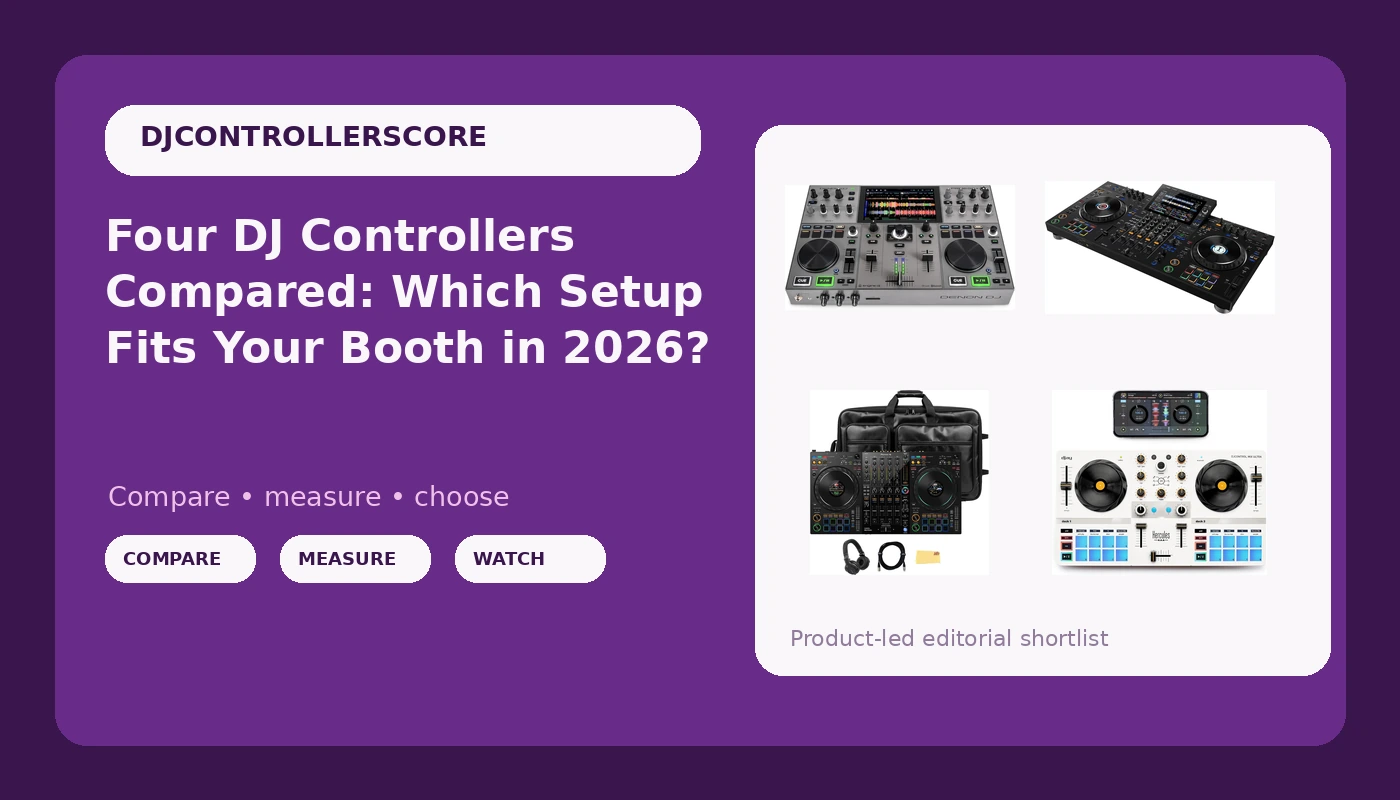
I have been a club DJ for eight years and a wedding DJ for five, and most of what I know about gear I learned the hard way, at volume, in front of paying customers. So when friends ask me to walk through DJ controllers compared side by side, I do not start with spec sheets. I start with the room. A basement party, a wedding tent, and a 4,000-person warehouse ask completely different things of a controller, and the four units here sit at four distinct points on that map. The price spread between the cheapest and the most expensive is enormous, but price is not the interesting part. What matters is what each controller assumes about where you play, what you already own, and how much you are willing to carry up a flight of stairs at 1 a.m.
My short answer: if you are replacing an entire booth with one box, the Pioneer DJ XDJ-AZ is the most capable unit in this group. If you want standalone freedom in a bag you can carry with one hand, the Denon DJ PRIME GO+ is the pick. If you already own a laptop and a software library you trust, the Pioneer DJ DDJ-FLX10 bundle is the best value here. And if you are brand new and want to spend the least money to find out whether you actually like this, the Hercules DJControl Mix Ultra is the honest entry point.
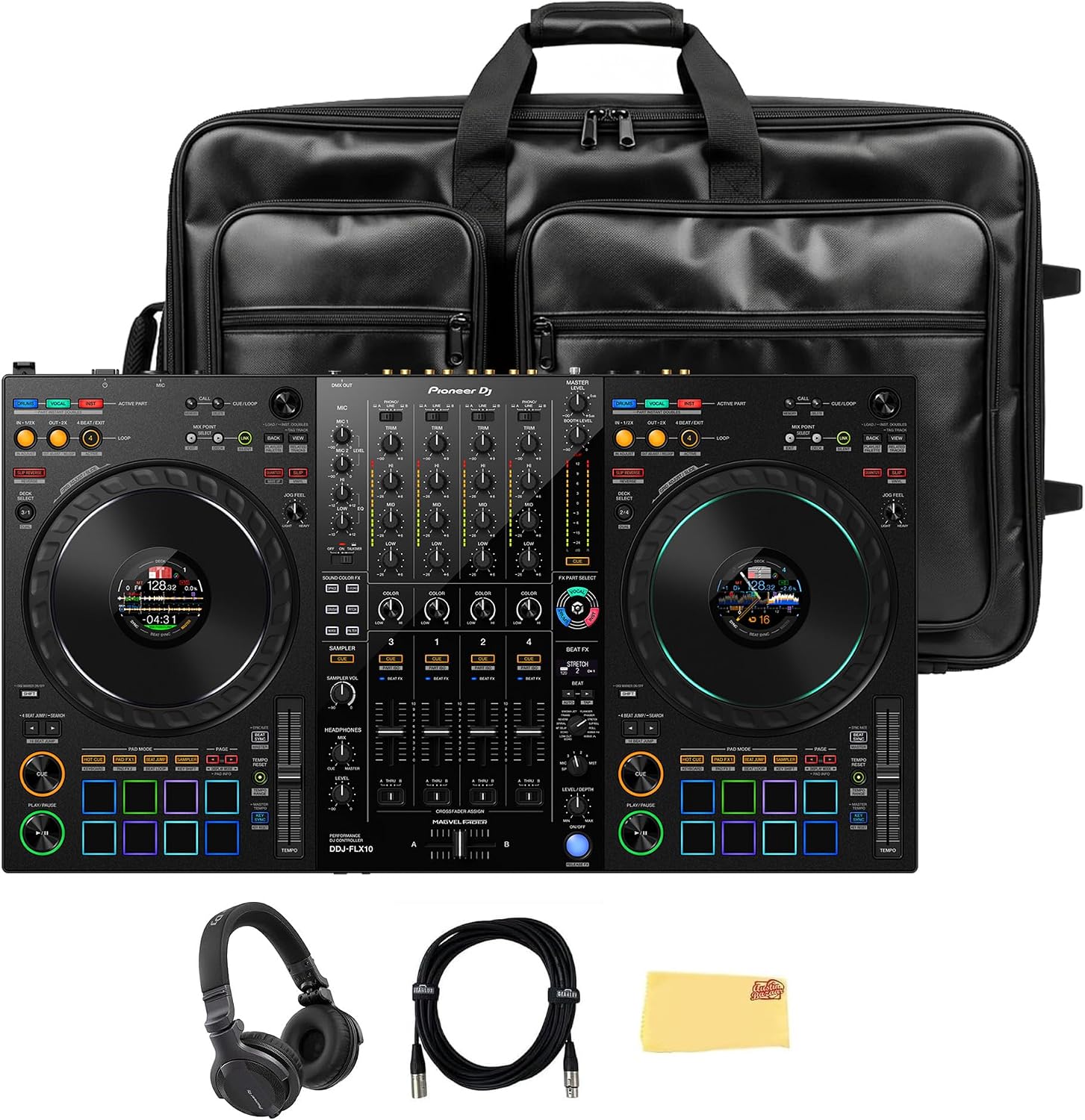
Pioneer DJ DDJ-FLX10 4-Channel Professional DJ Controller, Black Bundle
Four channels, plus a bundle that includes a carrying case, HDJ-CUE1 headphones, an XLR cable, and a polishing cloth
Still a laptop controller, so you are not buying independence
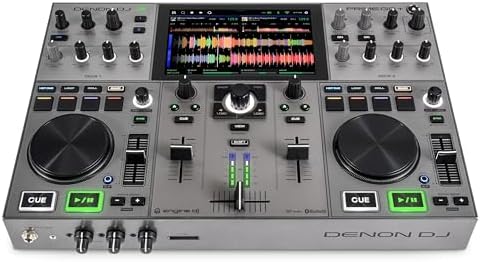
Denon DJ PRIME GO+ Standalone Portable DJ Controller
Standalone and genuinely portable, no laptop required
Smaller surface means fewer hands-on controls
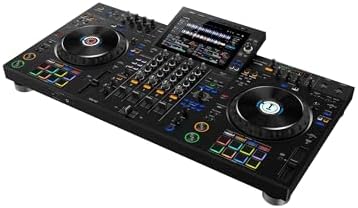
Pioneer DJ XDJ-AZ Professional 4-Deck All-in-One DJ System
Four decks, a 10.1-inch touchscreen, built-in Wi-Fi, SonicLink wireless tech, performance pads, and Beat FX
Heaviest, largest, and most expensive option here
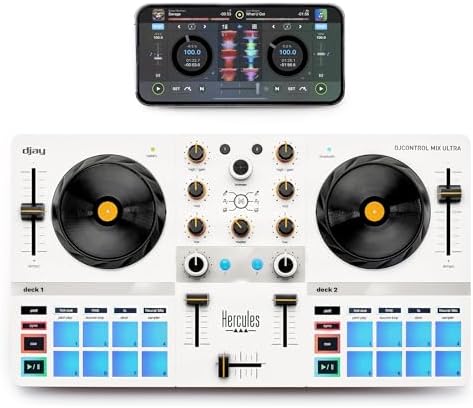
Hercules DJControl Mix Ultra Mobile DJ Controller for iOS and Android
Cheapest way into the craft, pairs with the phone already in your pocket
Depends entirely on a mobile device you also use for everything else
Prices and availability were captured from Amazon Creators API and may change.
What actually separates these four controllers
Three of these are not really the same kind of product, and pretending otherwise is how people waste money.
The DDJ-FLX10 is a four-channel controller, which in practice means it is a laptop accessory. The processing, the library, the analysis, and the screen all live in your computer. The controller gives you the physical surface: the jog wheels, the faders, the pads, the knobs. The XDJ-AZ and the PRIME GO+ are standalone, meaning the player, the mixer, and the interface are inside the box. The Hercules DJControl Mix Ultra goes the other direction entirely and works with an iOS or Android device, which makes it the most portable and the least self-sufficient of the four.
That one difference drives everything else you care about. Standalone gear costs more because you are buying a computer built into a road case. Laptop controllers cost less because you already own the computer. Mobile controllers cost least because the phone in your pocket is doing the heavy lifting.
The second axis is channels and decks. The DDJ-FLX10 gives you four channels. The XDJ-AZ is a four-deck system. That matters if you layer loops, run a vocal over an instrumental, or play back to back with another DJ. If your sets are two decks and a lot of patience, you are paying for hardware your hands will never touch.
The third axis is the interface and what comes in the box. The XDJ-AZ carries a 10.1-inch touchscreen, which is a real control surface, not a status display. The DDJ-FLX10 arrives as a bundle with a carrying case, HDJ-CUE1 headphones, an XLR cable, and a polishing cloth, which saves you a separate shopping trip and a separate set of decisions. The PRIME GO+ and the Hercules trade surface area for size, and that trade is either the whole point or a dealbreaker depending on your back.
The software question comes first
I will say the thing I say to every beginner who emails me: the bundle is half the value of a controller, and hardware specs are the other half. A controller is only as good as the software it unlocks and the library you build inside it. Before you spend anything, find out which software each unit works with, whether that software charges a subscription for the features you actually need, and how painful it is to move your playlists in and out.
This is where a lot of people get burned. They buy on fader count and jog wheel size, then discover that the export workflow they rely on, or the streaming service they use for weddings, sits behind a paywall. If a piece of software wants a monthly fee for basics, that changes the math on a $200 controller versus a $900 one very quickly. Run the three-year cost, not the sticker cost.
Pioneer DJ DDJ-FLX10: the four-channel workhorse with the bundle
This is the one I would point a working mobile DJ toward if they already trust their laptop and their library. Four channels means you can hold a track, a cappella, a loop, and an emergency request all at once, which is exactly what a wedding reception demands around hour three. The bundle is the practical part: a carrying case, HDJ-CUE1 headphones, an XLR cable, and a polishing cloth cover the accessories most people forget to budget for and then buy in a panic two days before a gig.
The honest trade-off is that this is not independence. Your laptop is now a single point of failure in a paying situation. If your machine decides to update itself mid-set, the controller is a very expensive paperweight until it finishes. Anyone who has watched a spinning beach ball during a first dance knows the feeling. Visit on Amazon →
Denon DJ PRIME GO+: standalone that fits under your arm
The name says standalone and portable, and those two words are the entire pitch. Standalone means no laptop in the chain: the unit plays your files, mixes them, and gives you an interface to work with. Portable means it goes in a bag instead of a flight case, which is a different life for anyone who plays three rooms in one night.
The trade you make is surface area. A smaller unit means fewer physical controls, which usually means more menu diving and more time looking at a screen instead of at the crowd. For a bar residency, a pop-up, or a wedding cocktail hour, that is a fine trade. For a four-hour peak-time set where you are riding gains and cutting fast, you will feel the size. Visit on Amazon →
Pioneer DJ XDJ-AZ: the all-in-one that replaces the booth
This is the biggest statement in the group. Four decks, a 10.1-inch touchscreen, built-in Wi-Fi, SonicLink wireless tech, performance pads, and Beat FX in one chassis. Built-in Wi-Fi and wireless audio mean fewer cables snaking across the booth, which matters more than it sounds like it should when you are setting up in a dark corner with a house tech breathing down your neck. A touchscreen that size changes how you browse and prep, because you are not squinting at a two-line display while a crowd waits.
The trade-off is everything that comes with size. It is the heaviest and most expensive unit here, and it is more machine than a bedroom setup will ever use. If you are not playing four decks or wireless audio, you are paying for capability that lives in the spec sheet instead of in your set. Visit on Amazon →
Hercules DJControl Mix Ultra: the phone-first entry point
The DJControl Mix Ultra is built for iOS and Android, which means the device you already carry is the brain of your setup. That is a genuinely smart way to start. No laptop purchase, no software install, no $900 decision before you have learned whether you enjoy beatmatching at all.
The honest limitation is the same thing that makes it cheap: your phone is now your rig, and it is also your camera, your messages, and the thing that runs out of battery. The physical surface is the smallest here, which is fine for learning and for house parties, and not the tool I would hand someone for a club set. Visit on Amazon →
Where each one gives something up
The DDJ-FLX10 gives up independence. You gain four channels and a bundle, and you accept a laptop in the signal chain.
The PRIME GO+ gives up surface area. You gain standalone portability, and you accept more time in menus and less room for your hands.
The XDJ-AZ gives up nothing technically and gives up everything practically: money, weight, and booth space. You gain the most complete single box in the group.
The Hercules DJControl Mix Ultra gives up power and durability. You gain the lowest entry cost in this comparison and a rig that fits in a backpack.
Who should buy which
Buy the Pioneer DJ DDJ-FLX10 if you are a mobile or wedding DJ with a trusted laptop, you want four channels, and you would rather not shop for a case and headphones separately.
Buy the Denon DJ PRIME GO+ if you play multiple small rooms, you hate carrying flight cases, and you want to leave the laptop at home.
Buy the Pioneer DJ XDJ-AZ if you are building a permanent booth, you want the biggest interface in the group, and wireless audio and a large touchscreen matter to how you actually work.
Buy the Hercules DJControl Mix Ultra if you are starting from zero, you want to spend as little as possible to find out if this hobby sticks, and you are fine working from a phone.
Questions I get asked about these four
Do I need four channels to start? No. You need two solid channels and a brain that plans transitions. Four channels are for layering, for back to back sets, and for the moment a bride's mother hands you her phone. If that is not your week, save the money.
Is standalone worth the premium? It is worth it the first time a laptop fails in front of a crowd. It is also worth it every time you load in alone. If you never leave the bedroom, it is harder to justify.
Should I buy the bundle or the pieces? Run the numbers. The FLX10 bundle covers a case, headphones, and an XLR cable in one purchase, and if you need all three, it is the simpler decision.
Which has the best jog wheels? I will not tell you what to feel. I will tell you to close your eyes and touch the platter before you buy, because cheap plastic wheels with no resistance make every mix feel like a mistake, and no spec sheet has ever told that truth.
Final word
None of these four is the wrong controller. They are wrong for specific people, and that is a different thing. The FLX10 is the practical choice for laptop DJs who want four channels and a bundle that covers the small stuff. The PRIME GO+ is for the DJ who values the walk-in more than the control count. The XDJ-AZ is the machine you buy when the booth is yours. And the Hercules is the two hundred dollars that tells you whether any of this is for you at all. Match the gear to the room you actually play, and you will stop shopping and start practicing.