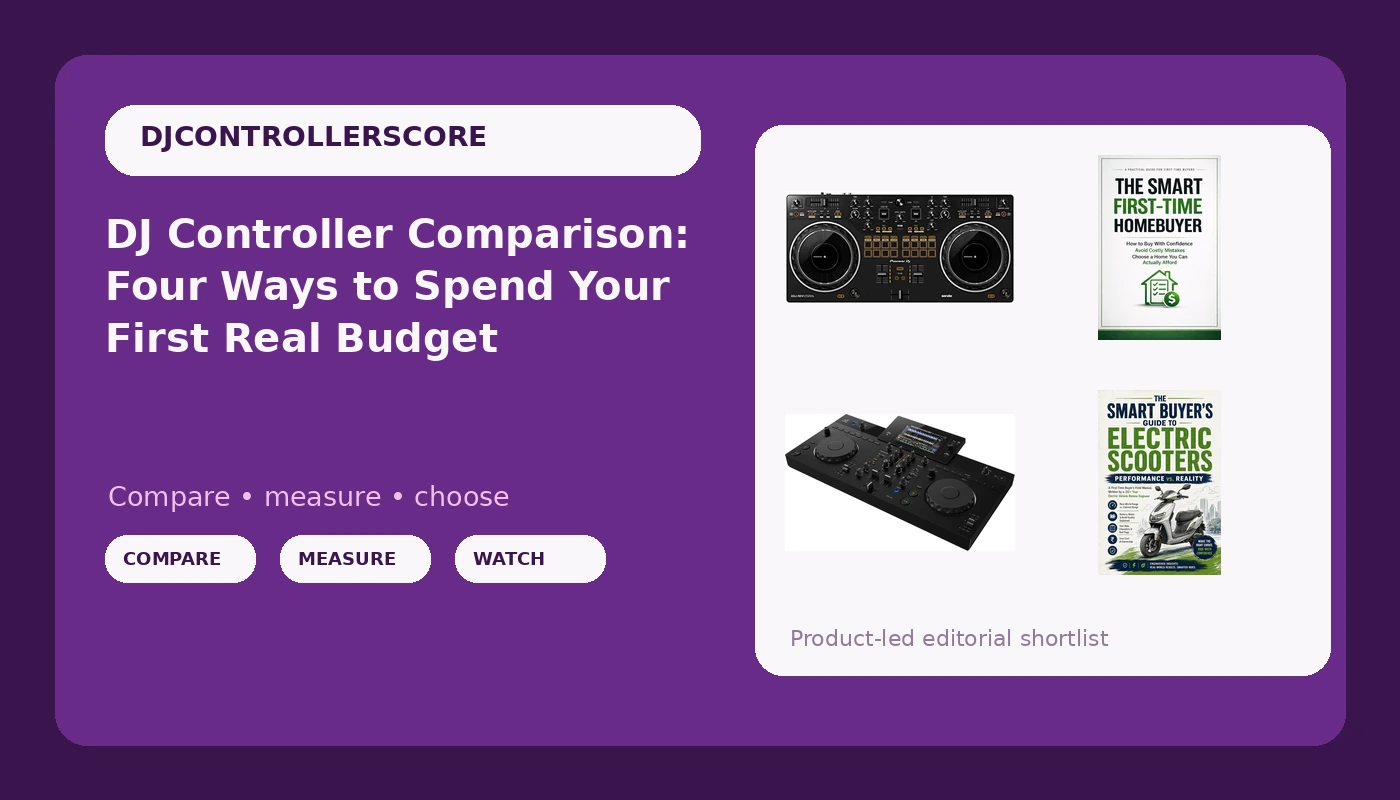
I have been DJing in Brooklyn for eight years, five of those on the wedding circuit, and I own three controllers plus a storage unit full of gear my friends keep borrowing. This DJ controller comparison started life as an email reply. The same question keeps landing in my inbox: what do I buy first, and how much of what I am being sold is marketing? So I did what I do with any question I get twice. I put the four products that keep ending up in the same conversation into one table, two controllers and two books, and I wrote down what each one is actually for.
The short answer: the Pioneer DJ DDJ-REV1 is the right first controller for most people, and the AlphaTheta XDJ-AN is the system you graduate to when you are tired of plugging a laptop in. The long answer involves software bundles, jog wheel feel, and why two books about houses and scooters are sitting in a gear comparison at all.
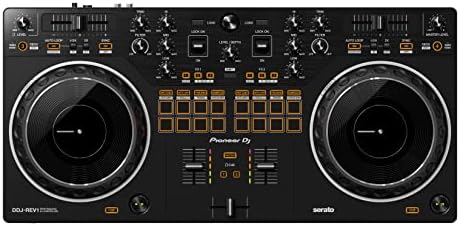
Pioneer DJ DDJ-REV1 2-deck Serato DJ Controller, Black
Serato comes in the name, and the software bundle is half the value of any controller; two decks done properly is all a new DJ actually needs
The laptop stays in the rig, and two channels means your third track has to live in your head, which is a skill, not a workaround

The Smart First-Time Homebuyer: How to Buy With Confidence, Avoid Costly Mistakes, and Choose a Home You Can Actually Afford
The only item here attached to a decision bigger than any controller, and the cheapest way to avoid a five-figure mistake
It will not teach you a single transition, and it is not gear, which is the whole point of it
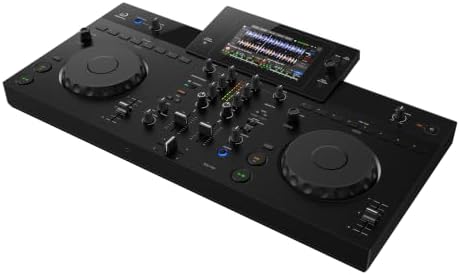
AlphaTheta XDJ-AN 2-Channel All-in-One DJ System, Touchscreen, Wi-Fi
No laptop between you and the crowd, a touchscreen where your screen time used to go, and Wi-Fi in a box that is the whole rig
It costs like a serious purchase because it is one, and it removes the laptop excuse you have been hiding behind

The Smart Buyer's Guide to Electric Scooters: Performance vs. Reality - How to Read Spec Sheets, Test Ride Smart, and Avoid Costly Mistakes (Written by a 20-Year EV Engineer)
Teaches the exact skill controller buyers need, which is reading a spec sheet without believing it
Same problem as the other paperback: it is information, not a fader
Prices and availability were captured from Amazon Creators API and may change.
How I judge a controller before it earns a recommendation
Close your eyes and touch the jog wheel. That is the review. Everything else is a spec sheet written by a marketing department. But since you cannot reach through a screen and put your hands on a unit, here is the checklist I run in my own head before any controller gets a recommendation from me, and the one I would hand to you before you spend anything.
First, can I play a four hour set on it without wanting to throw it? Thirty minutes of messing around tells you nothing. The gear reveals itself in the first hour of a real set, when you are reading a room and making decisions faster than you can think about the layout.
Second, the jog wheels. Cheap plastic platters make every pitch bend feel like a mistake, and you will feel that in your shoulders before you hear it in the mix. Resistance and weight matter more than the size printed in the marketing copy.
Third, the faders. Faders die. The only question is whether they die at a gig or after five hundred hours in the studio. I do not need a controller to survive a war. I need it to survive a paying gig with a line check and a bride who wants her first dance at exactly 8:15.
Fourth, the software bundle. A controller is only as good as the software it ships with. A great rig with a bad bundle is a paperweight with faders. A modest rig with the right software is a career.
The two-deck Serato controller: Pioneer DJ DDJ-REV1
The DDJ-REV1 is the traditional path, and the traditional path works. You buy the controller, you plug into a laptop, and the laptop does the thinking while you do the performing. Two decks, Serato in the name, and a black finish that will look exactly as tired as you feel after your third wedding of the month.
Here is why the Serato part matters more than any hardware number. Serato is a standard for a reason, the same way Pioneer is a standard for a reason. The industry did not arrive there by accident, and neither will you. When you walk into a booth and the house rig runs the software you already practice on, you are not learning a new tool at load in time, you are playing.
The REV badge comes from the scratch world, and the layout reflects that lineage. If you came up watching battle DJs on YouTube at 2 a.m., this is the closest thing to that feel in a starter price bracket, and the learning curve is honest rather than punishing.
What it is not is a standalone system. The laptop stays in the rig, and that means a screen, a cable, a battery, and one more thing that can fail at 11 p.m. I have watched a laptop die mid-set. It is survivable, but you will remember it.
Who it is for: the bedroom DJ who wants to practice every night, the wedding and party DJ who needs a reliable two channel rig, and anyone who plans to upgrade in two years and wants something that holds value when they do. Gear is not the bottleneck, practice is, and this is a practice machine.
The all-in-one: AlphaTheta XDJ-AN
The XDJ-AN is the other philosophy entirely: two channels, an all-in-one build, a touchscreen, and Wi-Fi. There is no laptop in the picture, which sounds like a small detail until you have played a set where the picture was the whole problem.
An all-in-one forces a decision that laptop DJs keep postponing. Your library lives in one place. Your workflow is one workflow. You stop treating the screen as a safety net and start treating the rig as an instrument. That is uncomfortable for about three sets and liberating for the next three hundred.
You do not need four channels to start, and honestly most working DJs do not need four channels at all. Two solid channels and a brain that plans transitions will carry you through a club night, a wedding, and a warehouse party. The extra channels are usually anxiety with XLR outputs.
The touchscreen is the part that changes the ergonomics. When you are used to glancing down at a laptop two feet away, having the information on the unit itself tightens the loop between hearing and doing. The Wi-Fi is the part that quietly matters in 2026: fewer cables, fewer adapters, one less thing to forget in the car.
The honest trade-off is cost and commitment. This is not the purchase you make in your first month. It is the purchase you make when you already know how you play, you are tired of the laptop, and you want one box that does the job. Buy it before that point and you will resent it, because you will not yet know what to do with it.
Why two books are in a controller comparison
Fair question. I am not going to review a paperback the way I review a fader. But the two books in that table are here because they teach the single skill that separates a good gear decision from an expensive lesson: reading a claim and figuring out what it is actually worth.
Take The Smart Buyer's Guide to Electric Scooters. The subtitle says it plainly: how to read spec sheets, test ride smart, and avoid costly mistakes, written by a twenty year EV engineer. Swap the word scooter for controller and you have described every gear article I have ever wanted to write. Manufacturers put numbers on a box because numbers sell. Top speed, range, motor watts, platter size, channel count. What the spec sheet never tells you is whether the thing feels right in your hands at hour three, and whether the parts that touch your body most often are the parts that were built to last.
That is the same trap as a controller stamped pro grade at a plastic price. The scooter book is a manual for distrusting marketing in a category where the buyer cannot easily verify anything before purchase, which is exactly the position you are in when you are shopping for a first controller online at midnight.
The Smart First-Time Homebuyer is here for a different reason. It is about a decision an order of magnitude larger than any piece of gear, and yet the discipline is identical: knowing what you can actually afford, avoiding the mistakes that cost the most, and refusing to let someone else's urgency set your budget. A house and a controller are not the same purchase, but the person who cannot tell the difference between what they can afford and what they have been approved for is the same person who buys four channels before they can mix on two.
The trade-offs the table cannot show
Laptop versus standalone is the real fork in this comparison, not price. The Serato controller keeps you flexible and cheap, and it keeps a computer in your signal chain. The all-in-one removes the computer and asks you to commit. Neither is wrong. They just fail differently.
Resale is the second thing. Names hold value. If you buy the standard, you can sell the standard when you upgrade, and that money funds the next thing. If you buy an off brand bargain, you own it until it dies.
Subscriptions are the third. Before you buy any controller, read what the software costs after the first year. I have walked away from rigs over a monthly fee for features that should be free, and I would do it again.
And the fourth is the one nobody puts in a table: practice time. A cheaper controller you play five nights a week beats an expensive one you play twice a month. Every time.
Who should buy what
If you are brand new and you want to practice tonight, buy the Pioneer DJ DDJ-REV1. It is the gateway, the bundle is right, and it resells when you move on.
If you have paid your dues on a laptop and you are done with screens in your signal chain, the AlphaTheta XDJ-AN is the upgrade that changes how you play, not just what you play on.
If you are about to make the largest purchase of your life, read The Smart First-Time Homebuyer first. The controller can wait a month. The mortgage cannot.
And if you want to get better at seeing through spec sheets in any category, the scooter guide is the cheapest education in this table.
What I am chasing next
Jog wheel durability is the thing I am chewing on this year. Cheap platters feel fine for a week and then tell you the truth in a long set, and that is the difference between a controller you keep and a controller you flip on a marketplace site at a loss. That question is what this site exists to answer, one fader at a time.
The other thing I keep thinking about is how much of this hobby is really a reading comprehension test. The people who end up happy with their gear are almost never the ones who spent the most. They are the ones who knew what they were buying before the box arrived.