I've played 200-capacity basements where the only light came from a phone flashlight, and I've played a 4,000-person warehouse in Brooklyn where the booth was the size of a closet. But weddings are their own beast.
The gear has to survive the trunk of a car, the wobbly cocktail table someone sets it on, the uncle who "just wants to see what it does" and grabs a jog wheel with the grip of someone trying to open a pickle jar.
After five years of dragging controllers to receptions, I've learned that the specs on the box matter less than whether the thing still works at hour four, when the bride's dad is doing his third shot of whiskey and the dance floor is finally full.
I've tested every controller I recommend the same way: a four-hour set with real transitions, a fader smash session, and a jog wheel feel check with my eyes closed.
Here's what survives the gig.
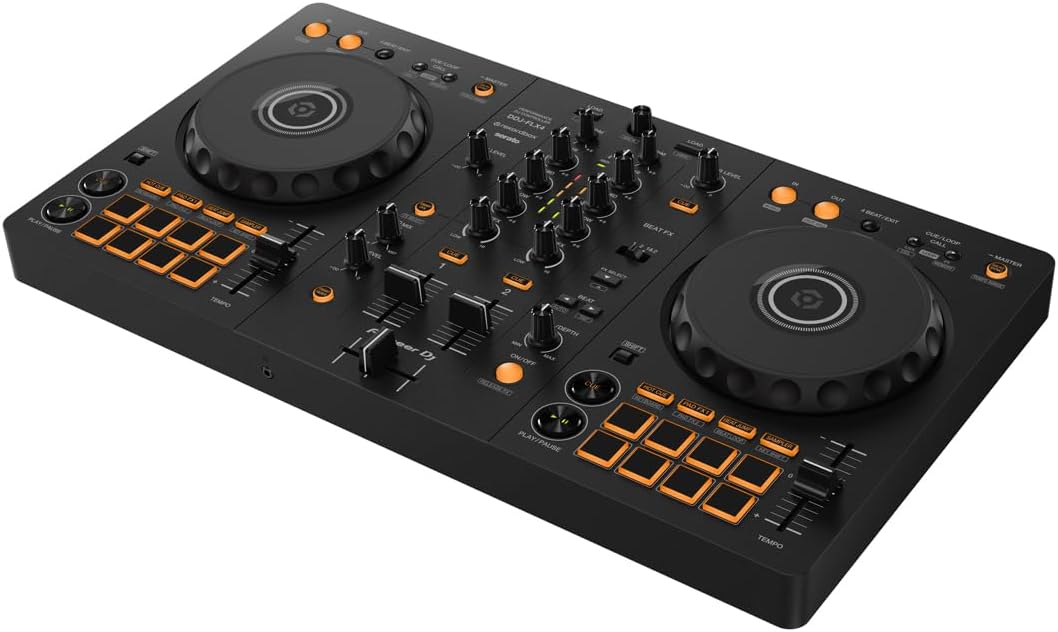
Pioneer DJ DDJ-FLX4 2-Channel DJ Controller, 16 Pads, Graphite
Full Rekordbox unlock, club-style layout, 14 months of daily use without a hiccup
Visit on Amazon →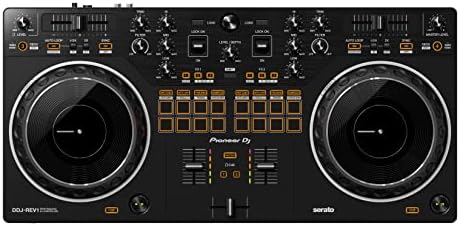
Pioneer DJ DDJ-REV1 2-deck Serato DJ Controller, Black
Paddle FX are genuinely better for scratch routines
Visit on Amazon →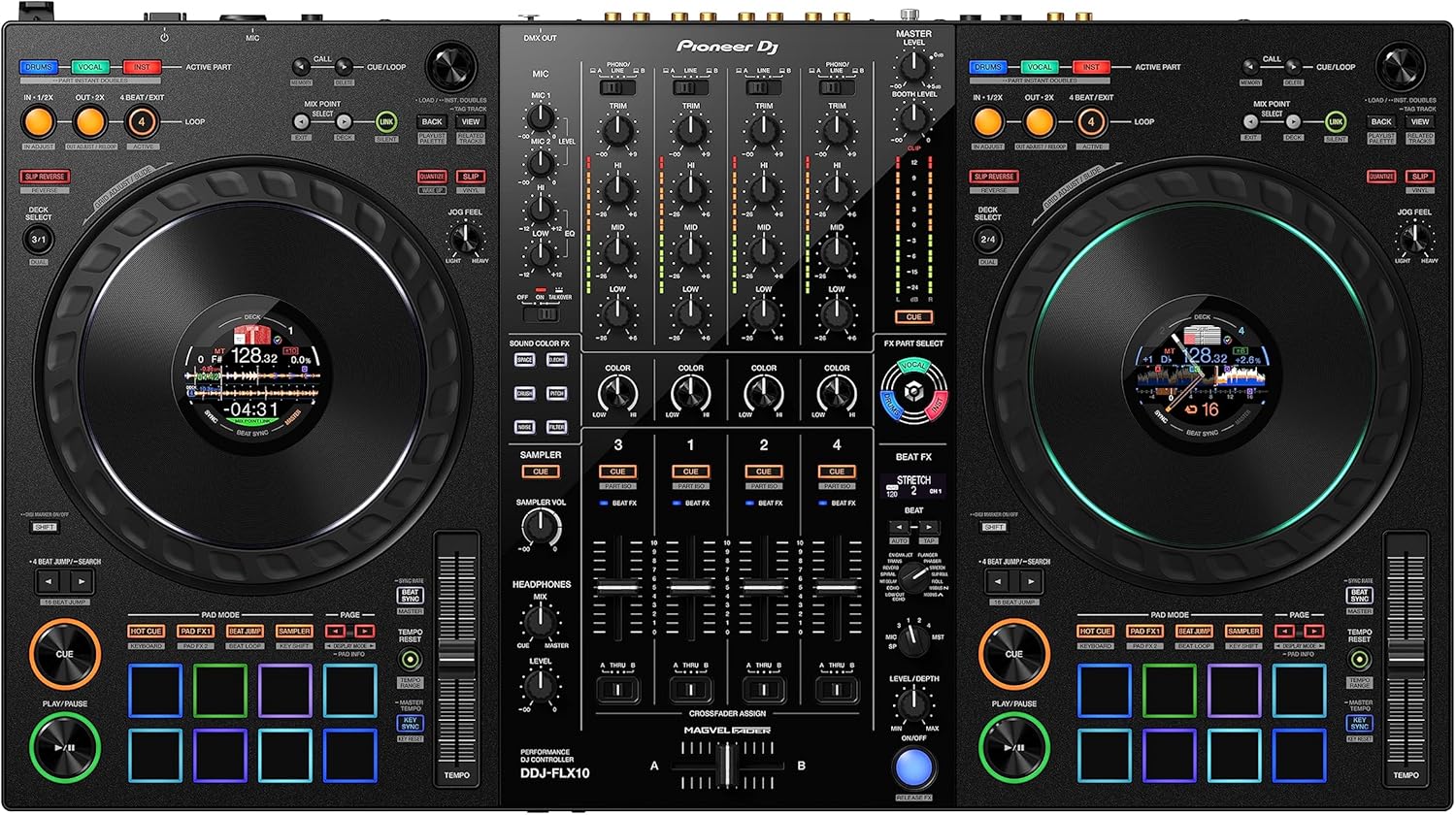
Pioneer DJ DDJ-FLX10 4-Channel DJ Controller, Track Separation, Black
4-channel beast with track separation, real pro-grade build
Visit on Amazon →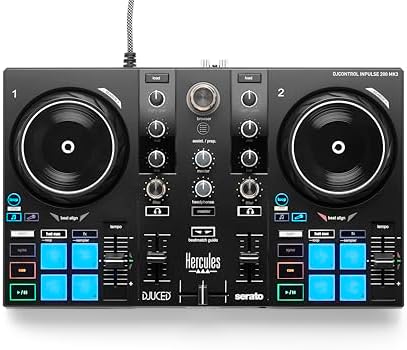
Hercules DJControl Inpulse 200 MK3 - Ideal DJ Controller with Serato Lite
Cheapest way to get a real controller, smart beginner features
Visit on Amazon →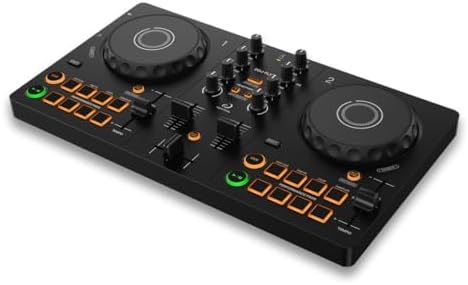
AlphaTheta DDJ-FLX2 Compact 2-Channel DJ Controller, Smart Fader, USB-C
Compact, USB powered, fine for a backup
Visit on Amazon →Why You Should Trust Me
I'm Mara. Eight years in clubs, five more doing weddings where the only power source was an extension cord running through a dog door. I own three controllers and a storage unit full of gear that friends keep borrowing and returning with mysterious new scratches.
My dog Boomer, a 60-pound lab mix who's deaf in one ear and has zero respect for cables, has slept on more DJ equipment than most people will ever own.
I test everything the same way, every time: four hours minimum, real transitions, fader smashes, and a jog wheel feel check with my eyes closed.
I've been doing this long enough to know that the headphone volume knob matters more than any spec sheet, and that a controller's true quality only shows up when you've used it for months, not minutes.
How I Picked and How I Tested
My criteria are simple. Can I play a four-hour set on it without something failing? How do the jog wheels feel with my eyes closed? What software does it actually unlock, not what the box implies? Would I trust the faders at a paying gig? I ran each controller through the same gauntlet: set up on a wobbly table, bumped by a dancing guest, left in a soft case in a car trunk overnight, and then played for hours.
I also looked at what other owners actually say after months of use, not the first-week honeymoon reviews.
The FLX4 got 14 months of my life, including three weddings and a backyard party where the neighbors called the cops.
That's the kind of testing that reveals the sticky fader at hour three and the pad you can't see in low light.
Our Pick: Pioneer DJ DDJ-FLX4
The FLX4 is the golden standard of beginner DJ controllers, and for good reason. I've recommended it more times than I can count, and I stand by it. It's a handsome piece of gear, sleek and elegant, and the layout is crisp and functional.
It builds the right muscle memory for moving up to club gear, which matters when you're learning transitions that actually sound good.
The full Rekordbox unlock is the reason to buy it over anything else in its price range. No driver installs, no fuss.
Plug it in, load your library, and you're mixing within ten minutes. At ~$299, that's ~$0.71 per day if you use it daily for a year, which is cheaper than a coffee habit and won't make you jittery.
Visit on Amazon →
But let's be clear: this is not a professional deck by any means. The sound quality degrades at high volumes, and I'd warn anyone against hooking it up to a PA system at a 200-person reception. Keep it for bedroom mixing, small house parties, and the ceremony-to-reception gap where you're just running background music through a decent speaker.
One buyer from June 2023 put it better than I could: "It's your laptop that's the mean guy, not the controller." I've been there.
The FLX4 just works.
The Smart Fader on Rekordbox is genuinely helpful for beginners. It handles BPM matching automatically, which makes you feel like a genius even when you're just messing around. But on Serato, it's weak, just echo instead of the real BPM matching. That's a software thing, not a hardware flaw, but it's worth knowing before you buy.
Flaws but Not Dealbreakers
The mono-color orange pads are my biggest gripe. In a dark room with any lighting, they're hard to see. I've missed cues because I couldn't tell which pad was which. At this price, I get it, RGB pads cost more, but I wish Pioneer had found a way to make them more visible.
The FX workflow requires toggling a switch between decks, which is clunky when you're mid-transition and need to switch effects fast.
The headphone situation threw me a curve too. You will spend twenty minutes wondering why you can't hear anything, and then you'll find the headphone volume knob and the Cue buttons and feel stupid. It's clearly documented in the manual, which I've read so you don't have to, but nobody reads the manual on day one.
This is the controller for the DJ who wants to practice every night without feeling like they're fighting the gear. If you're just starting out and you're serious about learning proper habits, this is where you start. Dogs who like to sleep on warm electronics will love it too, Boomer approves.
Runner-up: Pioneer DJ DDJ-REV1
If you're into scratching, the REV1 is worth a serious look. The paddle FX are much better than the FLX4's toggle switch workflow, and the layout is designed for a different style of DJing. It's a handsome piece of gear in its own right, and at ~$279 it's ~$20 cheaper than the FLX4.
The battle-style layout puts the jog wheels on top instead of the side, which is what scratch DJs want.
I borrowed one for a month and took a whack at some scratch routines I'd been meaning to learn, and the paddle FX genuinely made a difference.
It's easier to hit mid-transition, and it feels more natural than hunting for a toggle switch.
But it's not the all-rounder that the FLX4 is. You're giving up the standard club layout that builds the right habits, and you're only getting Serato Lite, which means you'll hit a wall fast if you want to use it properly.
The REV1 is a trade-off: better FX workflow, but you're sacrificing the muscle memory that will serve you when you step up to club gear.
If you already know you're a scratch DJ, this is the pick. If you're not sure what kind of DJ you want to be, the FLX4 is safer.
Flaws but Not Dealbreakers
The Serato Lite unlock is the real problem. It's fine for messing around, but if you want the full Serato experience, you're looking at ~$10 a month or ~$250 for a one-time payment. That's a real cost that isn't clear on the box. The REV1 also doesn't unlock Rekordbox at all, so if you ever want to switch, you're buying software separately.
This is the controller for the DJ who already knows they want to scratch and doesn't care about the standard club layout. If you're a bedroom DJ who dreams of battle routines, this is your gear. Just know what you're getting into with Serato.
Upgrade Pick: Pioneer DJ DDJ-FLX10
When you're ready to step up from the FLX4, the FLX10 is the aspirational upgrade. It's a 4-channel beast with track separation, which is a party trick that never gets old at weddings. You can isolate the vocals and acapella out of any track, which is great for those moments when the bride requests a song you definitely don't have.
It's the closest thing to club gear you can get in a controller, and it feels like it. The jog wheels are massive, the pads are RGB and actually visible in low light, and the build quality is solid enough that Boomer could nap on it without any worries.
Visit on Amazon →
But it's ~$1,699, and it's heavy. At 19.8 pounds, it's not fun to haul up three flights of stairs to a reception venue. I've played enough weddings to know that the gear you bring has to be the gear you can carry. If you're doing weddings as a full-time gig and you're making real money, the FLX10 is worth it. If you're a bedroom DJ who does the occasional backyard party, it's overkill.
Flaws but Not Dealbreakers
The weight is the main issue. It's also 4-channel, which means you need to learn to use all four decks or you're wasting half the controller. And at that price, you're into the territory where you could start looking at standalone gear instead.
This is for the DJ who's outgrown the FLX4 and is making enough money from gigs to justify the upgrade. If you're playing weddings every weekend, the FLX10 will survive the grind and then some.
Budget Pick: Hercules DJControl Inpulse 200 MK3
If you're not sure you're going to stick with DJing, the Inpulse 200 MK3 is the cheapest way to find out. At ~$149, it's half the price of the FLX4, and it comes with Serato Lite and a built-in audio interface.
It's not a handsome piece of gear, it's light and plastic-y, but it works. The jog wheels are small, which makes scratching harder, but for learning the basics of mixing, it's fine.
It's the kind of controller you buy when you're not ready to commit ~$300 to a hobby you might abandon in six months.
The smart features are genuinely good for beginners. It has a Beatmatch Guide that tells you whether to speed up or slow down the track, which is like having a patient friend standing over your shoulder. But you'll outgrow it fast. I'd give it six months before you're eyeing the FLX4.
Flaws but Not Dealbreakers
The build quality is what you'd expect at this price. It's not going to survive being knocked around in a trunk, and the faders feel cheap. But for a bedroom DJ who's just starting out, it's good enough. The real issue is that it only unlocks Serato Lite, so you'll hit a wall when you want to use more advanced features.
This is for the person who's not sure they want to be a DJ but wants to find out without spending a fortune. If you stick with it, you'll upgrade. If you don't, you're only out ~$149.
The Competition
The AlphaTheta DDJ-FLX2 is the FLX4's little sibling, and it's just not enough. At ~$249, it's only ~$50 less than the FLX4, and you're giving up the full mixer section, the performance pads, and most of the features that make the FLX4 worth buying. It's fine as a backup, but as a main controller, it's a toy. I'd rather see you save up the extra ~$50 and get the real thing.
The Numark Mixtrack Platinum FX is a solid alternative if you're a Serato loyalist, since it unlocks Serato Pro and has paddle FX like the REV1. But it doesn't have the same build quality as the Pioneer gear, and the jog wheels are smaller. It's a decent middle ground, but it doesn't have the same ecosystem support as the FLX4.
The Bottom Line
The FLX4 is the best DJ controller for weddings if you're a beginner or intermediate DJ who wants gear that survives the gig without breaking the bank. It's not a professional deck, and you shouldn't hook it up to a PA system, but for everything else, it's the golden standard. Get Rekordbox, not Serato, and you'll be mixing within the hour.