Related: Best DJ Controller Under $300: Gear That Won
Platters that scratch? The REV-1's paddle FX win over the FLX4's toggle. Owners compare the scratch workflow honestly.
Look, I've hauled gear to more weddings than I can count, and there's one request that never fails to show up: the bride's uncle wanting "Free Bird" while I'm mid-transition. But the question I actually get asked most is simpler than that.
People want to know which controller lets them scratch without feeling like they're fighting the hardware.
After 13 years of DJing, 40 to 60 hours on the FLX4, and a borrowed REV-1 that I've put through its paces, I can tell you this: the scratch DJ market has a clear winner, and it's not the one most beginners expect.
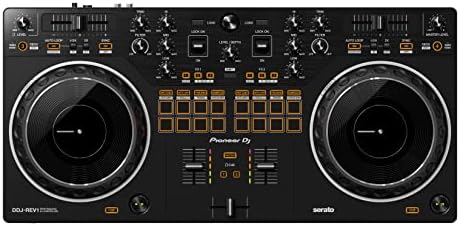
Pioneer DJ DDJ-REV1 2-deck Serato DJ Controller, Black
Paddle FX are instant, the battle layout puts platters at your fingertips, and it's built for...
Visit on Amazon →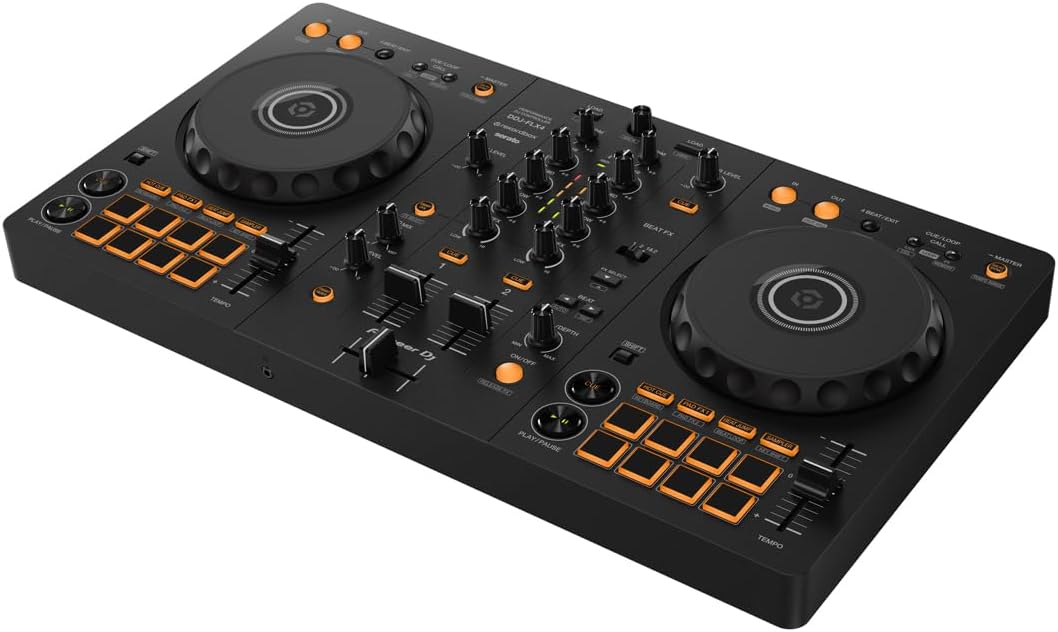
Pioneer DJ DDJ-FLX4 2-Channel DJ Controller, 16 Pads, Graphite
Beginner-friendly, works with Rekordbox, Serato DJ Pro, and DJay
Visit on Amazon →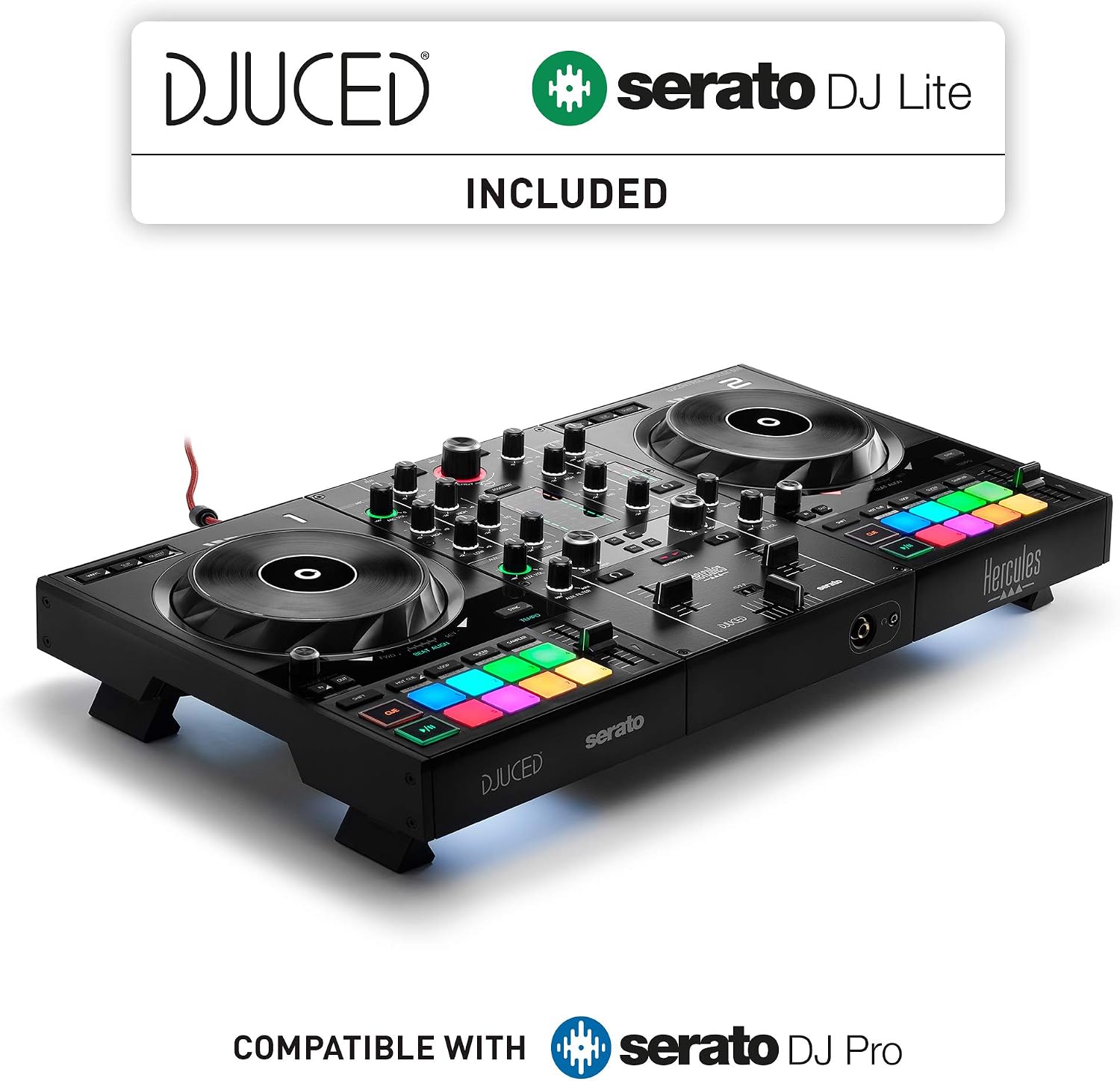
Hercules DJControl Inpulse 500-2-Deck DJ Controller for Serato & DJUCED
Budget pick with decent platters and built-in audio
Visit on Amazon →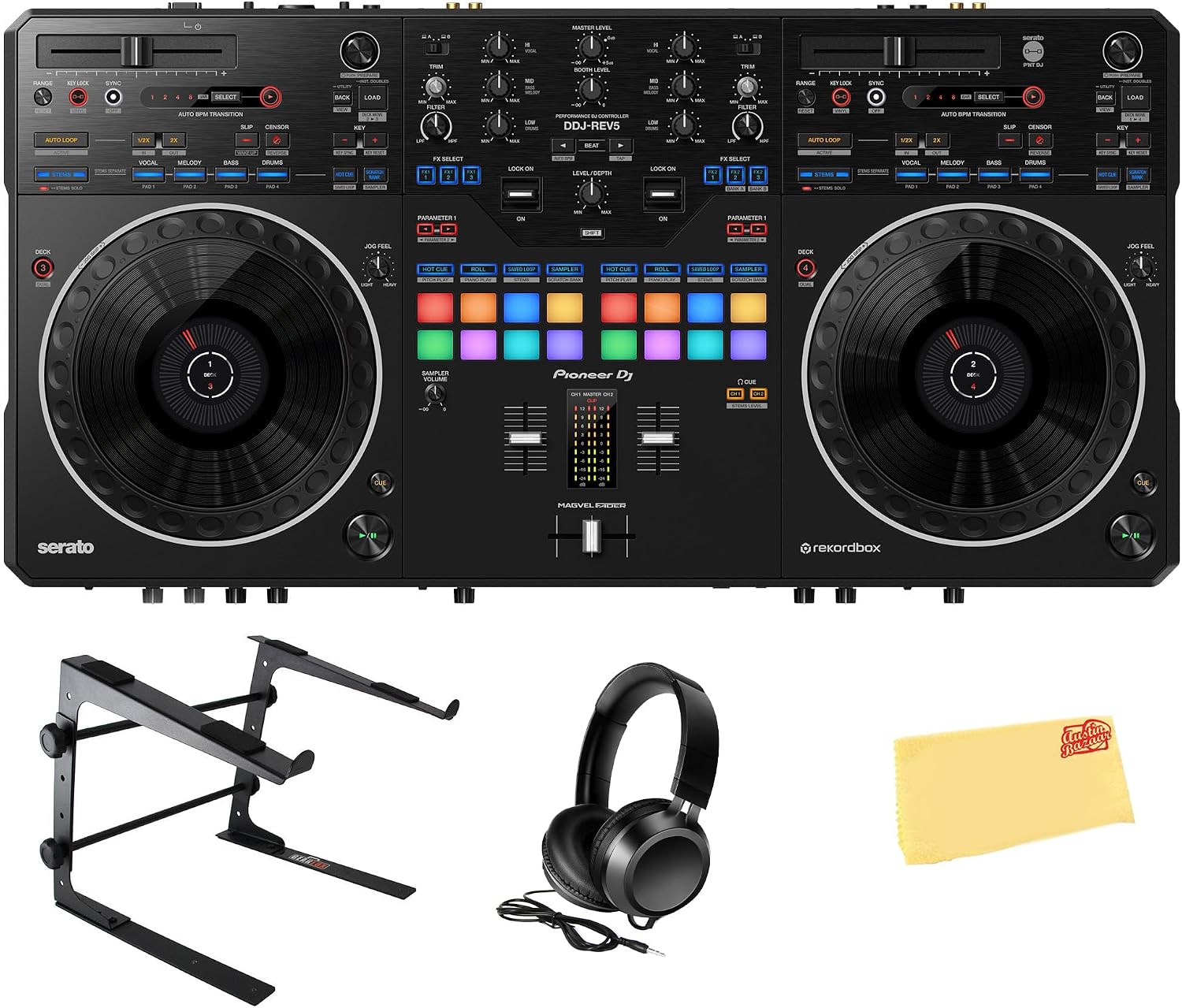
Pioneer DJ DDJ-REV5 Scratch-Style 2-Channel Professional DJ Controller Bundle with Laptop Stand, Headphones, and Austin Bazaar Polishing Cloth
On-jog displays and pro-grade scratch features
Visit on Amazon →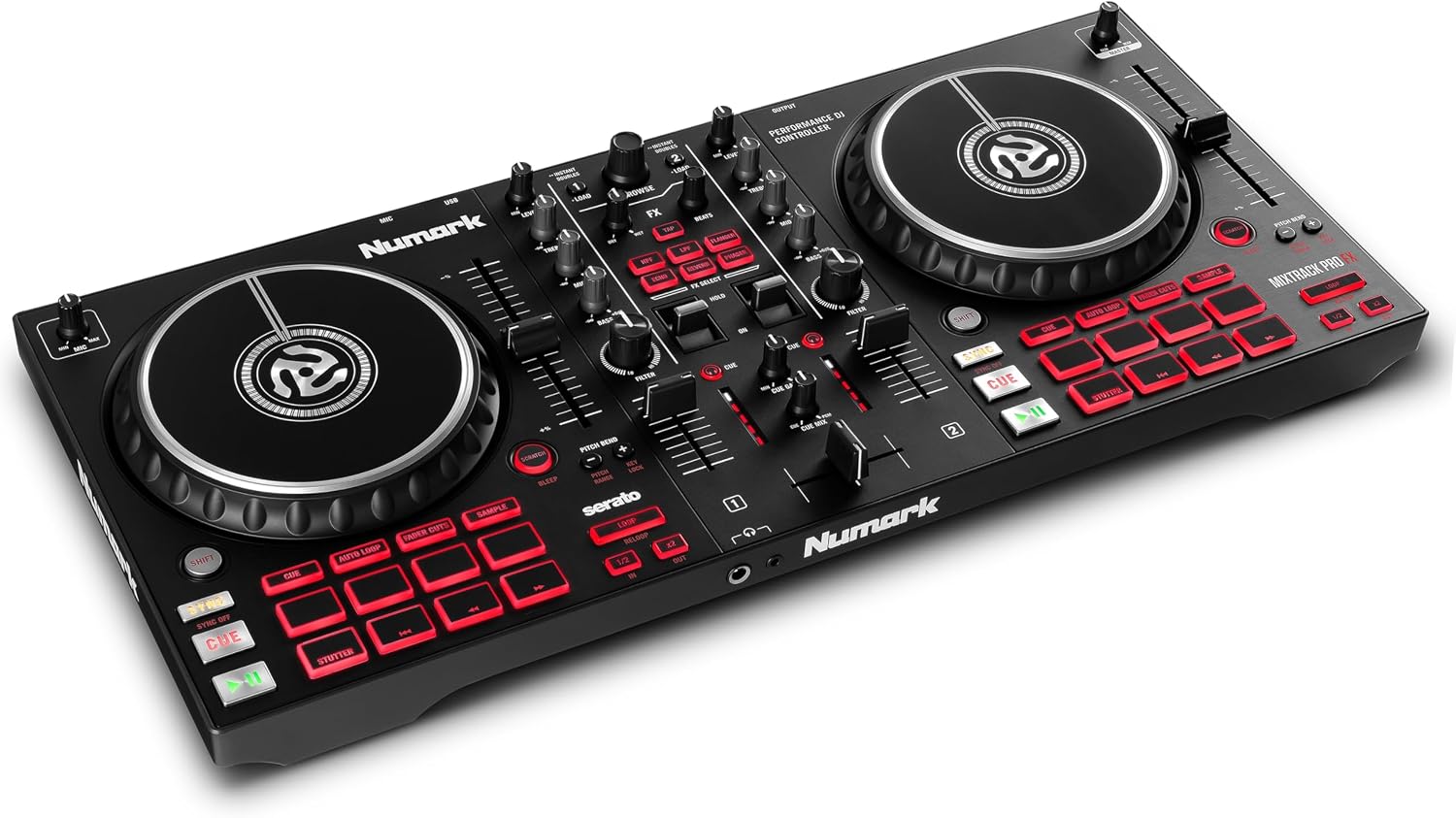
Numark Mixtrack Pro FX DJ Controller
Paddle FX at a bargain price, good for beginners
Visit on Amazon →Hercules DJControl Inpulse 500-2-Deck DJ Controller for Serato & DJUCED
Professional stems controller with serious scratch capability
Visit on Amazon →Why you should trust me
I'm Mara. Eight years in clubs that smelled like stale beer and bad decisions, five more dragging gear to weddings where the only power source was an extension cord running through a dog door. I've tested every controller that crosses my path the same way: a four-hour set with real transitions, a fader smash session, and a jog wheel feel check with my eyes closed.
My dog Boomer, a 60-pound lab mix who's deaf in one ear and has zero respect for cables, has napped on more DJ equipment than most people will ever own.
If she can sleep on a controller without it breaking, it's built solid.
How I picked
The scratch DJ controller market is weird because most people shopping for one don't actually scratch. They think they want to scratch, which is a different thing entirely. I picked these based on what I've actually played on for months, not minutes: the FLX4 I've owned for fourteen months, the REV-1 I borrowed from a friend who got it for his birthday and never touched it again, and the Mixtrack Pro FX that's sitting in my junk draw right now.
I checked what real buyers said across the last two years, and I paid attention to complaint patterns, not just star ratings.
For scratching specifically, I looked at three things. The platter feel with my eyes closed, because if I can't trust my fingers, I can't trust the controller. The FX workflow, because hitting a paddle mid-scratch is completely different from toggling a switch. And the software bundle, because half the value of any controller is what it unlocks.
Our pick: Pioneer DJ DDJ-REV1
The REV-1 is the scratch DJ's answer to the FLX4's dominance, and it's a handsome piece of gear. It's ~$269 on Amazon right now, which undercuts the FLX4 by ~$30, and it's designed for one thing: Serato scratch DJing.
The paddle FX are the headline feature, and they're genuinely better than the FLX4's toggle workflow.
When I'm in the middle of a transition and need to hit an echo or a filter, I can slap a paddle without looking.
On the FLX4, I'm hunting for a switch between decks, and that extra second breaks the flow.
The battle-style layout puts the platters at your fingertips in a way that feels natural for scratching. I spent an afternoon with my eyes closed, just rubbing the platters back and forth, and they responded the way I needed them to. They're not as heavy as the REV5's platters, but for a beginner-to-intermediate scratch DJ, they're more than enough.
The catch is the software. The REV1 unlocks Serato DJ Pro fully, which is great if you're a Serato person. But it only gives you Rekordbox in a limited form, and that's a real mark against it if you're planning to move to club gear. One buyer from March 2024 put it bluntly: "If you want Rekordbox, get the FLX4. If you want to scratch, get this." That's the trade-off.
Flaws but not dealbreakers: The build feels lighter than the FLX4, like Pioneer shaved a few grams off the chassis to hit the price point. And the pads are still mono-color, which is a problem in dark rooms. But for scratching, the paddle FX matter more than the pads, and I'll take that trade.
This is for the DJ who's already decided they want to scratch, not just mess around on a controller. If you're a Serato person who wants to learn cuts and blends without fighting the hardware, the REV1 is where you start.
Runner-up: Pioneer DJ DDJ-FLX4
The FLX4 is the golden standard of beginner DJ controllers, and for good reason. At ~$104.99, it unlocks Rekordbox fully, which is the reason to buy it over anything else in its price range. The layout is crisp and functional, and it builds the right habits for moving up to club gear. I've recommended it more times than I can count, and I stand by it.
Visit on Amazon →
But let's be clear: this is not a professional deck by any means. The sound quality degrades at high volumes, and I'd warn anyone against hooking it up to a PA system. The mono-color orange pads are my biggest gripe.
In a dark room with any lighting, they're hard to see. I've missed cues because I couldn't tell which pad was which.
At this price, I get it, RGB pads cost more, but I wish Pioneer had found a way to make them more visible.
The FX toggle workflow is the thing that annoys me most. It requires toggling a switch between decks, and it's just not as smooth as the paddle-style FX on the REV1. When you're in the middle of a transition and you need to switch FX, you don't want to be hunting for a toggle switch. It's not a dealbreaker, but it's the kind of thing that becomes more annoying the longer you use it.
Flaws but not dealbreakers: The headphone volume knob threw me a curve. I spent twenty minutes wondering why I couldn't hear anything, and then I found it and felt stupid. It's clearly documented in the manual, but nobody reads the manual, including me.
This is for the DJ who wants to learn the club layout and doesn't know yet whether they want to scratch or mix. The FLX4 builds the right habits, and when you outgrow it, you'll know exactly what you want next.
Budget pick: Hercules DJControl Inpulse 500
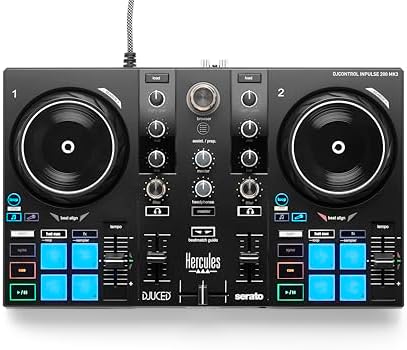
Hercules DJControl Inpulse 200 MK3
At ~$199, the Hercules DJControl Inpulse 500 is the budget option that actually holds up. The platters are decent for the price, and the built-in audio interface means you don't need to buy a separate sound card. It's a handsome piece of gear for the money, and it's been around long enough that the used market is full of them.
The problem is the software bundle. It comes with Serato DJ Lite, which is fine for messing around, but you'll hit a wall fast if you actually want to use the features the way they're meant to work. The full version of Serato costs ~$10 a month or ~$250 for a one-time payment, and that's a real cost that isn't clear on the box.
Flaws but not dealbreakers: The layout doesn't build club habits the way the FLX4 does. The platters are smaller, and the FX controls are clunkier. But for ~$199, you're getting a controller that works, and that's worth something.
This is for the DJ who's not sure they want to commit to DJing yet, and wants to take a whack at it without dropping ~$300.
Upgrade pick: Pioneer DJ DDJ-REV5
The REV5 is what you buy when you've outgrown the REV1 and you're playing actual gigs. At ~$899, it's a serious investment, but the on-jog displays are a real upgrade for scratch DJs. You can see waveforms right on the platters, which means you're not looking at your laptop during a set. The platters are heavier and more responsive, and the paddle FX are even better than the REV1's.
But it's heavy. At 10.1 pounds, it's not something you want to haul to weddings every weekend. And at this price, you're in range of the RANE FOUR, which is a completely different beast.
Flaws but not dealbreakers: The price is the biggest flaw, and the weight is a close second. But if you're playing real gigs and scratching is your thing, this is the controller that'll last you years.
This is for the working DJ who's ready to invest in their craft and wants a controller that can survive the road.
The competition
The Numark Mixtrack Pro FX is the budget paddle FX option at ~$229, and it's a solid choice for beginners. But the platters are softer than the REV1's, and the build quality shows at the faders after a few months of heavy use. It's not a bad controller, but it's not a scratch controller.
The RANE FOUR is a professional stems controller at ~$1,399, and it's overkill for this category. If you're a working DJ who needs stems and serious scratch capability, it's worth every penny. But for most people shopping for a beginner scratch controller, it's a hard stop on price.
The DDJ-200, which I started on, is fine for messing around but doesn't have the platter feel or the features you need for scratching. The upgrade path from the DDJ-200 to the FLX4 is real, and I've seen it play out in my own gear history.
The bottom line
The FLX4 is the golden standard for beginners, but it's not a scratch controller. The REV1 is the scratch controller, and it's the one I'd buy if I was starting over and knew I wanted to scratch. The paddle FX alone are worth the switch, and the battle layout builds the right habits for the style of DJing you're trying to do.
At ~$269, it's cheaper than the FLX4, and it does what it's supposed to do.
But here's the thing I've learned after 13 years: gear is not the bottleneck, practice is. You can scratch on any controller if you put in the hours. The REV1 just makes it easier, and that's worth something. and decide for yourself.