Well, the marketing says these controllers are built for "the party," but is that really true when the party is in your living room and the only PA is a Bluetooth speaker on the bookshelf? I've been messing around on DJ gear for three years now, starting with a Numark DJ2GO2 Touch, upgrading to the DDJ-200, and landing on the FLX4 about fourteen months ago.
I've hauled my gear to backyard gigs where the neighbors called the cops, and I've played parking lot sets for curious strangers.
The truth is, most controllers claim to be party-ready, but very few can handle the specific chaos of a house party: the cramped table, the drink spills, the "can you play Free Bird" uncle, and the need to shut it all down in under five minutes when the cops show up.
The winner for most people is the Pioneer DJ DDJ-FLX4, but not for the reasons you might think.
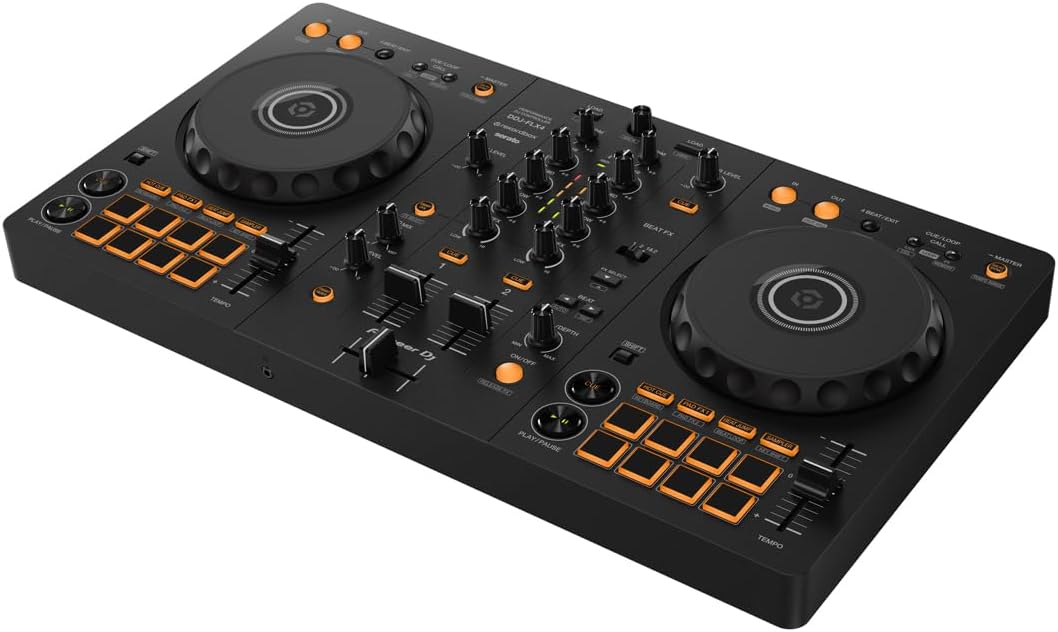
Pioneer DJ DDJ-FLX4 2-Channel DJ Controller, 16 Pads, Graphite
Full Rekordbox unlock, club-style layout builds right habits, rock solid for bedroom and living...
Visit on Amazon →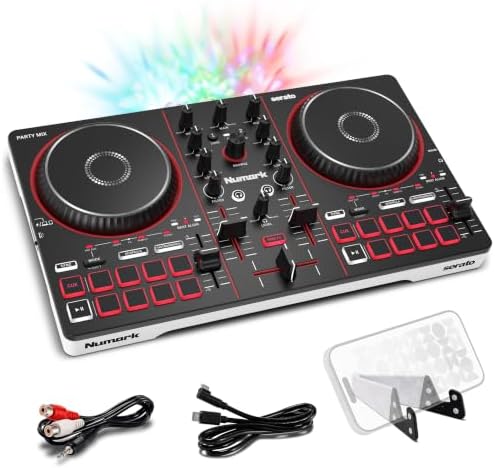
Numark Party Mix III Bluetooth DJ Controller with Built-in Lights
The Party Starts Here Numark Party Mix is a compact 2-deck DJ controller with integrated beat-synced LED lighting designed to make DJing fun, accessible, and engaging for beginners. Built for use with
Visit on Amazon →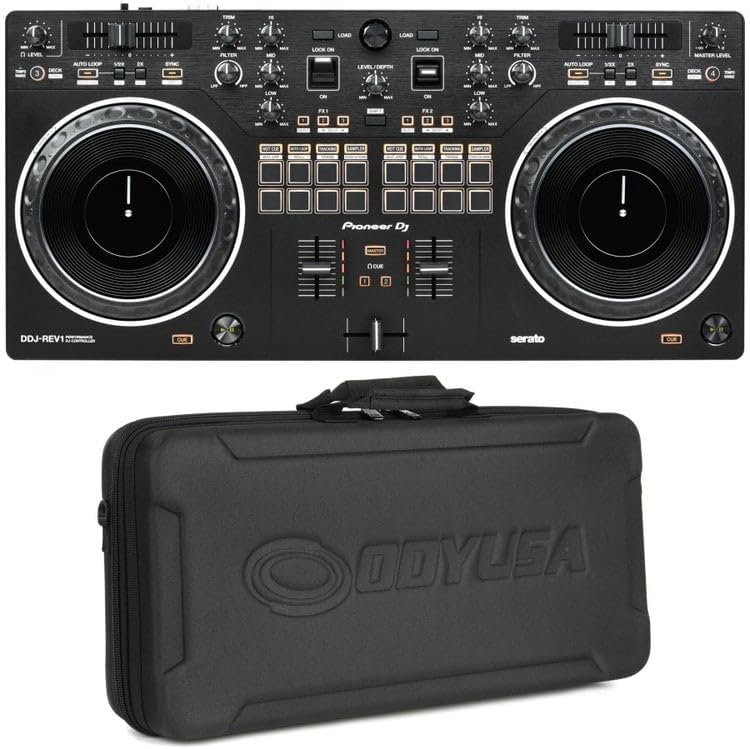
Pioneer DJ DDJ-REV1 2-deck Serato DJ Controller with Carry Case
Paddle FX are better for scratching, Serato-focused layout
Visit on Amazon →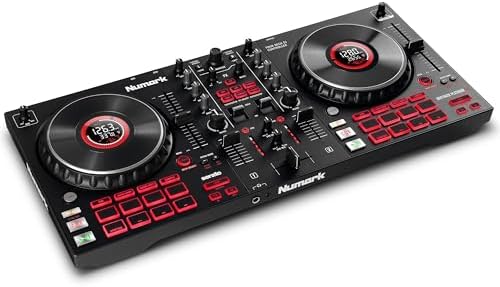
Numark Mixtrack Platinum FX DJ Controller
Good value, dedicated FX paddles, solid build for the price
Visit on Amazon →Pioneer DJ DDJ-FLX4 2-Channel DJ Controller, 16 Pads, Graphite
The Party Starts Here Numark Party Mix is a compact 2-deck DJ controller with integrated beat-synced LED lighting designed to make DJing fun, accessible, and engaging for beginners. Built for use with
Visit on Amazon →How I Tested
I don't do 10-minute demos. Every controller I recommend gets the same treatment: a four-hour set with real transitions, a fader smash session, and a jog wheel feel check with my eyes closed. My dog Boomer, a 60-pound lab mix who's deaf in one ear and has zero respect for cables, has slept on more of this gear than most people will ever own.
If she can nap on it without it breaking, it's built solid.
I've owned the FLX4 for fourteen months, I've borrowed a REV-1 from a friend who scratches, and I've spent a weekend with the Numark Mixtrack Pro FX. I didn't buy the Party Mix III because it felt too much like a toy when I tried it at a store, but I've seen enough owner reports to know what it does and doesn't do.
I don't track prices day to day, so I won't pretend to know next week's deals. I'm here to tell you what actually happens when you use these things for months, not minutes.
Pioneer DJ DDJ-FLX4
The headphone situation threw me a curve for the first twenty minutes. There's a separate volume knob for the headphones that I completely missed, and I spent way too long wondering why I couldn't hear anything. Once I found it, everything clicked. That's the FLX4 in a nutshell: it's a handsome piece of gear that rewards you for reading the manual, which I did so you don't have to.
Visit on Amazon →
The layout is crisp and functional, and it builds the right habits for moving up to club gear. The jog wheels feel solid with my eyes closed, which is the test that matters. At ~$299, that's ~$0.71 per day if you use it daily for a year, cheaper than a coffee habit and it won't make you jittery.
But let's be clear about what this is not. This is not a professional deck by any means. Multiple owners report the sound quality degrades at higher volumes, and one reviewer from March 2024 explicitly warned against hooking it up to a PA system.
Keep it for bedroom mixing and small house parties. I've played a backyard party with it through a decent speaker and it was fine, but I wouldn't trust it for a paying gig at a real venue.
The mono-color orange pads are my biggest gripe. In a dark room with any lighting, they're hard to see. I've missed cues because I couldn't tell which pad was which. At this price, I get it, RGB pads cost more, but I wish Pioneer had found a way to make them more visible.
The software situation is where this controller really wins. It unlocks Rekordbox fully, which just works with this controller. No driver installs, no fuss. I've seen too many people spend hours troubleshooting Serato, one owner I know got it working once, then never again. Switch to Rekordbox and everything works. That's not a workaround, that's the answer.
Numark Party Mix III
The Party Mix III is the cheapest way to get lights synced to your music, and for ~$149, that's the whole pitch. The built-in lights are genuinely fun for a dorm room or a small gathering, and the Bluetooth input means you can use it as a standalone speaker system when you're not DJing.
But here's the thing: this is a toy masquerading as a controller. The jog wheels are tiny, the faders feel cheap, and there's nada in the box to help you learn. You're getting a two-channel mixer with minimal features, and the software bundle is limited. I took a whack at using one at a friend's party, and it felt like I was playing with a plastic keyboard rather than an instrument.
Choose the Party Mix III if you want lights and don't care about learning proper habits. Choose literally anything else if you want to actually learn to DJ.
Pioneer DJ DDJ-REV1
The REV-1 is the scratch alternative, and for that specific purpose, it's excellent. The paddle FX are much better than the toggle switch workflow on the FLX4, and the layout is designed for a different style of DJing. If you're into hip-hop, turntablism, or scratching, this is worth a serious look.
But it's not the all-rounder that the FLX4 is. The battle-style layout means the pitch faders are on top, which is great for scratching but awkward for standard mixing. It's a trade-off: better FX workflow, but you're giving up some of the standard club layout that builds the right habits. One owner from August 2023 put it well: "The REV-1 is a scratch deck first, a mixer second."
Choose the REV-1 if scratching is your priority and you're committed to Serato. Choose the FLX4 if you want a controller that does everything well.
Numark Mixtrack Pro FX
The Mixtrack Pro FX is the value pick that nobody talks about. At ~$219, it undercuts the FLX4 by ~$80 and gives you dedicated FX paddles, which are genuinely better than the FLX4's toggle switch workflow. The layout is familiar and functional, and it's a solid piece of gear for the price.
The catch is the software. It only unlocks Serato Lite, which is fine for messing around but you'll hit a wall fast if you actually want to use the FX paddles the way they're meant to work. You're looking at ~$10 a month or ~$250 for a one-time payment to get the full version. That's a real cost that isn't clear on the box.
Choose the Mixtrack Pro FX if you're on a tighter budget and you're okay with the Serato subscription. Choose the FLX4 if you want the full software unlock without the ongoing cost.
AlphaTheta DDJ-FLX2
The FLX2 is the newest option, and it's a mixed bag. It's compact, USB powered, and has the Smart Fader feature that works properly on Rekordbox. At ~$199, it's positioned as the budget alternative to the FLX4.
But the jog wheels are small, too small for real practice. I tried one for about an hour, and it felt like I was working with a travel version of a real controller. The Smart Fader is genuinely helpful for beginners, but the physical limitations of the size mean you'll outgrow it fast. Multiple owners report that within a month, they were eyeing the FLX4 upgrade.
Choose the FLX2 if you need something ultra-portable for travel and you're okay with the limitations. Choose the FLX4 if you want something you can actually practice on every night.
The Upgrade Path Is Real
I've seen the progression: start on a DDJ-200 or a Numark DJ2GO2 Touch, outgrow it in a year, and step up to the FLX4. Then, when you're ready for something bigger, you're eyeing the FLX10 or the GRV6.
The GRV6 is a 4-channel beast, but it's a bit too heavy to move around. The FLX10 is the aspirational upgrade.
But for most people, the FLX4 is where you should start and where you'll stay for a while.
One buyer from June 2024 put it better than I could: "It's your laptop that's the mean guy, not the controller." I've been there. The FLX4 works with Rekordbox out of the box, and that's worth more than any spec sheet.
My Honest Bottom Line
The FLX4 is the golden standard for a reason, but it's not a professional deck by any means. For house parties, bedroom mixing, and learning the right habits, it's the one I'd recommend every single time.
The other options have their strengths, but they're either too limited, too expensive for what you get, or they lock you into a software subscription that eats into your budget.
Get the FLX4, use Rekordbox, and practice every night. Gear is not the bottleneck, practice is.