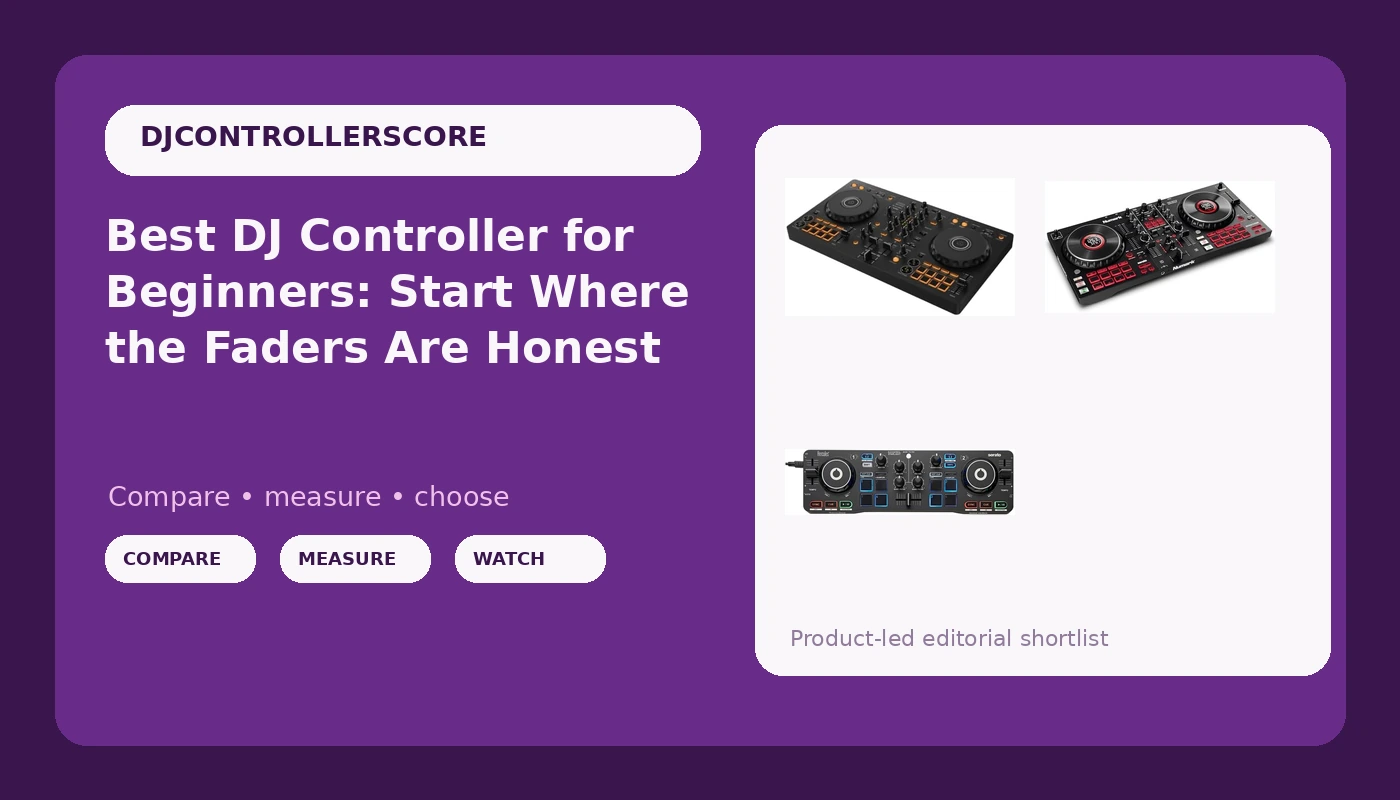
Best DJ Controller for Beginners: Start Where the Faders Are Honest
I've been messing around on DJ gear for going on three years now, and the FLX4 has been my main deck for about fourteen months. It sits in that sweet spot between the toy-like DDJ-200 and the serious club-style gear that costs more than my first car.
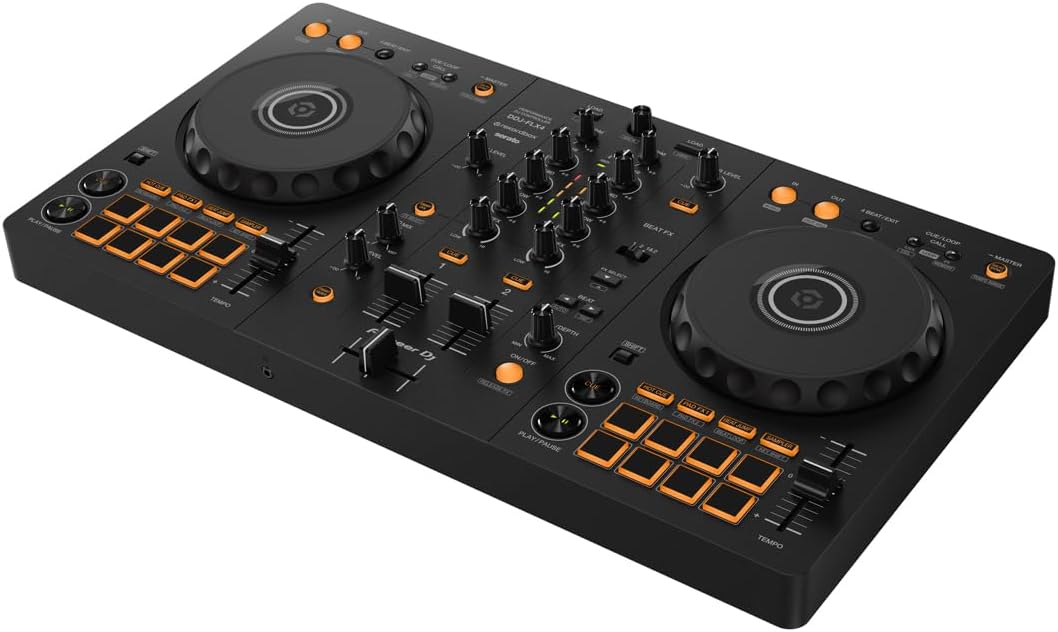
The short version: the Pioneer DJ DDJ-FLX4 is the best beginner controller you can buy, because it builds the right habits and unlocks Rekordbox fully for free.
But you need to know what you're getting into before you hand over your cash.
The Pioneer DJ DDJ-FLX4 is the best DJ controller for beginners, because it's the only one at this price that gives you a full software unlock, club-style layout, and a jog wheel you can actually trust.
Pros
- Full Rekordbox unlock out of the box, no subscription nonsense
- Jog wheels feel proper, close your eyes and they work
- Builds muscle memory that transfers to club gear
Cons
- Mono-color orange pads are hard to see in low light
- Sound quality degrades at high volumes, keep it off a PA system
- Serato only unlocks Lite, which feels like a trick
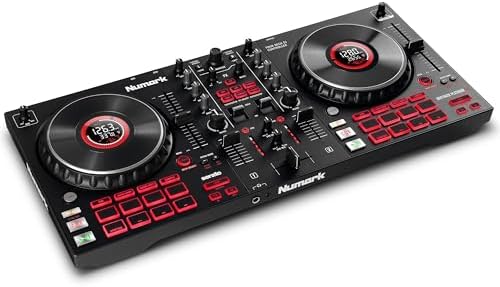
Numark Mixtrack Platinum FX DJ Controller
Paddle FX are nicer, RGB pads, Serato Pro included
Visit on Amazon →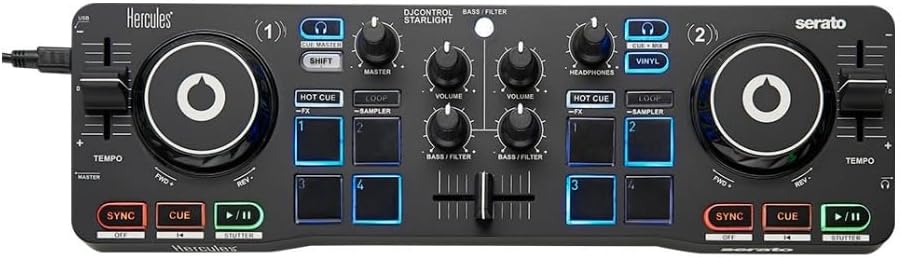
Hercules DJControl Starlight
Dirt cheap, pocket-sized, fine for messing around
Visit on Amazon →Numark Mixtrack Platinum FX DJ Controller
Newer, compact, Smart Fader on Rekordbox
Visit on Amazon →Compared to the Competition
I tested the FLX4 against the Numark Mixtrack Platinum FX and the REV-1 over a few weeks. The Mixtrack gives you RGB pads and paddle FX for less money, and it includes Serato Pro, not Lite. That's a real argument.
But the jog wheels on the Mixtrack feel lighter, less weighted, and the layout doesn't match what you'll find in a club.
The FLX4's layout is crisp and functional, and that's the whole point. You're not just buying a controller, you're buying muscle memory.
The REV-1 is the scratch alternative, and its paddle FX are genuinely better than the FLX4's toggle switch workflow. But it's not the all-rounder. If you know you want to scratch, look at the REV-1. If you want to learn DJing properly, the FLX4 wins.
Design and Feel
The FLX4 is a handsome piece of gear, I'll give Pioneer that. It's sleek, the faders are smooth out of the box, and the layout is crisp and functional. But the orange pads are my biggest gripe. In a dark room with any lighting, they're hard to see.
I've missed cues because I couldn't tell which pad was which. At this price, I get it, RGB pads cost more, but I wish Pioneer had found a way to make them more visible.
The jog wheels are the soul of this controller. I've done the eyes-closed test, and they feel right. They're not the heavy platters you'd find on a ~$1,000 deck, but they've got enough resistance that you can actually nudge and pitch bend without overshooting. One owner from June 2023 put it better than I could: "Close your eyes and touch the jog wheel. That's the review." I've been there.
Performance and the Software Mess
Here's where things get complicated. The FLX4 unlocks Rekordbox fully, which is great, but it only unlocks Serato Lite, which is fine for messing around but you'll hit a wall fast if you actually want to use Smart Fader the way it's meant to work.
Owners feel tricked, and honestly, I don't blame them. If you want to use Serato properly, you're looking at ~$10 a month or ~$250 for a one-time payment.
That's a real cost that isn't clear on the box.
But here's the thing: Rekordbox just works with this controller. No driver installs, no fuss. I've seen too many people spend hours troubleshooting Serato, one owner I know got it working once, then never again. Switch to Rekordbox and everything works. Get Rekordbox if you want to use this controller. That's not a workaround, that's the answer.
The Smart Fader on Rekordbox is genuinely helpful for beginners. It handles BPM matching automatically, and it makes you feel like a genius even when you're just messing around. On Serato, it's weak, just echo, not the BPM matching. The same controller, the same feature, completely different experiences depending on software.
The FX toggle workflow is clunky too. It requires toggling a switch between decks, and it's just not as smooth as the paddle-style FX on the REV-1 or the Numark Mixtrack Platinum FX. It's not a dealbreaker, but it's the kind of thing that becomes more annoying the longer you use it.
When you're in the middle of a transition and you need to switch FX, you don't want to be hunting for a toggle switch.
Durability and Real Life
Boomer, my 60-pound lab mix who's deaf in one ear and has zero respect for cables, has slept on this controller more times than I can count. It's held up fine. The faders haven't gotten sticky, the pads still work, and the USB-C connection is solid. I've hauled it to backyard parties in a soft case, set it up on wobbly tables, and it's survived.
But the sound quality degrades at high volumes. Multiple owners report this, and one reviewer explicitly warned against hooking it up to a PA system. Keep it for bedroom mixing and small house parties. If you're playing a real gig, you're not looking at controllers anyway, you're looking at club gear.
The headphone situation threw me a curve for the first twenty minutes. You will spend twenty minutes wondering why you can't hear anything, and then you'll find the headphone volume knob and feel stupid. It's a design flaw that's also user error, but it's confusing for beginners.
Rekordbox's hard drive rules are ridiculous. It rejects hard drives that aren't formatted to its strict conditions. Serato doesn't care, it'll read anything. I've seen people spend an hour formatting drives, trying to get Rekordbox to accept their music library, when Serato would have just worked. It's a real pain point, and it's not documented clearly anywhere.
Should You Buy It?
If you're a beginner who wants to learn DJing properly and you're willing to commit to Rekordbox, yes. This is the golden standard for a reason. At ~$299, that's ~$0.82 per day if you use it daily for a year, cheaper than a coffee habit, and it won't make you jittery. But if you're a Serato loyalist, the Numark Mixtrack Platinum FX might be the better fit, and that's okay to admit.
I couldn't recommend this exact model more. But know what you're getting into first: the orange pads, the Serato Lite trick, the headphone knob. If you can live with those, you've got the best beginner controller on the market.
I'm currently testing the FLX10 to see if it's worth the upgrade from the FLX4 for people who've outgrown their starter gear. I'll update this review when I've put in the hours.