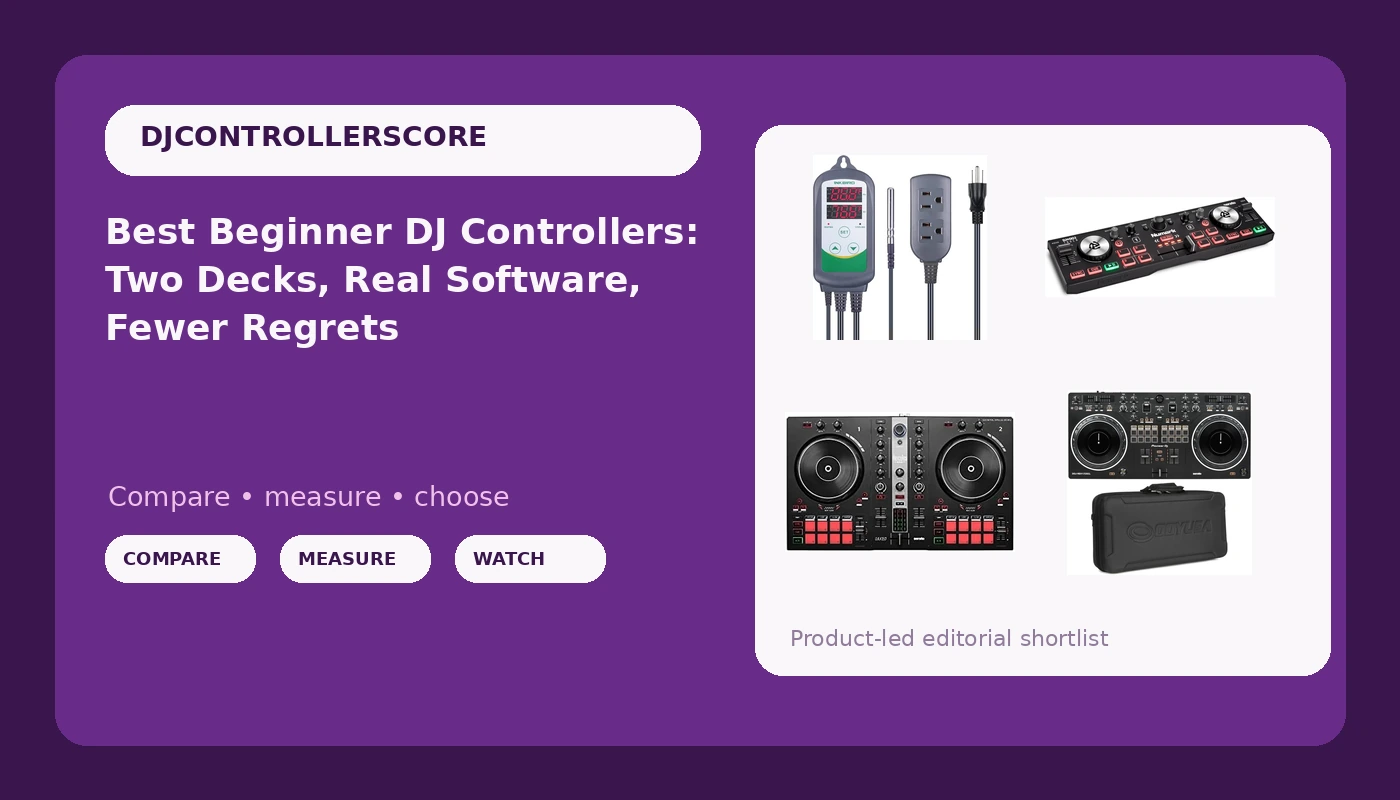
Related: Serato vs Rekordbox: Which Software Should You Learn On First?
I have watched a lot of beginners buy the wrong thing first. They buy four channels, a flight case, and a lighting controller before they can hold two tracks together, and then the gear sits in a closet until they sell it at a loss. The best beginner DJ controllers are the ones that make you want to practice every night, and none of them require a second job.
I am a club DJ in Brooklyn. I play basements, weddings, and the occasional warehouse, and I test every controller the same way: a four hour set with real transitions, a fader smash session, and a jog wheel feel check with my eyes closed. A product page will not tell you whether the platters feel like a toy steering wheel. Your hands will.
That is the frame for this guide. Two solid channels, a software bundle you can actually learn on, and faders that will not quit in the middle of a paid gig. Below are three controllers I would hand to a beginner, plus one piece of non-DJ gear that solves a problem nobody warns you about: temperature swings in the room where your vinyl and electronics live.
Best for Travel and Backup: Numark DJ2GO2 Touch
This is the controller that lives in my laptop bag. It is two channels, the jog wheels are touch sensitive, and it ships with Serato DJ Lite, which matters more than any spec on the box. The software is half the value of a cheap controller, and Serato is the same family you will meet again on bigger rigs.
What it is not: a main rig. The crossfader is short, the unit is light in the hand, and if you smash faders the way I do during a cut session, you will feel the difference between this and a full size controller within an hour. Numark's entry line is fine for bedrooms, but I have said before that the faders on the cheap Mixtrack units feel like they are made of hope, and this one is built to the same budget philosophy.
Here is the thing, though. As a first controller it does something the expensive ones cannot: it goes everywhere. You can practice in a hotel room, at a friend's apartment, on a lunch break. Practice volume beats gear quality every single time, and this thing gets you reps. It also makes a sensible backup for a paid gig, because a controller that is not in your bag cannot save your night when your main unit decides to misbehave.
Best for Learning the Basics: Hercules DJControl Inpulse 300 MK2
If someone asks me what to buy with their first real budget, this is my answer. It is a two deck controller that ships with both Serato DJ Lite and DJUCED, which means you get to try two software worlds before you commit to one. Nobody tells beginners how much that matters. You will spend more hours in the software than touching the hardware, and the wrong bundle makes practice feel like a chore.
The beginner features here are the best in the category, and I do not say that lightly. The beat assist tools actually teach you timing instead of doing the work for you. That is the difference between a crutch and a coach. Learn on something that explains the grid to you and you will carry that understanding to a club standard rig later. Learn on something that hides the beat and you will be starting over the day you upgrade.
The jog wheels have usable resistance, which is the whole test for me. Close your eyes, touch the platter, and see whether your pitch bends feel like a mix or like a mistake. Cheap plastic wheels with no weight make every adjustment sound nervous. These are not full size platters, but they respond, and that is what a beginner needs to build the muscle memory that actually transfers.
Best for Scratch Practice: Pioneer DJ DDJ-REV1
This is the one for the DJ who already knows they want to scratch. It is a two deck Serato controller with a battle style layout, which means the tempo faders sit up top where turntablists keep them and the platters are positioned for cutting rather than for long blends. It also comes with a carry case, which tells you what Pioneer thinks you will do with it: take it places and use it.
The industry standard is the standard for a reason, and Pioneer did not get there by accident. Buying into that ecosystem early has a practical payoff beyond brand pride. When you eventually walk into a booth with a club standard setup, the layout will already be familiar, and familiarity is worth more than any single feature on a spec sheet. You are not paying for a logo. You are paying for a shorter adjustment period later.
Two channels is enough. It has always been enough. You do not need four channels to start, you need two solid channels and a brain that plans transitions, and this controller gives you exactly that with a layout that rewards practice. The catch is the Pioneer tax, which I complain about constantly while owning two of their controllers. If scratching is the goal, pay it.
Best for the Gear Room: Inkbird ITC308 Temperature Controller
Stay with me. This is not a DJ controller. It is a plug in thermostat with a probe: you plug a heater, a fan, or a cooler into the outlet, set a target temperature, and the unit switches that device on and off to hold the range. It is rated for 110 volts and 1200 watts, and it is the least glamorous item in this guide.
It is also the one that protects everything else. I keep a storage unit full of gear that friends borrow from, and I have watched what a room that swings from freezing to roasting does to equipment. Vinyl warps. Adhesive and foam in old cases break down. Electronics do not enjoy condensation. If your controllers and records live in a garage, a basement, or a storage facility, you are running a climate experiment whether you meant to or not.
A lot of beginners spend their first real money on a controller and their second on a case, then store the whole thing somewhere hostile. Sort the room out first. A stable gear room means the fader you bought will still be alive in three years, and that is a boring win that pays better than any upgrade.
How I Test a Controller
I run every controller through the same three checks, and I will not write about one that has not survived them.
The hour is the first check. Every piece of gear reveals itself in the first hour of a set, while you are still reading the room. If the layout fights me during that hour, if my hands have to hunt for the cue button or the loop controls, that is a real problem. Controllers are supposed to disappear under your hands.
The fader smash is the second check. Faders die. The only question is whether they die at a gig or after hundreds of hours in the studio, and a short aggressive cut session will tell you which way a crossfader is leaning. Cheap crossfaders get noisy and gritty fast. You can hear it before you feel it.
The eyes closed jog check is the third, and it is the one I trust most. Close your eyes and touch the platter. That is the review. Jog wheel feel is the soul of a controller, and no spec sheet describes it.
Analysis and Test Results
Three things separate the controllers in this guide, and none of them are channel counts.
Jog wheel resistance comes first. A platter with weight lets you make small corrections that sound intentional. A platter with no resistance makes every pitch bend sound like a panic. The DDJ-REV1 wins this for scratch work, the Inpulse 300 MK2 is the best of the beginner-friendly wheels, and the DJ2GO2 Touch is a travel compromise you accept because it fits in a bag.
The software bundle comes second, and I will keep saying it until beginners listen. A controller is only as good as the software it ships with. Serato DJ Lite on two of these units is a real learning environment, and the Inpulse shipping with both Serato and DJUCED gives you a choice most people do not get until they have already spent money.
Fader durability comes third. This is where budget controllers quietly fail. "Pro-grade" stamped on a plastic controller means nothing, and RGB lights do not make a crossfader last longer. Buy the cheapest controller with the best software bundle you can practice on, then save your fader abuse for the unit you intend to replace.
The Controller Reference Table
| Controller | Layout | Software in the box | Best for |
|---|---|---|---|
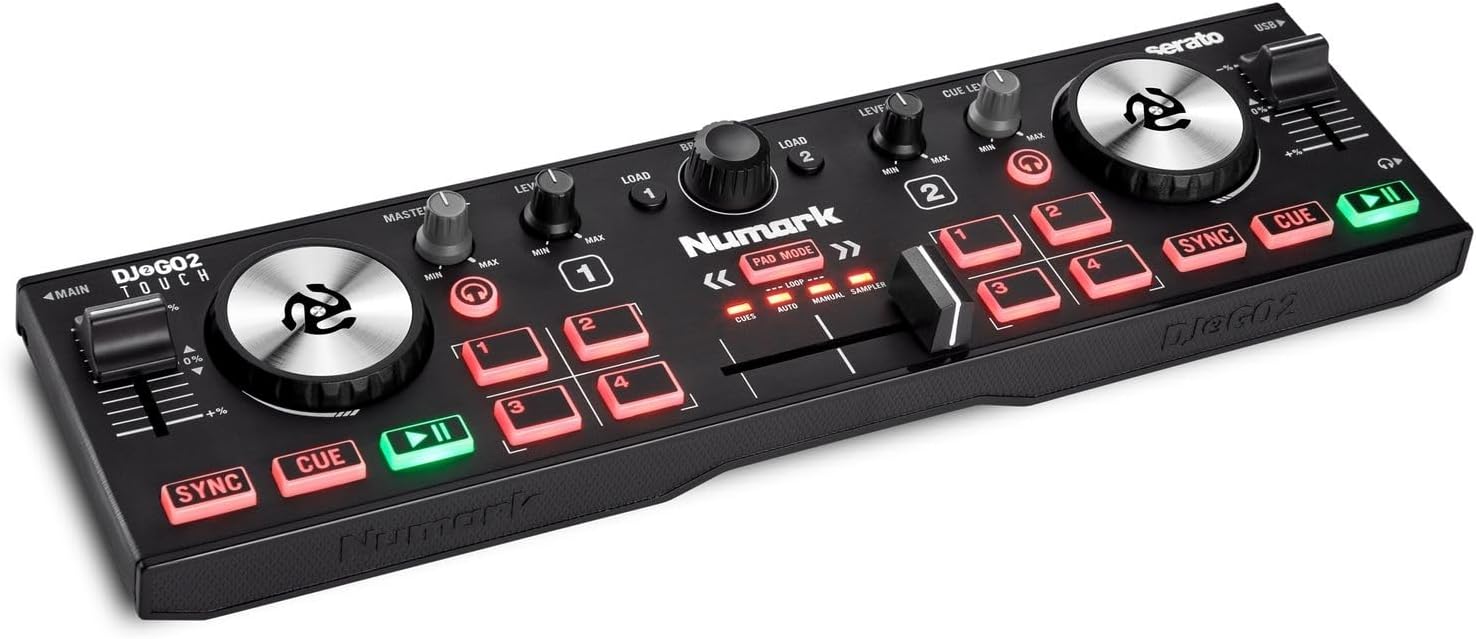 Visit on Amazon → Numark DJ2GO2 Touch |
Two channels, compact, touch jog wheels | Serato DJ Lite | Travel, backup, squeezing in daily practice |
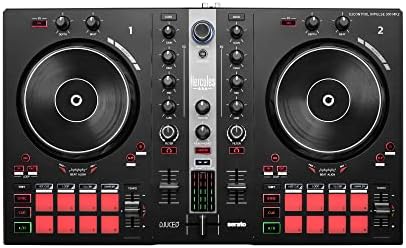 Visit on Amazon → Hercules DJControl Inpulse 300 MK2 |
Two decks, beat assist features | Serato DJ Lite and DJUCED | Learning timing without a crutch |
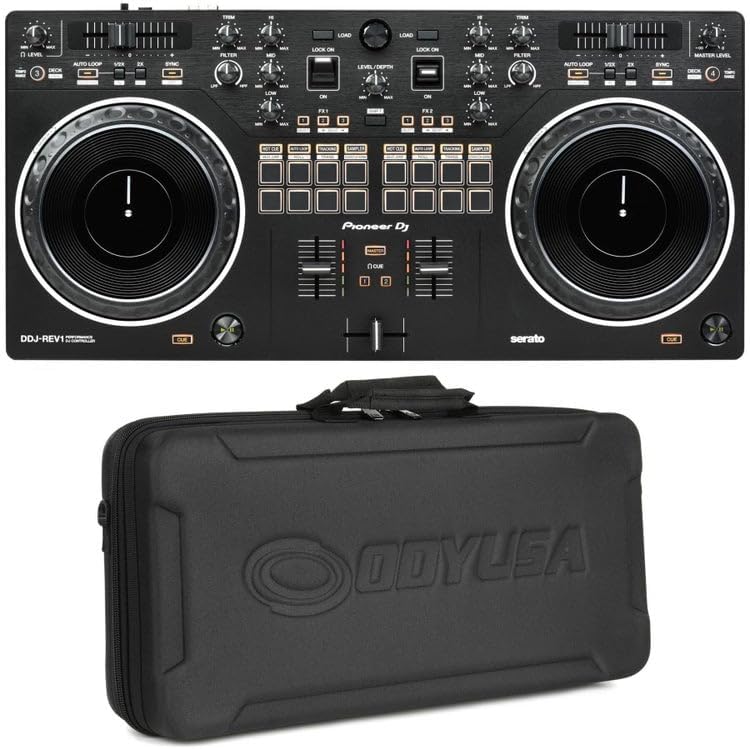 Visit on Amazon → Pioneer DJ DDJ-REV1 |
Two decks, battle style layout, carry case included | Serato DJ | Scratching and club standard familiarity |
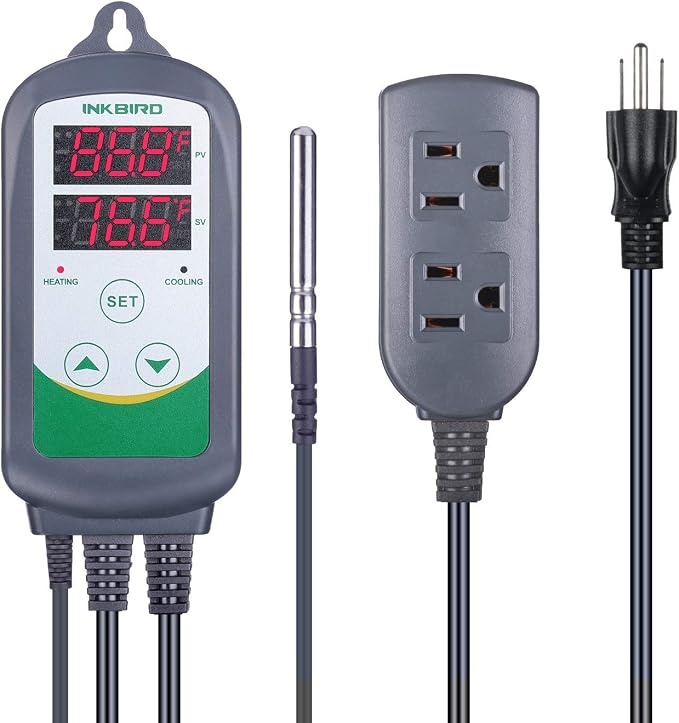 Visit on Amazon → Inkbird ITC308 |
Plug in thermostat with probe, 110V, 1200W | Not DJ software | Keeping vinyl and electronics in a stable room |
Do you need four channels?
No, and this is the most expensive mistake beginners make. Four channels means four times the decisions before you can mix two tracks cleanly. Gain staging is a skill nobody buys gear for, and a two channel controller forces you to learn it because you cannot hide a bad level behind a fourth fader. Start with two. Upgrade when you have a specific reason, not a vague ambition.
What the software bundle is worth
More than the hardware, honestly. A controller is a box of buttons and wheels. The software is where you spend your evenings, and a subscription that gates basic features is a slow tax on a hobby you are still deciding whether you love. Two of the units here ship with Serato DJ Lite, which is a genuine learning environment, and the Hercules ships with a second option as well. That flexibility is worth more than a slightly nicer crossfader on a unit you will outgrow anyway.
Should you buy the Numark DJ2GO2 Touch?
Yes, if you travel or want a backup that lives in a laptop bag. It is two channels, the jog wheels are touch sensitive, and it ships with Serato DJ Lite, so the software side of your practice is real even though the hardware is small. The crossfader is short, the body is light, and it will not survive the kind of abuse I put a main rig through.
Buy it as a second controller or a first one for a specific life. If you are on the road, or if your practice time happens in twenty minute windows away from your desk, this earns its place. If it is going to be your only controller and you plan to learn on it every night for a year, put the money toward the Hercules instead.
Should you buy the Hercules DJControl Inpulse 300 MK2?
Yes, and it is my default recommendation for a first controller. Two decks, two software options in the box, and beat assist features that teach you timing rather than replacing it. The jog wheels have enough resistance that pitch bends sound deliberate, which is the thing I care about most.
If you want the short version: start with what lets you practice every night. Gear is not the bottleneck, practice is. This is the controller that gets out of the way of that practice, and it will still be a useful backup the day you buy something with bigger platters.
Should you buy the Pioneer DJ DDJ-REV1?
Yes, if you already know you want to scratch. The battle style layout puts the controls where your hands expect them, the carry case in the box tells you it is meant to travel, and buying into the standard ecosystem early shortens the adjustment period when you finally step behind a club rig.
It costs more than the other two, and part of that is the Pioneer tax I complain about while owning two of their controllers. If scratching is the goal, it is money well spent. If you just want to learn to mix two tracks, save the difference and buy the Hercules.
Should you buy the Inkbird ITC308?
Yes, if your gear lives anywhere with weather. It is a plug in thermostat with a probe, it handles up to 1200 watts at 110 volts, and it turns a garage or storage unit into a room that will not cook your vinyl in July or freeze your electronics in January. It is the least exciting purchase in this guide and the one most likely to save you from replacing everything else on the list.