Related: Best DJ Controllers for Beginners: Two Channels Done Right
There are two ways to buy a four-channel controller. You can read spec sheets until your eyes cross, or you can figure out what the gear has to do on a Saturday night and work backward from there. I have been DJing for thirteen years, eight of them in clubs and five doing weddings, and I have never once watched a dance floor react to a spec sheet. What a floor reacts to is whether the mix lands.
So this is a 4-channel DJ controller guide built from that angle. It covers the RANE Performer as the four-channel flagship and the Roland DJ-707M as the pick for streamers and content creators, plus two items that showed up in the same batch of gear and have nothing to do with DJing at all. I would rather tell you exactly what those two things are than dress them up as something they are not.
The short version: buy channels when you have a reason to use them, trust a software bundle only when the bundle is honest, and touch the jog wheels before you trust anyone's opinion, including mine.
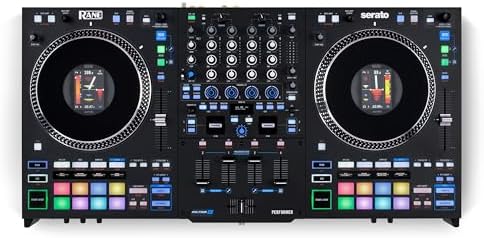
Best Overall: RANE PERFORMER 4-Channel DJ Controller
Four channels is not a status symbol. It is a workflow. If you have ever wanted a track running on one channel, an acapella on a second, a loop on a third, and a turntable or a microphone on the fourth, you already know why people pay for the extra two. If you are still learning to plan transitions, two extra channels mostly hand you two extra ways to confuse yourself.
The Performer is the four-channel option in this guide, and RANE's reputation in club installs is the reason it sits at the top of the list. What I want to know before anyone spends this kind of money, in this order: how the jog wheels feel with my eyes closed, whether the faders have the resistance to survive a year of hard cuts, and what software ships in the box. Software bundles matter more than hardware specs. A controller is only as good as the software it ships with, and if that software charges a subscription for features that should be standard, you are paying a monthly tax on gear you already bought.
Then the practical question: does this live in a booth or in a studio? Four channels earn their keep when you are genuinely running four sources. A two-deck DJ with a hard drive and a dream is paying for headroom that never gets used. That is not a knock on the Performer. It is a knock on buying it too early, which is the most common mistake in this whole category.
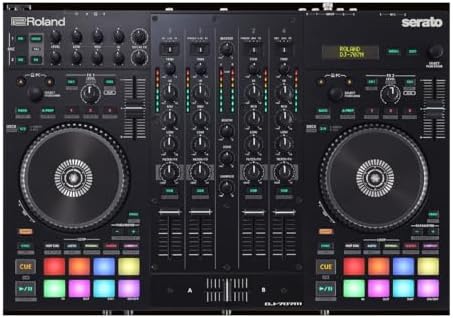
Best for Live Streaming: Roland DJ-707M
Roland's controllers are weird and wonderful, and I mean that as a compliment. The DJ-707M is aimed at live streamers and content creators, which is a genuinely different job than holding down a club booth. A streamer needs clean audio routing, a way to talk over the music without sounding like a drive-thru speaker, and a rig that survives four hours on camera without anyone in the chat hearing a buzz.
The questions you ask about a streaming controller are not the questions you ask about a club controller. You want to know what the software does when you are broadcasting and mixing at the same time. You want to know how the mic channel actually sounds. You want to know whether the rig can carry a show when the laptop is busy doing something else. Those are the specs that matter on a stream, and they are the ones that get buried under channel counts and light shows.
Roland is also the family that has always done drum machine integration better than anyone else, so if your set involves programming patterns instead of only mixing records, this is the branch of the tree you want to be standing on. For a hybrid setup where the stream is the gig and the club is the side quest, this is the more interesting of the two controllers here.
The Two Items That Are Not DJ Gear
Two products in this batch have nothing to do with mixing. I am listing them anyway, with links, because pretending otherwise would waste your time. One is a beginner rocket kit. One is a plug-in thermostat. Here is what each one actually is.
Estes 1469 Tandem X Rocket-Building Kit
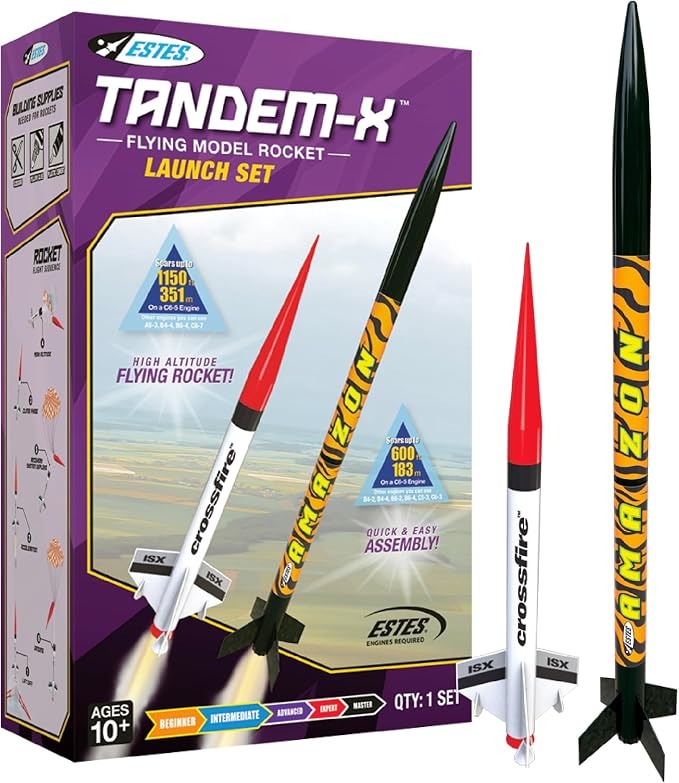
Read the name carefully. It includes a launch pad and a controller, and that controller fires a rocket, not a track. It is a beginner flying model kit for ages 10 and up, and it is a build project before it is a launch project, which is the part kids either love or hate depending on the kid.
It is in this article because it arrived in the same order, and because plenty of us have a kid, a niece, or a nephew who is bored of watching us coil cables. It is also a useful reminder that the word controller does a lot of work in product listings. Search that word without context and you will happily get handed a launch pad when you wanted a jog wheel.
Inkbird ITC308 Temperature Controller
Same story, different job. The ITC308 is a plug-in thermostat with a probe on a cable. You set a target temperature, plug a heater or a cooler into the outlet, and it holds the room, the tank, or the kegerator where you told it to. It is rated for heating and cooling at 110 volts and up to 1200 watts, and the listing names greenhouses, reptile setups, brewing, fermentation, and kegerators as the usual jobs.
In a DJ context, this is a gear room tool. Vinyl warps in a hot room. Adhesives soften. Electronics hate big temperature swings more than they hate dust. If your records live in a basement that turns into an oven every July, a thermostat plus a fan or a small heater costs less than replacing a crate of wax. It is not glamorous work. Neither is replacing a crate of wax.
How I Test a Controller
Every controller I recommend goes through the same loop, because thirty minutes of playing around tells you nothing.
First, a four-hour set with real transitions, not a loop and a filter sweep. The first hour is the hour where the gear reveals itself: how the jog wheels respond when you are pitching a track into a live mix, whether the buttons sit where your hands expect them, whether you are fighting the layout by hour two.
Second, a fader smash session. Faders die. The only question is whether they die at a paying gig or after five hundred hours in a studio, and I would rather find out in my living room than in front of two hundred people.
Third, the eyes-closed jog wheel check. Close your eyes and touch the platter. If it feels like a toy steering wheel, the review is over. Feel beats specs every single time.
Fourth, gain staging. Setting levels so your mix does not clip is the skill nobody buys gear for, and a controller that makes it hard is a controller that will make you sound bad no matter how good your track selection is.
What Actually Decides the Purchase
Jog wheel feel is the whole review
You can stack a hundred features on a controller and a cheap platter will ruin every one of them. Jog wheel feel is the soul of the machine. It is also the one thing a spec sheet cannot describe, which is why so many buyers get it wrong and only notice three months in.
Faders are consumables
Treat them like brake pads. Every crossfader has a lifespan, and aggressive cutting shortens it. What separates a controller you keep for five years from one you resent for two is whether the faders still feel the same after a season of real use. If a listing brags about the lights and says nothing about the faders, that tells you something.
The software bundle is half the value
A controller is a box of controls. The software is what turns those controls into music. Check what ships in the box, what happens when the trial runs out, and whether basic features sit behind a subscription. Paying monthly for features that should be standard is the fastest way to sour on hardware you actually like.
Channels do not fix transitions
You do not need four channels to start. You need two solid channels and a brain that plans transitions. The DJs I know who sound best are not the ones with the biggest rigs, they are the ones who know where the mix is going thirty seconds before it gets there.
The standard is the standard
The industry standard earned that position for a reason. That does not mean you have to buy it. It does mean that when you compare anything else to it, you should be honest about what you are giving up and what you are getting instead.
The reference table
Here is the whole batch in one place. Two controllers, two things that are not controllers, and what each one is actually for.
| Gear | Type | Best for | Notes |
|---|---|---|---|
 Visit on Amazon → Visit on Amazon →RANE PERFORMER 4-Channel DJ Controller |
4-channel controller | Rigs running four sources | Check current Amazon price |
 Visit on Amazon → Visit on Amazon →Roland DJ-707M DJ Controller for live streamers and content creators |
Controller for streamers | Broadcasts and hybrid sets | Check current Amazon price |
 Visit on Amazon → Visit on Amazon →Estes 1469 Tandem X Rocket-Building Kit |
Model rocket kit | Kids, ages 10 and up | Not DJ gear. Check current Amazon price |
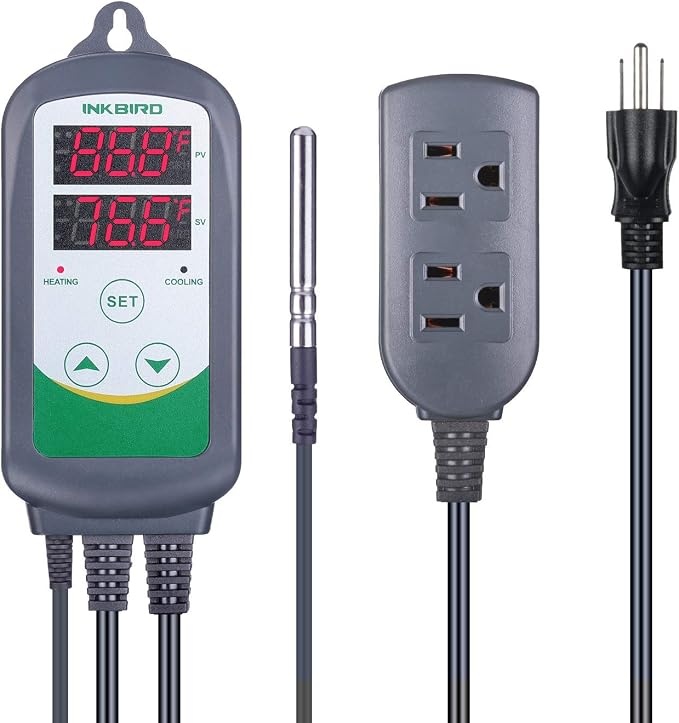 Visit on Amazon → Visit on Amazon →Inkbird ITC308 Temperature Controller |
Plug-in thermostat | Gear rooms and record storage | Not DJ gear. Check current Amazon price |
The two controller rows are the ones that matter for a booth. The other two rows matter for the room the booth sits in, and for the kid who is tired of hearing about faders.
Should you buy the RANE Performer?
Yes, if you actually run four sources. Four channels pay for themselves when you are juggling a track, an acapella, a loop, and a turntable or microphone at the same time, and RANE's club reputation is the reason this one leads the guide. Check current Amazon price and then check yourself: if your sets are two decks and a playlist, you are buying headroom you will never touch.
What would change my answer is feel. Before you commit, put your hands on the jog wheels with your eyes closed and see whether the platters have resistance or whether they spin like a toy. That single test tells you more than any spec sheet on the page.
Should you buy the Roland DJ-707M?
Yes, if the stream is the gig. This is the controller in this guide built for live streamers and content creators, and that means the questions change: how the software behaves during a broadcast, how the mic channel sounds, whether the rig can hold a show together when the laptop is busy. Check current Amazon price against what your current setup already does, because if you already own an interface and a mixer, you may be buying overlap.
If your sets involve programming patterns rather than only blending records, this is the more interesting machine of the two. Roland has always been the family for that.
Should you buy the Estes Tandem X kit?
Not for your booth, because it is not DJ gear. The controller in the name fires a rocket. It is a beginner kit for ages 10 and up that includes a launch pad and a launch controller, and it is a build project first and a launch project second.
Buy it for a kid, or buy it because you want a hobby that does not involve a laptop. Check current Amazon price and keep your expectations calibrated to the age range on the box.
Should you buy the Inkbird ITC308?
Not for your booth either, but possibly for the room your booth lives in. It is a plug-in thermostat with a probe, rated 110 volts and up to 1200 watts, with heating and cooling modes. It holds a temperature for a heater, a cooler, a fermentation setup, or a kegerator, and the same logic applies to a gear room.
If your records and your gear sit in a space that swings from cold to oven-hot depending on the month, this is cheap insurance. Check current Amazon price, then check the wattage on whatever you plan to plug into it.