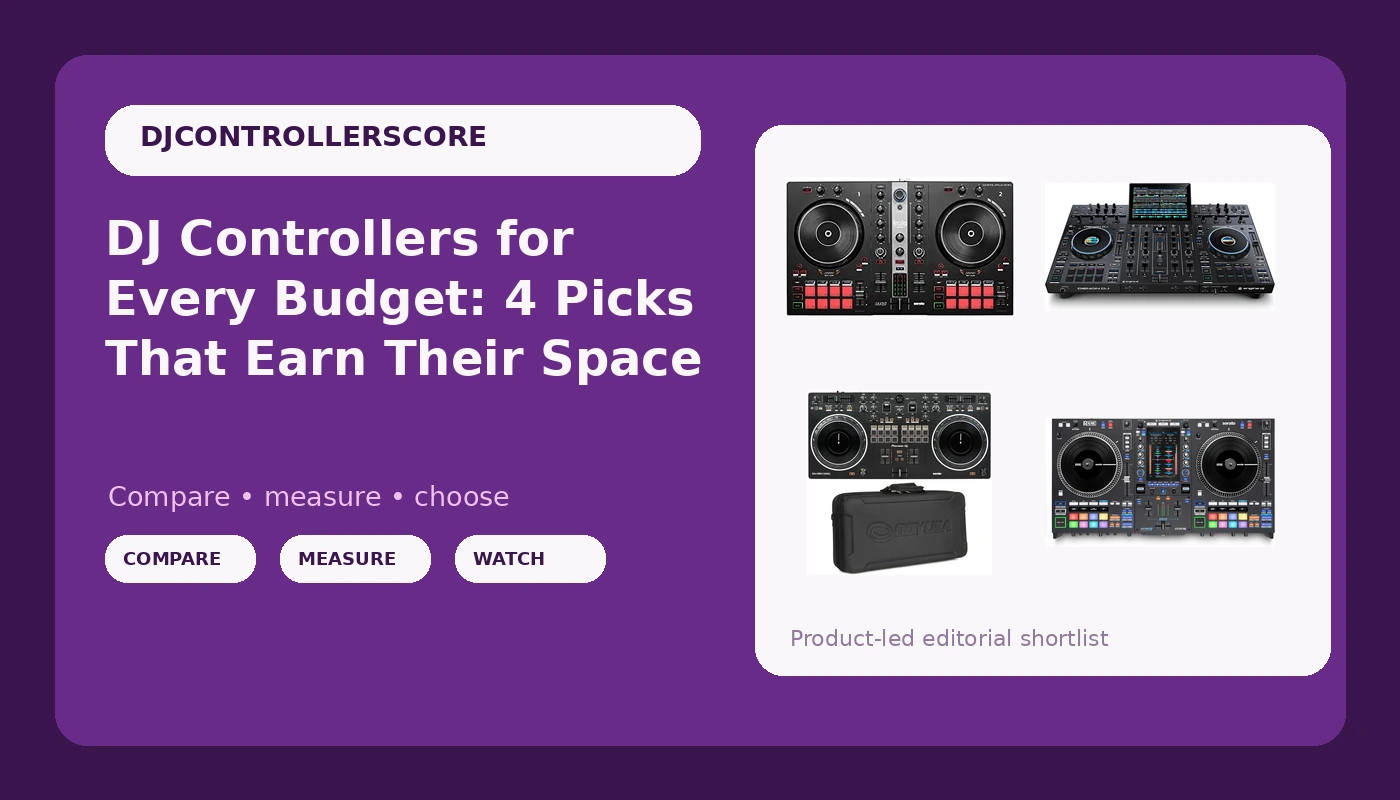
Related: Best DJ Controller for Beginners: Two Channels and Real Jog Wheels
I have spent eight years behind a controller in clubs and five more doing weddings, and the hardest part of DJing was never the mixing. It was picking the box to learn on. Shopping for DJ controllers for every budget is a trap, because the marketing copy sounds identical at every price: pro-grade, club-ready, industry standard. None of that tells you whether the jog wheel feels like a platter or a toy steering wheel, or whether the crossfader will survive a year of aggressive cuts.
So here is how I split the category. Two channels or four. Laptop or standalone. A software bundle you own outright, or one that wants a subscription for basics. The four controllers below are the ones I point people toward depending on where they are, and the reference table near the end is the ninety-second version if you already know what you want.
Best for Learning: Hercules DJControl Inpulse 300 MK2
The Inpulse line is what I hand to people who have never touched a controller, and the reason is the beat assist. It teaches you where the one is instead of pretending you already know. Hercules ships this with both Serato and DJUCED, so you can find out which software you actually like before you spend money on a library you cannot move.
Two decks is not a limitation at this stage, it is a curriculum. With two channels you plan transitions because you have to, and that planning is the skill that separates a DJ from someone playing songs in order. Close your eyes and touch the jog wheels before you commit. If they feel like a toy steering wheel, every pitch bend will feel like a mistake, and you will blame yourself for a hardware problem.
The honest caveat on any budget controller is the faders. They are the first thing to go, and the question is never whether they die, only whether they die at a gig or after a few hundred hours in your bedroom. This is also the controller in this group that resells most easily when you outgrow it, which matters more than people admit.
Best Two-Channel for Scratch and Open Format: Pioneer DJ DDJ-REV1
Pioneer is the standard for a reason, and the REV1 is the two-channel entry into that ecosystem. It ships with Serato and it comes with a carry case, which sounds like a small thing until you are the person loading a car for a wedding on a Saturday afternoon. Gear that travels in a case survives longer, and gear that survives longer is cheaper in the end.
If you learn on a Pioneer, you can walk into almost any booth and know where things are. That is worth something concrete the first time you get called to cover for someone. Serato is a real bundle here too, not a demo, so you are not renting your own music back from a subscription.
The tradeoff is that you pay the Pioneer tax. You always do. What you get for it is resale value and a layout that translates to the gear you will find at the venue. For an open format DJ who scratches and plays weddings, two decks plus Serato plus a case is a complete answer.
Best Standalone All-Rounder: Denon DJ PRIME 4+
Standalone is the feature that changes how you work. No laptop, no dongle, no panic when a USB port dies mid-set. The PRIME 4+ runs four decks with stem separation, streams over Wi-Fi, includes a drop sampler on the mixer, and gives you a 10.1 inch touchscreen plus light control. That last one is not a gimmick if you are also the person running the lights.
Four decks means you can hold a loop under a vocal, park an acapella, and still keep a clean two-deck mix going. Stem separation means you can pull a vocal out of a track on the fly instead of hunting for an edit. Wi-Fi streaming is what saves you when a request comes in for something you do not own, which happens at every single wedding.
I am a two-channel brain by training, and I will still tell you that you do not need four channels to start. But if you are already working, this is the one in the group that removes the most failure points at once: the computer, the missing track, and the light rig.
Best Motorized Flagship: RANE SYSTEM ONE
Motorized platters are the reason this one exists. On a motorized controller the platters spin under your hands the way records do, so a DJ who came up on turntables does not have to unlearn their own hands. That is the whole pitch, and for the right person it is the only pitch that matters.
It is standalone as well, so it does not need a laptop, and it sits at the top of this group in every sense. This is not a starter purchase. It is the controller you buy when feel is the thing you refuse to compromise on and you have already decided that jog wheel resistance is not a spec, it is the review.
If you are still learning, buy the Hercules and put the difference into music. If you play vinyl style and you have the budget, this is the one that will feel like home.
How I judge a controller
Every controller I look at gets the same treatment, and none of it is complicated.
Can I play a four-hour set on it? Not thirty minutes of playing around. A full night, with real transitions, a room that fills up, and the first hour where the gear reveals itself before you have warmed up.
How do the jog wheels feel with my eyes closed? Feel beats specs. A spec sheet will tell you the platter diameter. It will not tell you whether a pitch bend lands where you meant it to.
Would I trust the faders at a paying gig? The fader smash is the test nobody advertises. Aggressive cuts for a year is how a cheap crossfader announces itself, and it always announces itself during the best song of the night.
What software does it bundle? The bundle is half the value of the controller. A subscription for basic features is a cost that never stops, and a demo version is not a bundle.
That is the whole framework. It is also why I do not care much about RGB lighting on a controller whose faders feel like they were made of hope.
What actually separates these four
Channel count is the least important difference. Two decks will carry a four-hour set if you plan, and four decks will not save you if you do not.
The real divider is standalone versus laptop. The PRIME 4+ and the RANE SYSTEM ONE both run without a computer, which removes the most common point of failure in a live set. The Hercules and the REV1 both want a laptop, and both ship with the software to make that painless. There is nothing wrong with that. A laptop plus a controller is still the cheapest path into the craft, and it is the path most working DJs actually use.
The second divider is the software bundle, and this is where beginners get burned. Hercules gives you Serato and DJUCED. Pioneer gives you Serato. Both are software you own. If you are comparing two controllers and one of them wants a monthly fee to unlock basics, that is not a tie, that is a decision.
The third divider is feel, and feel does not show up on a spec sheet. Motorized platters, weighted jog wheels, and a crossfader with real tension are the things you notice in year three, not week one. Buy the cheapest controller that does not lie to your hands, then practice until the gear is the boring part.
The DJ controller reference table
Scan this if you already know your budget and your setup.
| Controller | Decks | Software | Best for | Price |
|---|---|---|---|---|
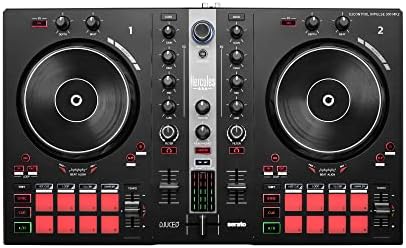 Visit on Amazon → Hercules DJControl Inpulse 300 MK2 |
2 | Serato and DJUCED | Learning, beatmatching, first gigs | $228.00 |
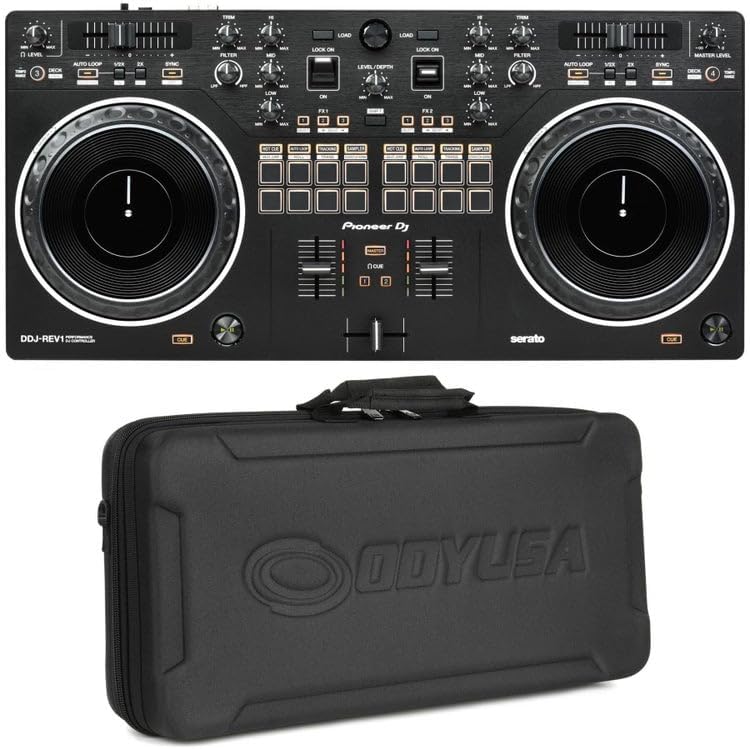 Visit on Amazon → Pioneer DJ DDJ-REV1 |
2 | Serato, carry case included | Scratch and open format, mobile work | Visit on Amazon → |
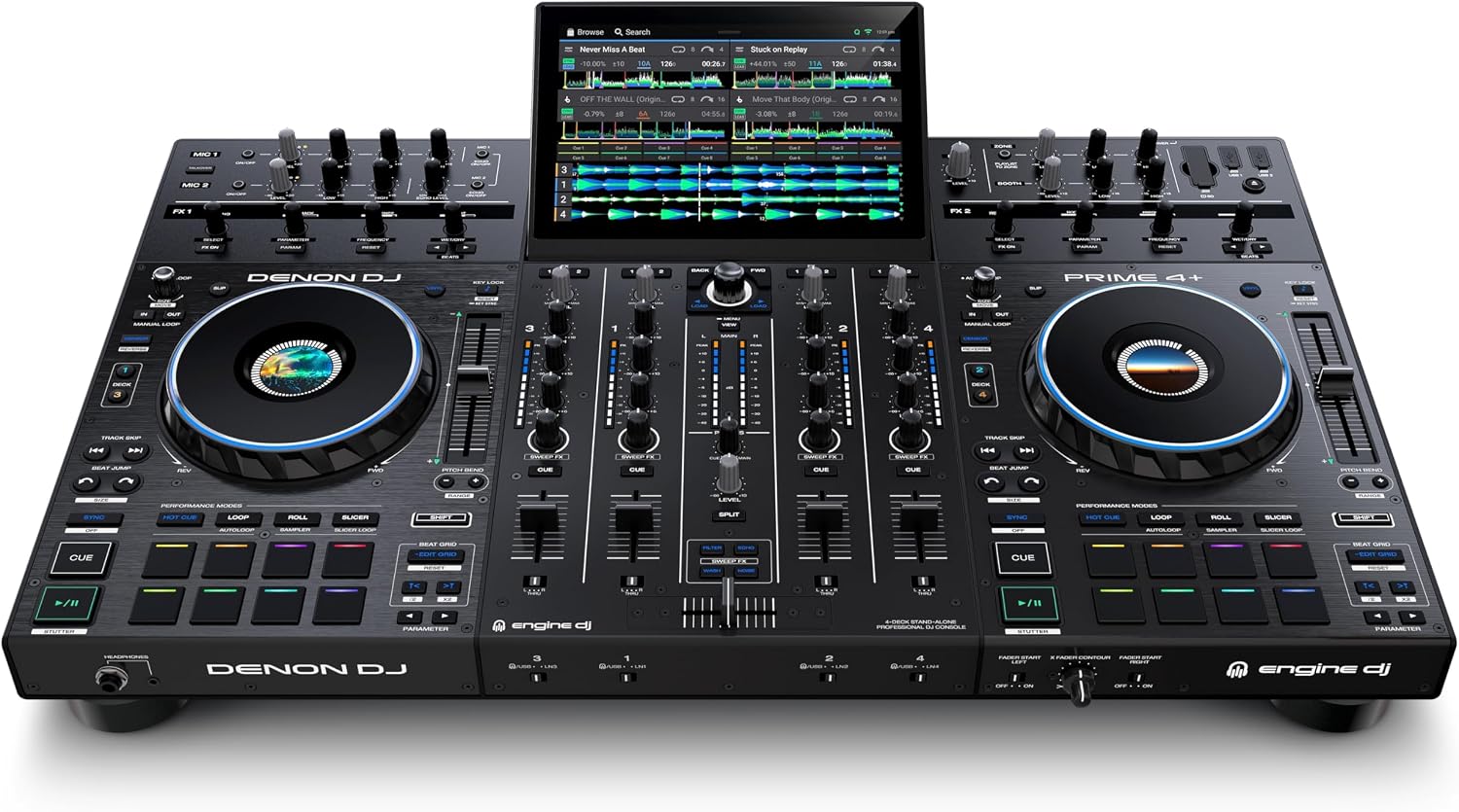 Visit on Amazon → Denon DJ PRIME 4+ |
4, standalone | Onboard, Wi-Fi streaming, stem separation | Working DJs who want no laptop | Visit on Amazon → |
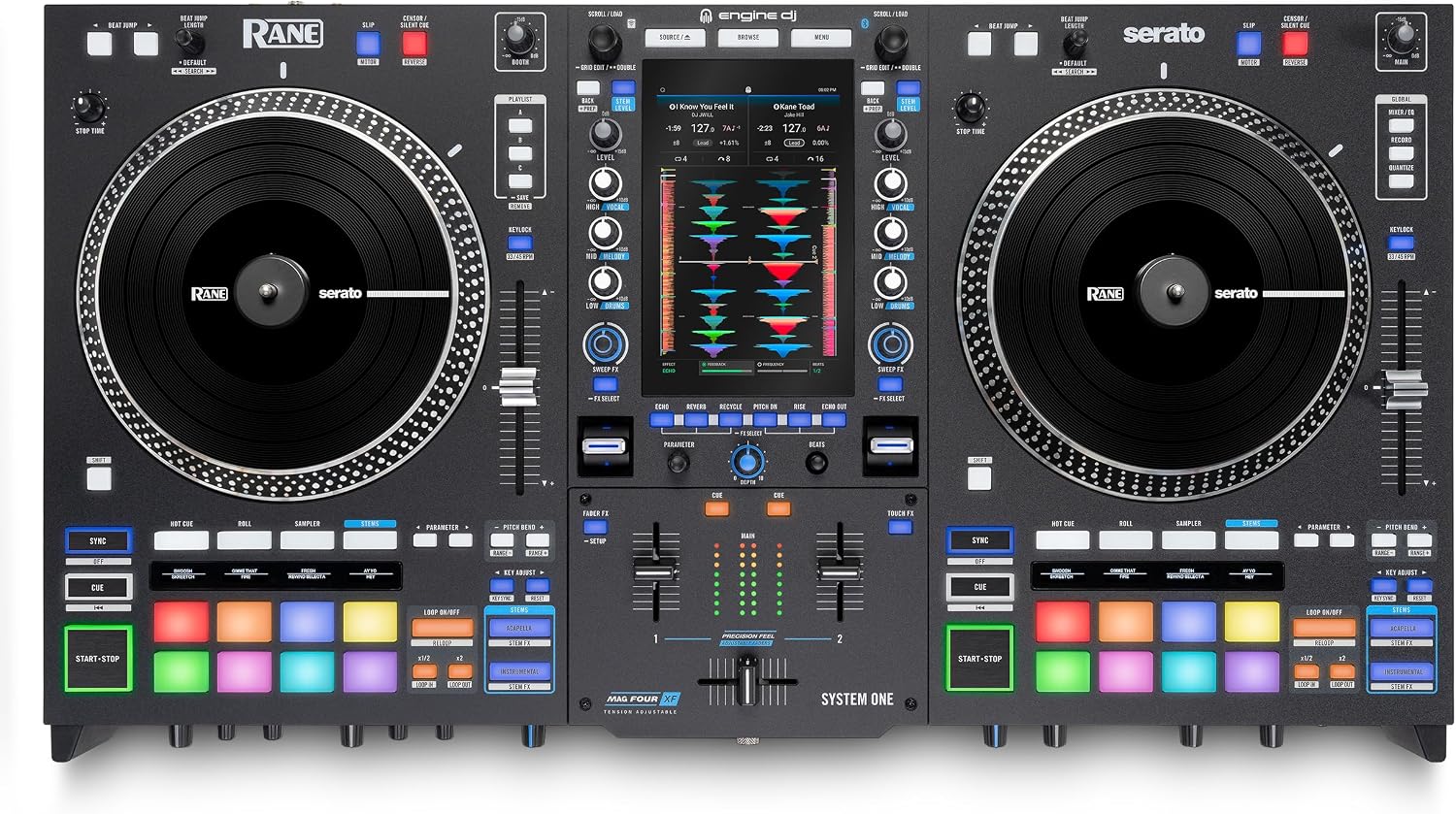 Visit on Amazon → RANE SYSTEM ONE |
Standalone, motorized platters | Onboard | Turntable players who want feel first | $2,499.00 |
Standalone or laptop?
If your gigs are weddings, corporate, or anything where a request can arrive mid-set, standalone plus Wi-Fi streaming removes two failure points at once. If your gigs are clubs with a booth and a mixer you plug into, a two-channel controller and a laptop you trust is lighter, cheaper, and completely professional.
Do you need four channels?
No, and I will keep saying it. You need two solid channels and a brain that plans transitions. Four channels are for holding loops and acapellas under a live mix, which is a technique you grow into, not a feature that makes you a DJ.
Should you buy the Hercules DJControl Inpulse 300 MK2?
Yes, if you are starting. It is the cheapest way into this group with software you actually own, and two channels force you to think about transitions instead of hiding behind a fourth deck. Check the jog wheels with your eyes closed and budget for faders eventually, because that is true of every controller at this level. Start with what lets you practice every night. Gear is not the bottleneck, practice is.
Should you buy the Denon DJ PRIME 4+?
Yes, if you are already working and you are tired of the laptop being the weakest link in your rig. Four decks with stem separation, Wi-Fi streaming, a drop sampler, a 10.1 inch touchscreen, and light control cover the requests, the edits, and the lighting without a second device. It is not a beginner purchase and it is not supposed to be.
If you want the two-channel path instead, the Pioneer DJ DDJ-REV1 with its carry case is the safer first buy, and if motorized platters are non-negotiable for you, the RANE SYSTEM ONE is the one to save for.