Well, is the "best DJ software for beginners" even a real question anymore, or is it just whatever your controller unlocks for free? I've been messing around on DJ gear for nearly three years now, and I've learned that the software battle is way more confusing than picking the hardware.
I started on a Numark DJ2GO2 Touch, moved to the DDJ-200, and have spent the last fourteen months living with the Pioneer DJ DDJ-FLX4 as my main deck.
I've tested it against the REV-1, the Numark Mixtrack Platinum FX, and my buddy's Inpulse 500, and I'm here to tell you that the software choice dictates your entire experience.
Here's what actually works, what's a trap, and what I'd tell a friend who's about to pull the trigger.
The Truth About Bundles: You're Buying a Software Ecosystem, Not a Controller
The first thing you need to understand is that every beginner controller is a trojan horse for a software subscription. The Pioneer DJ DDJ-FLX4 is the golden standard for a reason, but it unlocks Rekordbox fully while only giving you Serato Lite.
That's not a feature, that's a trick. I spent a good week messing around on Serato Lite before I hit the wall where Smart Fader just didn't do what the Rekordbox videos showed.
Turns out, the Serato version only applies echo, not the BPM matching that Rekordbox does. I felt like an idiot for not reading the fine print.
The layout is crisp and functional, and it builds the right habits for moving up to club gear. But the software situation threw me a curve. If you're a Serato loyalist, you're looking at ~$10 a month or ~$250 for a one-time payment to get the full version. That's a real cost that isn't clear on the box. I couldn't recommend this exact model more, but know what you're getting into first.
The Pioneer DJ DDJ-FLX4: The Golden Standard, Warts and All
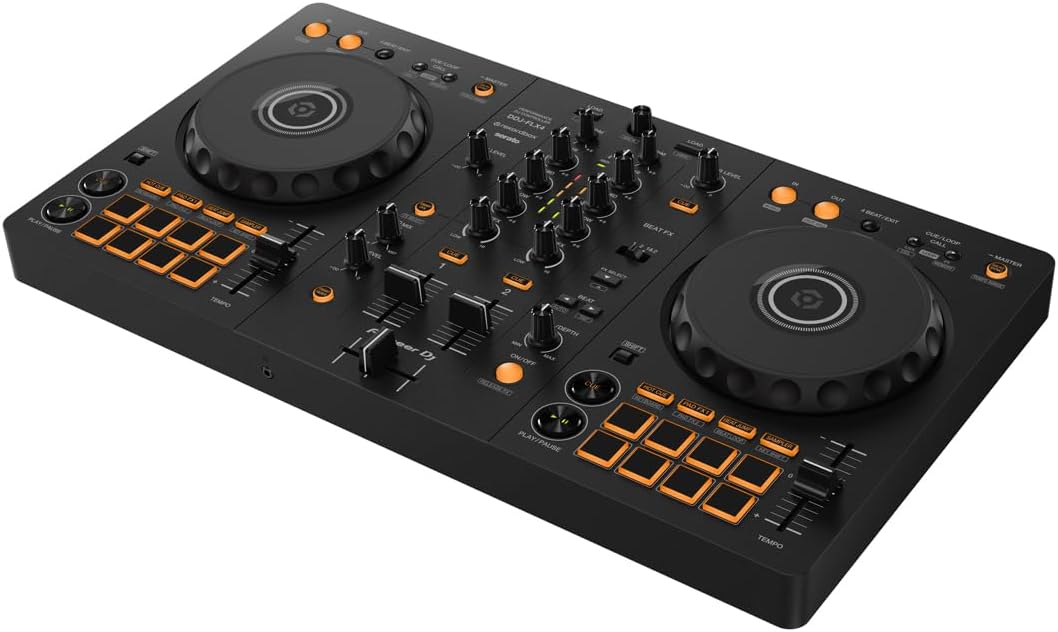
Let me lead with the biggest gripe I have after fourteen months: the mono-color orange pads. In a dark room with any lighting, they're hard to see. I've missed cues because I couldn't tell which pad was which, and that's the kind of thing that becomes more annoying the longer you use it. At ~$299, I get it. RGB pads cost more. But I wish Pioneer had found a way to make them more visible.
Now the good stuff. The jog wheels are the soul of this controller, and they feel right with your eyes closed. I've done the test. Close your eyes, touch the jog wheel, and let your fingers decide. That's the review. They're responsive, they've got a nice weight to them, and after hundreds of hours, they haven't gotten sticky or loose.
The software bundle is half the value here. Rekordbox just works with this controller. No driver installs, no fuss. I've seen too many people spend hours troubleshooting Serato. One buyer I know got it working once, then never again. Switch to Rekordbox and everything works. Get Rekordbox if you want to use this controller. That's not a workaround, that's the answer.
The Smart Fader on Rekordbox is genuinely helpful for beginners. It handles BPM matching automatically, so you can focus on the transition instead of the math. But the FX workflow requires toggling a switch between decks, and it's just not as smooth as the paddle-style FX on the REV-1.
When you're in the middle of a transition and you need to switch FX, you don't want to be hunting for a toggle switch.
Sound quality degrades at high volumes. I'd warn anyone against hooking it up to a PA system. Keep it for bedroom mixing and small house parties. At ~$299, that's ~$0.82 per day if you use it daily for a year. Cheaper than a coffee habit, and it won't make you jittery.
The REV-1: The Scratch Alternative That Feels Different
If you're into scratching, the REV-1 is worth a serious look. I borrowed one for a weekend, and the paddle FX are much better than the FLX4's toggle switch. The layout is designed for a different style of DJing, with the platters on the outside and the FX paddles right where your fingers naturally sit. It's a handsome piece of gear, no doubt.
But here's the thing: it's not the all-rounder that the FLX4 is. The club-style layout on the FLX4 builds the right muscle memory, and that's why it's the golden standard for beginners. The REV-1's battle layout is great for scratching, but if you're planning to play weddings or clubs, you're going to have to relearn the standard layout eventually.
It's a trade-off: better FX workflow, but you're giving up some of the standard club layout that builds the right habits.
One buyer from May 2024 put it well: "The REV-1 made me a better scratch DJ, but I still keep the FLX4 for everything else." That's the truth. Choose the REV-1 if you're obsessed with scratching. Choose the FLX4 if you want a controller that does everything well.
The Numark Mixtrack Platinum FX: The Serato Sleeper
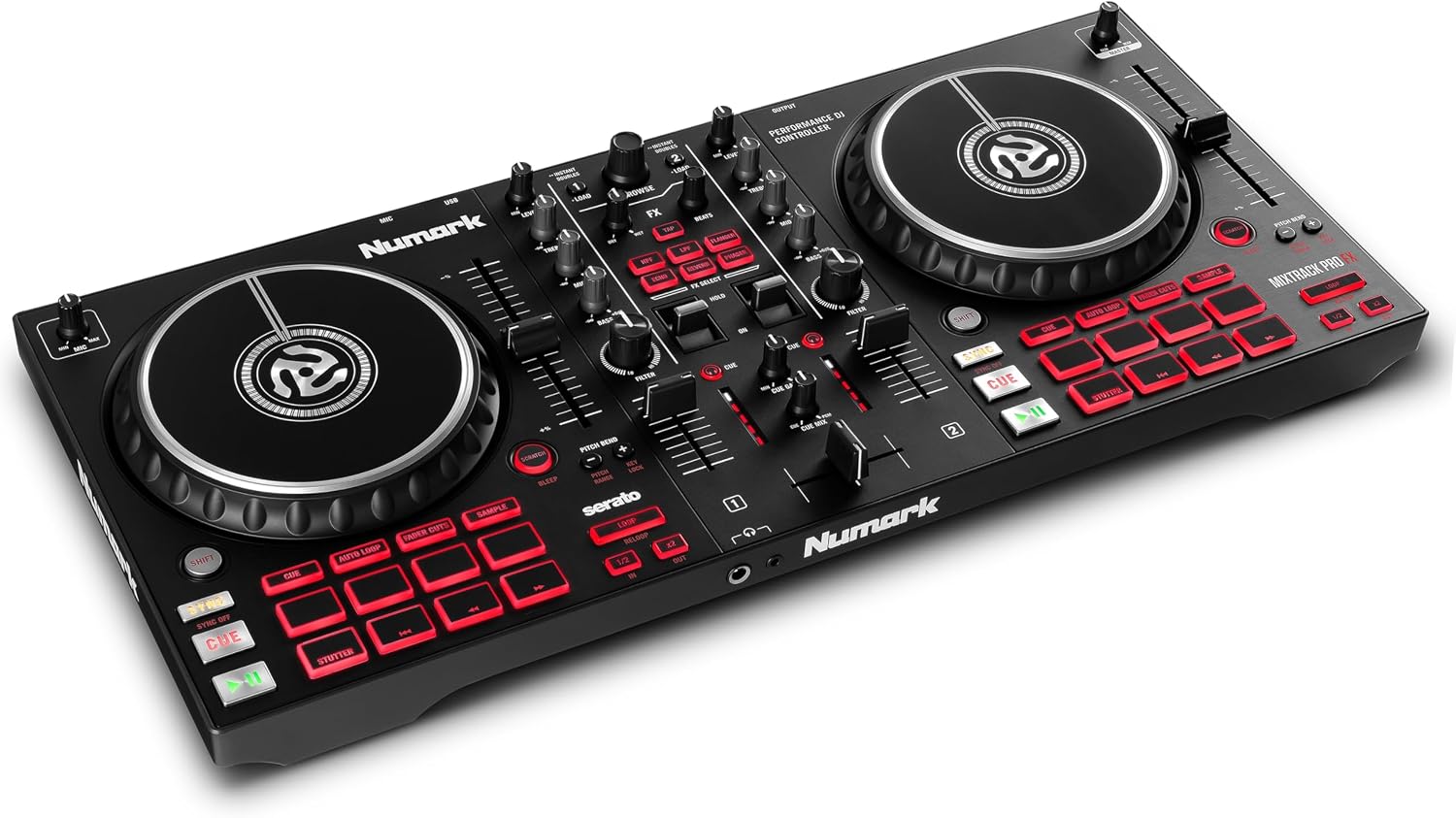
If you're a Serato person, this is the one to look at. The Numark Mixtrack Platinum FX is the controller that actually gives you a full Serato unlock, not a lite version. I tested this against my FLX4, and the paddle FX are way better than the toggle switch on the Pioneer. It's a handsome piece of equipment, sleek and elegant on my desk.
The jog wheels are decent, though not quite as good as the FLX4's. They're a bit lighter, less weighted, and I found myself overcorrecting during transitions. But the price story is the real appeal here. It's often ~$50 to ~$100 cheaper than the FLX4, and you get full Serato. If you've already got a Serato library, this is the smarter buy.
The downside? The build quality isn't quite there. After a few weeks of daily use, the pitch faders felt a little loose. Nothing broke, but it didn't feel as solid as the Pioneer. My dog Biscuit, a 60-pound lab mix who's deaf in one ear and has zero respect for cables, slept on it for a week, and it survived. That's the real test.
The Inpulse 500: The Underrated Workhorse
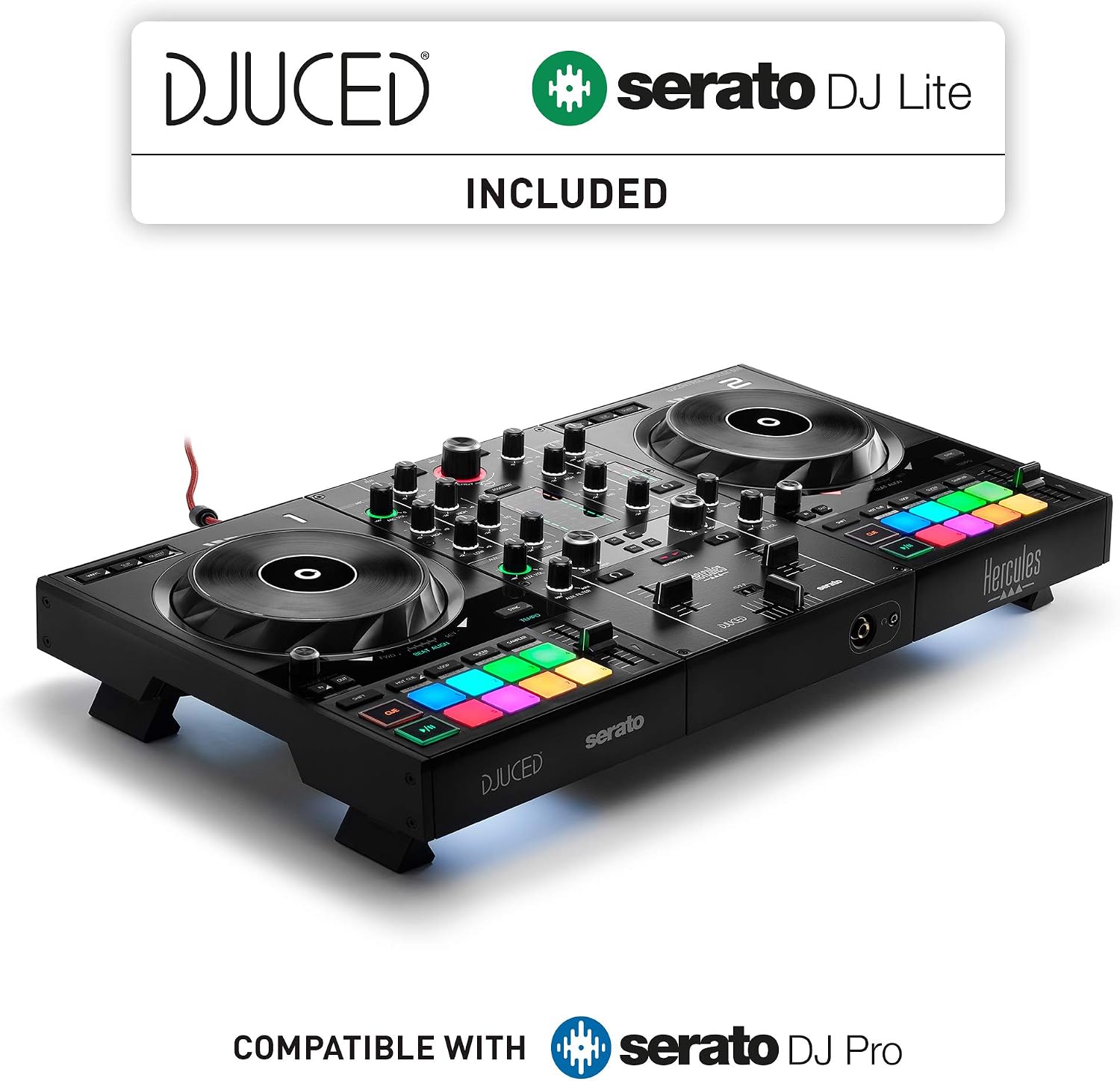
Here's the one that doesn't get enough love. The Inpulse 500 is made by Hercules, and it's got features that the FLX4 doesn't have at the same price point. It's got RGB pads, which I would have killed for on my FLX4, and the built-in audio interface is actually better. Sound quality doesn't degrade as much at higher volumes.
The software situation is different though. It unlocks Serato Lite and comes with Hercules's own DJUCED software, which is a full-featured program. DJUCED is actually pretty good, and it's completely free. I took a whack at it for a few days, and it's surprisingly powerful. The Smart Fader equivalent, called Beatmatch Guide, is actually more helpful for beginners because it's more visual.
The downside? The layout isn't the club standard. The FX controls are in a different place, and the jog wheels are smaller. If you learn on this, you'll have to adjust when you move to club gear. But if you're on a budget and want RGB pads, this is the best value in the beginner market.
The Software Wars: Rekordbox vs. Serato vs. DJUCED
I'm not a software reviewer, but I've spent enough hours in all three to tell you what matters. Rekordbox has the strictest hard drive formatting rules. Serato doesn't care what drive you use, but Rekordbox will reject your external hard drive like it's got a personal grudge against your music library.
I've seen people spend an hour formatting drives, trying to get Rekordbox to accept their music, when Serato would have just worked.
It's a real pain point, and it's not documented clearly anywhere.
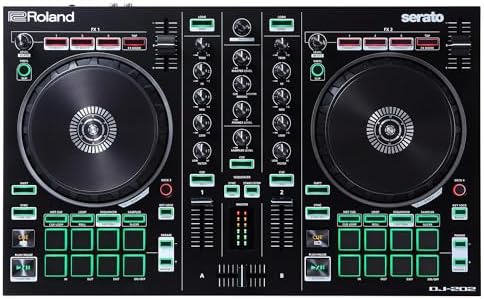
Serato is more forgiving with hardware and drives, but the unlock tiers are confusing. You get Serato Lite with most beginner controllers, and the upgrade path to the full version is expensive. The DJ-202 from Pioneer is a good example. It's a solid budget controller, but it only unlocks Serato Lite, and the full version costs more than the controller itself in a year of monthly payments.
DJUCED is the wild card. It's free, it's full-featured, and it works with the Inpulse 500. The downside is that it's not the industry standard. If you learn on DJUCED, you're not building the same muscle memory as someone learning on Rekordbox or Serato.
The Upgrade Path Is Real
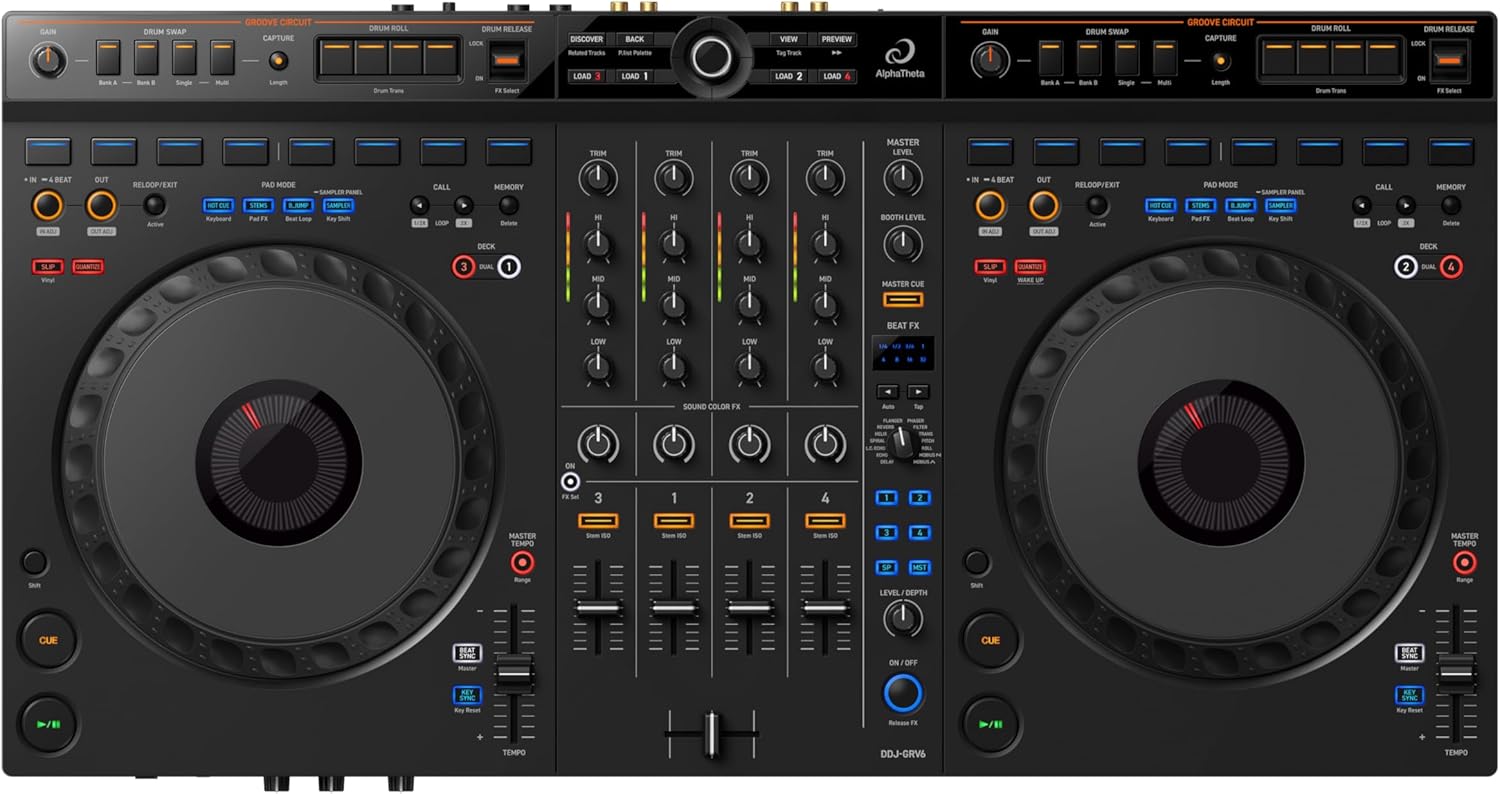
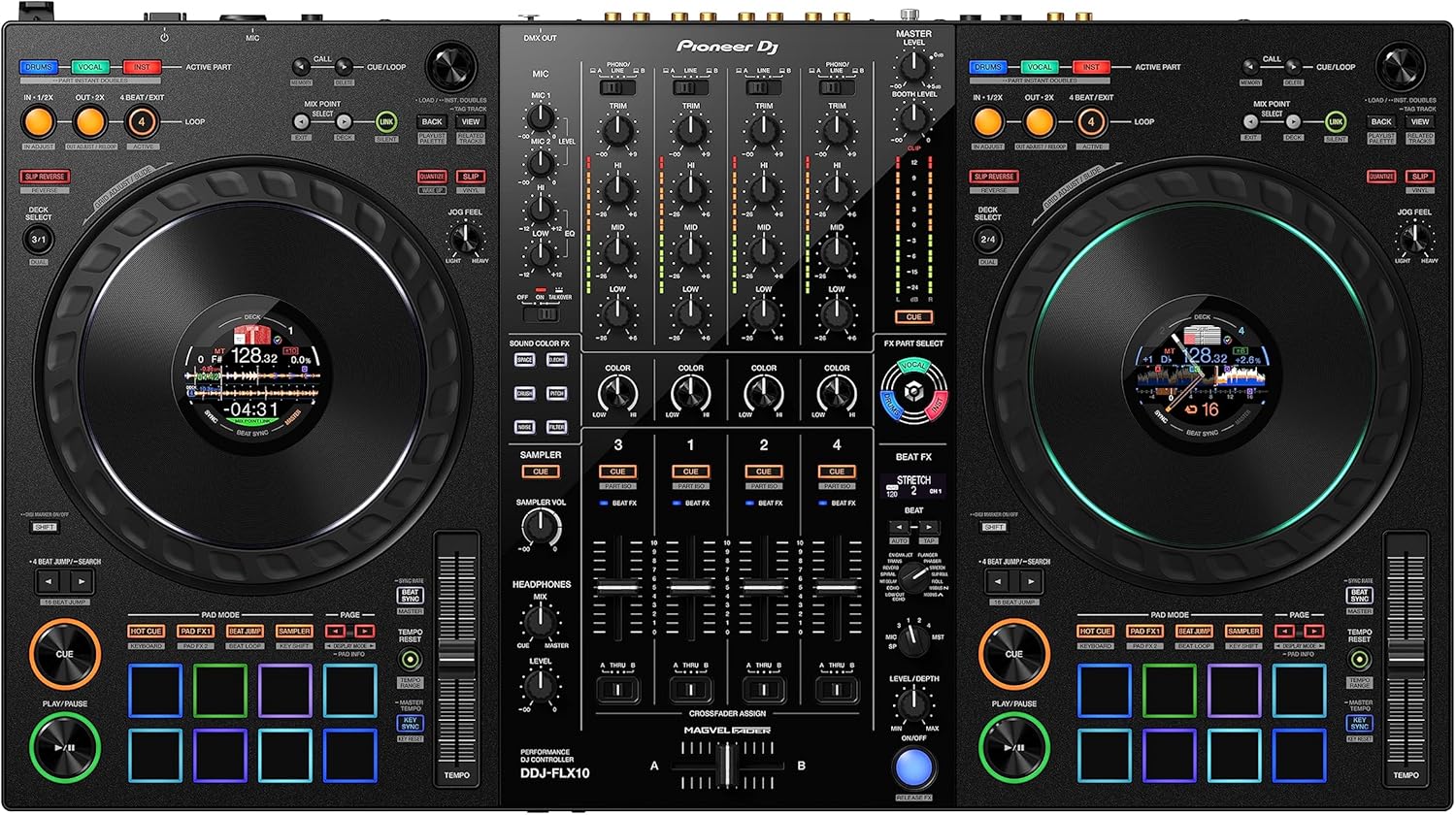
I've seen the progression: start on a DDJ-200 or a Numark DJ2GO2 Touch, outgrow it in a year, and step up to the FLX4. Then, when you're ready for something bigger, you're eyeing the FLX10 or the GRV6.
The GRV6 is a 4-channel beast, but it's a bit too heavy to move around. The FLX10 is the aspirational upgrade.
But for most people, the FLX4 is where you should start and where you'll stay for a while.
I don't track prices day to day, so I won't pretend to know next week's sales. But I know that the FLX4 has been consistently ~$299 for the past year, and the REV-1 has dropped to ~$249 a few times. If you're patient, you can save a few bucks.
My Honest Bottom Line
The best DJ software for beginners is the one that's fully unlocked on the controller you buy. For most people, that means Rekordbox on the FLX4. It's the golden standard for a reason, and the software just works.
But if you're a Serato person, get the Numark Mixtrack Platinum FX. If you're on a budget and want RGB pads, get the Inpulse 500.
Just don't buy a controller that only gives you a lite version of the software you actually want to use.
That's the trap.